Episode Details
Back to Episodes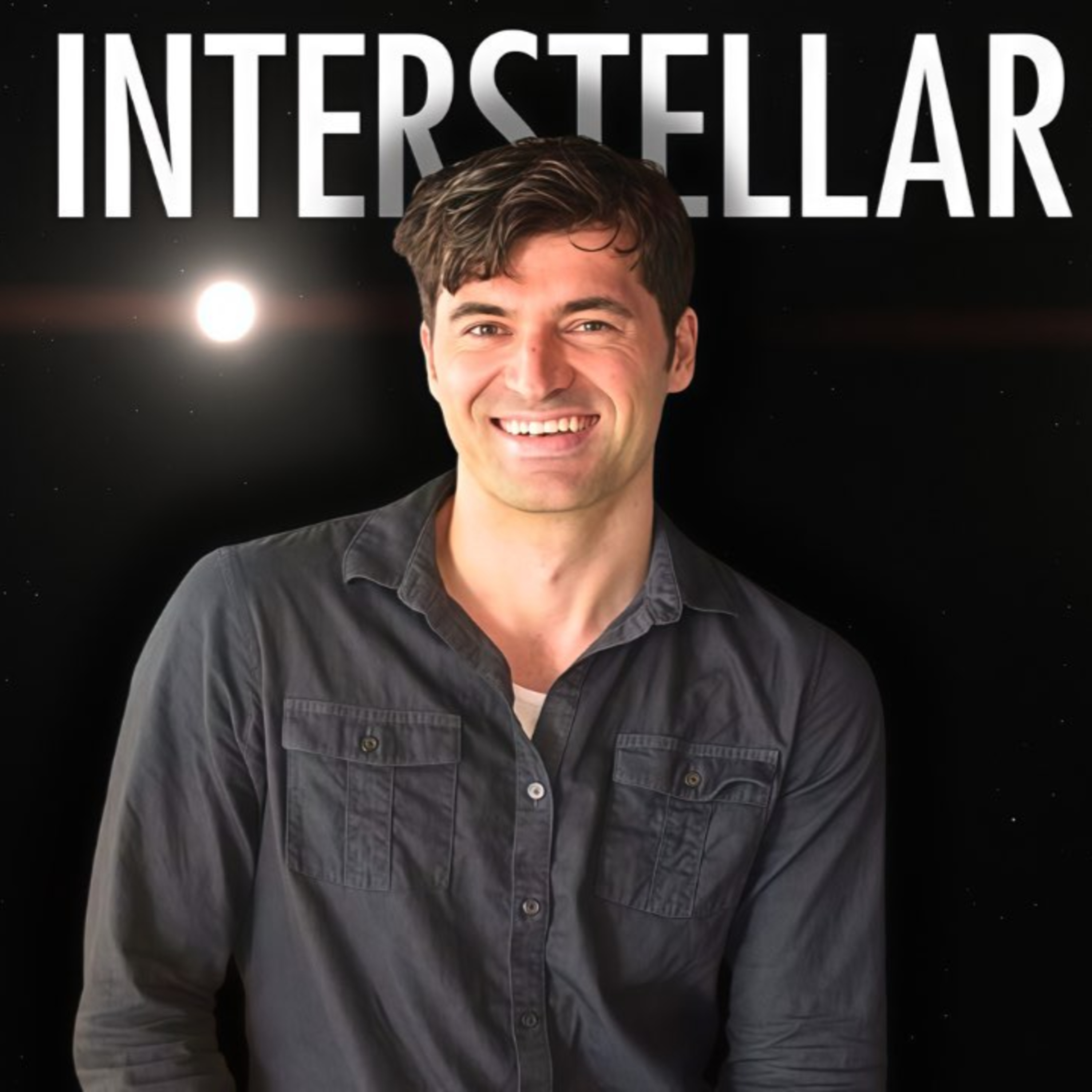
How To Reach The Stars (and Shield Mars) with David Kipping
Description
Dr. David Kipping joins John Michael Godier to unpack T.A.R.S., a solar-powered, spin-driven sail that leverages radiometer-like physics and a spinning dipole to accelerate lightweight probes and generate magnetic fields. They also explore relay networks for deep-space communications, science in the interstellar medium, and a bold Jupiter “atmospheric lens” concept to boost signals—plus implications for Mars shielding, mission cost–benefit, and the search for technosignatures.Links: A New Interstellar Propulsion Method: T.A.R.S.https://youtu.be/MDM1COWJ2Hc?si=Kw5SYtvEA441nMKaTorqued Accelerator using Radiation from the Sun (TARS) for Interstellar Payloadshttps://arxiv.org/abs/2507.17615@CoolWorldsLabSupport the Cool Worlds Lab and it's research: https://www.coolworldslab.com/supportYouTube Membership: https://www.youtube.com/channel/UCz3qvETKooktNgCvvheuQDw/joinPodcast: hhttps://creators.spotify.com/pod/show/john-michael-godier/subscribeApple: https://apple.co/3CS7rjTCHAPTERS00:00 Intro — welcome & setup00:32 Kipping’s bio, Cool Worlds & research focus02:03 T.A.R.S. — radiometer-inspired interstellar concept04:11 Why classic solar sails stall with distance06:02 Sub-Keplerian “quasite” orbits explained07:04 Could T.A.R.S. shield Mars with a magnetic field?10:46 Simplicity & cost: why swarms are attractive16:46 Deployment, micro-thrusters, initial spin-up17:21 Gyroscopic stability; dissipating energy via cyclotron radiation18:27 Why the odd shape? Load paths & tapering23:35 Near-term solar-system missions vs interstellar shots24:18 Relay swarms for “live-feed” deep-space comms29:00 Using T.A.R.S. probes to study the interstellar medium34:08 Rubin (LSST), TESS shift-stacking & finding distant objects40:55 Can T.A.R.S. be a telescope? (why not optical)41:47 Massive swarms as gravitational-wave machines44:52 Jupiter’s atmosphere as a lens; test with Juno47:49 Gravitational waves & the Fermi paradox52:01 Why radio still wins56:14 Neutrinos, dark matter & detectability limits01:01:05 Is Earth unusually interesting? Zoo vs rarity01:06:05 “Alone in practice”: distance & timescales01:07:12 Extragalactic SETI01:11:05 Star-lifting as a technosignature01:12:26 Anomaly hunting across galaxies01:13:50 Interstellar’s influence & the audacity to try01:17:22 Near-term life detection & abiogenesis focus01:19:48 3I/ATLAS, UFOs & “are they here?”01:23:30 Relics in the Solar System vs undetectable visitors01:26:09 Outro & creditsMore JMG https://www.youtube.com/c/JohnMichaelGodierWant to support the channel?Patreon: https://www.patreon.com/EventHorizonShowFollow us at other places!@JMGEventHorizonMusic:https://stellardrone.bandcamp.com/https://migueljohnson.bandcamp.com/https://leerosevere.bandcamp.com/https://aeriumambient.bandcamp.com/FOOTAGE:NASAESA/HubbleESO - M.KornmesserESO - L.CalcadaESO - Jose Francisco Salgado (josefrancisco.org)NAOJUniversity of WarwickGoddard Visualization StudioLangley Research CenterPixabay