Episode Details
Back to Episodes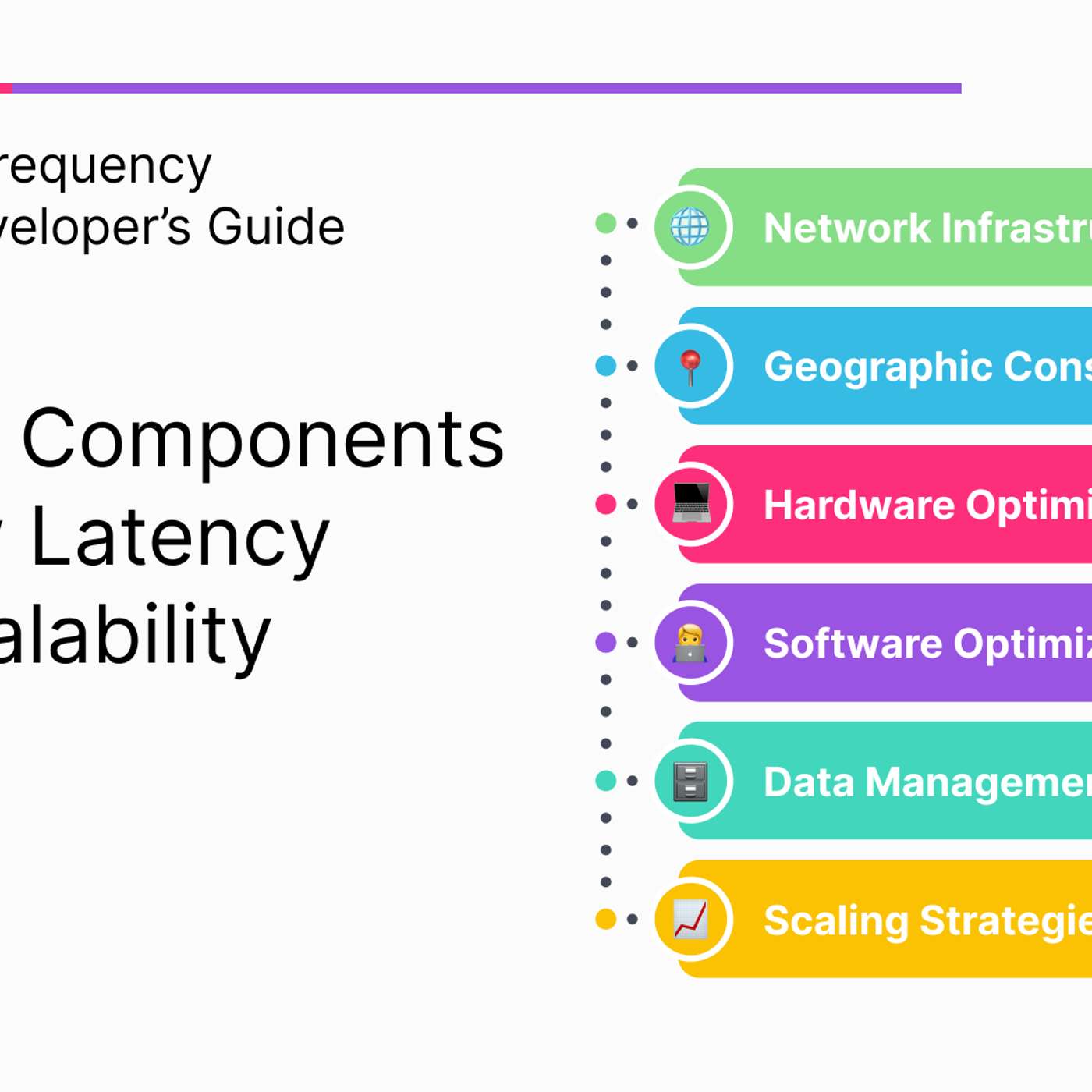
The High-Frequency Trading Developer’s Guide: Six Key Components for Low Latency and Scalability
Description
This story was originally published on HackerNoon at: https://hackernoon.com/the-high-frequency-trading-developers-guide-six-key-components-for-low-latency-and-scalability.
High-frequency trading (HFT) relies on complex algorithms to profit from small price discrepancies, requiring ultra-low latency and high-speed order execution.
Check more stories related to finance at: https://hackernoon.com/c/finance.
You can also check exclusive content about #high-frequency-trading, #infrastructure, #optimization, #data-management, #hft-hardware, #hft-infrastructure, #hft-developer's-guide, #hft-low-latency, and more.
This story was written by: @pavelgrishin. Learn more about this writer by checking @pavelgrishin's about page,
and for more stories, please visit hackernoon.com.
High-frequency trading (HFT) relies on complex algorithms to profit from small price discrepancies, requiring ultra-low latency and high-speed order execution. Achieving this involves optimizing network infrastructure, co-locating servers near exchange data centers, and using advanced hardware like FPGAs. Key components include minimizing network, software, and hardware latency through techniques like kernel bypass, efficient programming languages, and high-speed data storage solutions. Effective strategies involve scaling, real-time data processing, and continuous performance monitoring. This guide outlines best practices to ensure HFT systems are optimized for speed, reliability, and scalability.