Episode Details
Back to Episodes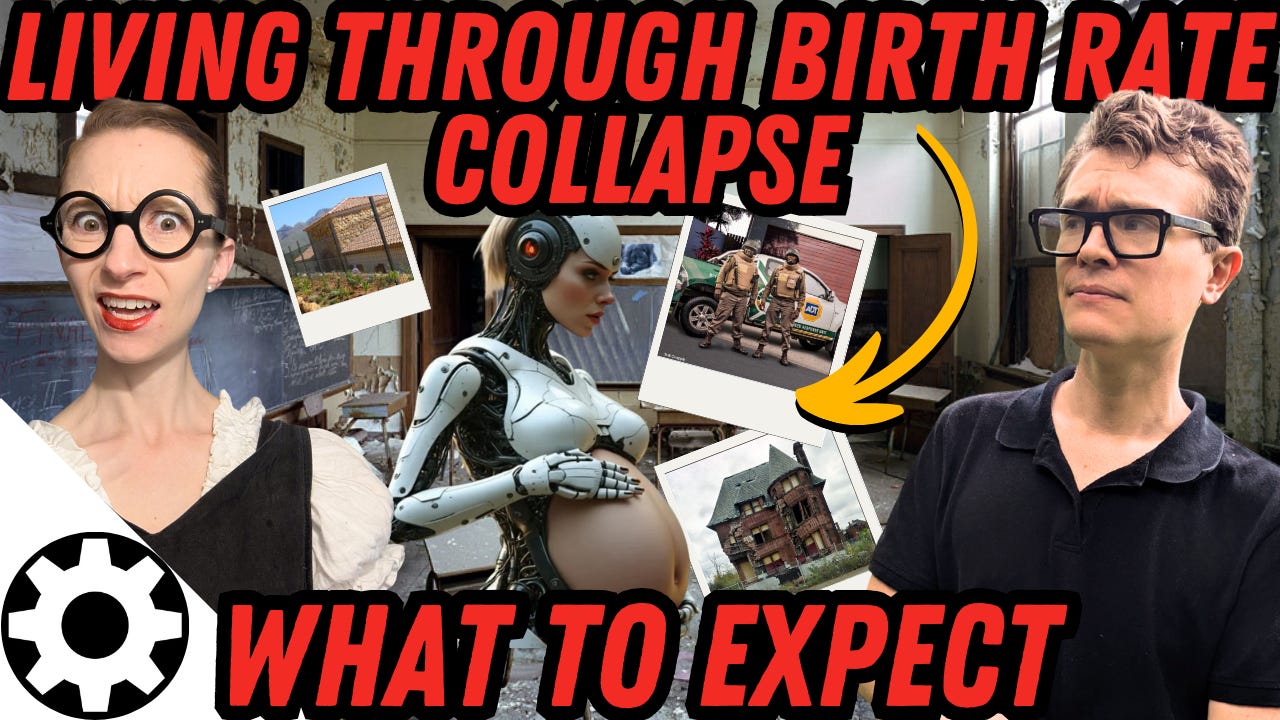
What Does A Birth Rate Collapse Future Look Like?
Description
In this episode, Malcolm and Simone explore the onset and implications of demographic collapse. From dystopian AI-managed cities to the technological advancements in artificial wombs, the Collinses discuss the possible futures and scenarios we might face in the next 150 years. The conversation includes detailed insights into how collapsing demographics will impact everything from urban infrastructure to social security. By examining current examples from cities like Detroit and nations like China, they predict what life could be like in the coming decades. The couple also outlines practical steps to prepare for a radically changing world economy, including advice on financial diversification, medical self-care, and home security. Whether it’s the bizarre concept of humanoid robots carrying artificial wombs or the perilous future of nationalized healthcare and social security, this episode aims to provide a comprehensive guide to navigating the uncertainties ahead.
Episode Transcript:
Simone Collins: [00:00:00] Hello, Malcolm. I'm so excited to be with you today because we are going to talk about what it's actually like to live through demographic collapse, which really matters because. It's already kind of starting. As William Gibson said, the future is here.
It's just not evenly distributed. We're gonna go through the good, the bad, the ugly. And I think we're gonna start off with the weird, like artificial wounds being developed in robot humanoid form. So it's gonna fun.
Malcolm Collins: This is in China, but this is happening and I, I'll argue that it's probably not real. It's 100% almost certainly not real, but still I'm very artificial ones are being developed.
But what I I, the core point of this episode that we're gonna be going over with you guys. Is, what does it actually feel like to live through a demographic collapse, apocalypse scenario? Mm-hmm. What does the world look like in 150 years? And what, and, and keep in mind we're we will be modifying this with what does this look like?
Positive AI timelines in neutral AI timelines because it's a huge modifier on how this plays out is ai. You know, you Yeah. [00:01:00] Although
Simone Collins: in some ways AI, I'm gonna argue is gonna make things worse, faster for people, so, oh, I agree. It
Malcolm Collins: absolutely will. But, but what I mean here is in my AI scenarios was in the original.
Timeline. AI doesn't come online enough to fix everything. And you get a post apocalypse. It'll create some for R Fab AI that, that have this scenario eventually. But anyway this is, this is like. My day SX world, right? Where, you know, our distant descendant 150 years from now is exploring mostly decayed buildings with like a, a slap drone, right?
And cities, you can't even walk in them because they're so dangerous. 'cause things can collapse. What if the AI comes online and decides to keep everything up and running? Right. And so it as a function of just, its, its maintenance function ends up keeping up all the roads in all the cities and you just end up with like eerily empty cities with like a very large in bustling like Orthodox Jewish quarter.
But like everything outside of that is, is, is mostly just empty [00:02:00] policed by AI drones. So you can't go out and like break the law or steal something. That could be the very weird and real future that our distant descendants could be living through. So let's talk about what these different futures could look like.
Simone Collins: Yeah. And since this just came out in the news and we've gotta talk about it because. This is how things are gonna get weird. Probably not through this method, but through others. Yeah. Some Chinese scientist has, has announced that he's going to create a humanoid robot that will gest state humans according to chosen Biz.
Listen Now
Love PodBriefly?
If you like Podbriefly.com, please consider donating to support the ongoing development.
Support Us