Episode Details
Back to Episodes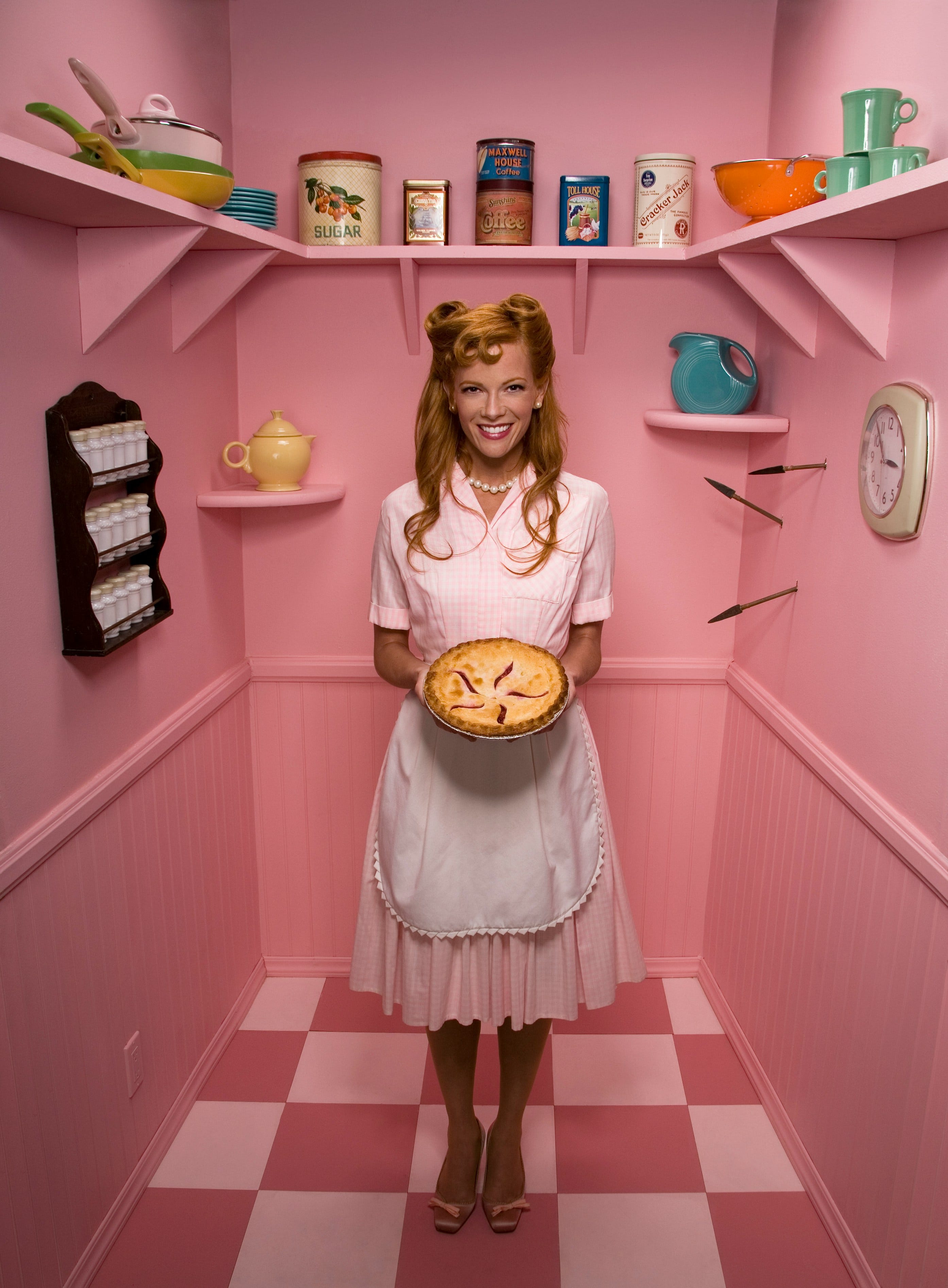
Why Liberation Can’t Be Packaged as Hustle or Homemaking
Description
As a kid, when non-Evangelical adults would ask me what I wanted to be when I grew up, I was always confused. Why ask when the correct answer was clearly “homemaker”?
Certain aspects of the job were appealing. I could exert control over the domestic sphere—things like meal planning, child rearing, decor, and my personal favorite, home organization. There’d be no pointless meetings and good job security.
Fresh out of college, I was lucky to marry a great guy, who (after I put him through grad school) earned enough to support our fledgling family. But while I was ecstatic to become a mother, being home with a baby all day was not, let’s say, as stimulating as I’d imagined.
Heretic Hereafter is a reader-supported publication. To receive new posts and support my work, consider becoming a free or paid subscriber.
Not only was I socially isolated and bored out of my mind, I felt confused: wasn’t this supposed to be God’s plan for families? And if so, why was it driving me up the wall?
What I didn’t realize was that the story I’d absorbed (a woman’s highest calling is full-time motherhood) was a recent invention. Pre-Industrial Revolution, most families lived and worked all in one place. Farms and shops were worked by the whole family. Elementary-aged kids learned their parents’ trades, how to run the home, and how to care for younger siblings.
Only once adults were leaving home to work in factories and large offices during the Industrial Revolution did we start to see the gender norm of upper-class women not working outside the home. (Low-income women have always taken on extra work for money.)
The Industrial Revolution’s emphasis on efficiency and productivity elevated certain types of work over others: work that made products which could be sold was deemed more important than maintenance or care work. Under neoliberal capitalism, work is valued primarily in terms of money—not in family or community necessity.
As a woman, I was presented with two choices: make money via Lean In-girlboss capitalism or opt into full-time motherhood.
But neither solution really satisfied my own ambitions, nor the needs of my family/ community. Lefty girlbosses (Sheryl Sandberg chief among them) conveniently ignored their reliance on other women (usually women of color, always low-income) to take care of the domestic and care work they were too busy/important to do. Not to mention that communities (and especially public schools) rely heavily on the unpaid labor of mothers.
Meanwhile, the Religious Right’s take on full-time motherhood/tradwifery has myriad issues. They, at once, elevate the value of unpaid domestic work (yay!) while also strictly reassuring us that men are biologically incapable of performing it (boo!)
It’s a thoroughly hypocritical argument: this work is sooooo important that men just have to do something more stimulating/prestigious/well-paid.
Masculinity is equated with earning enough money to support a family, while femininity equals “being taken care of” financially while being a 24/7 domestic servant with no breaks or benefits. Men in such arrangements get to enjoy the benefits of capitalism and the gift economy without ever labeling it as such (or needing to reciprocate.)
It’s a system ripe for abuse. Even among full-time mom friends in “good” marriages I’ve heard of women being told they didn’t get a vote in major family decisions because they “don’t earn any money.”
Perhaps it makes sense, then, that marriage and birth rates have been falling for decades. We’re feeling the squeeze of capitalism and rising inequality, with less community to call upon for