Episode Details
Back to Episodes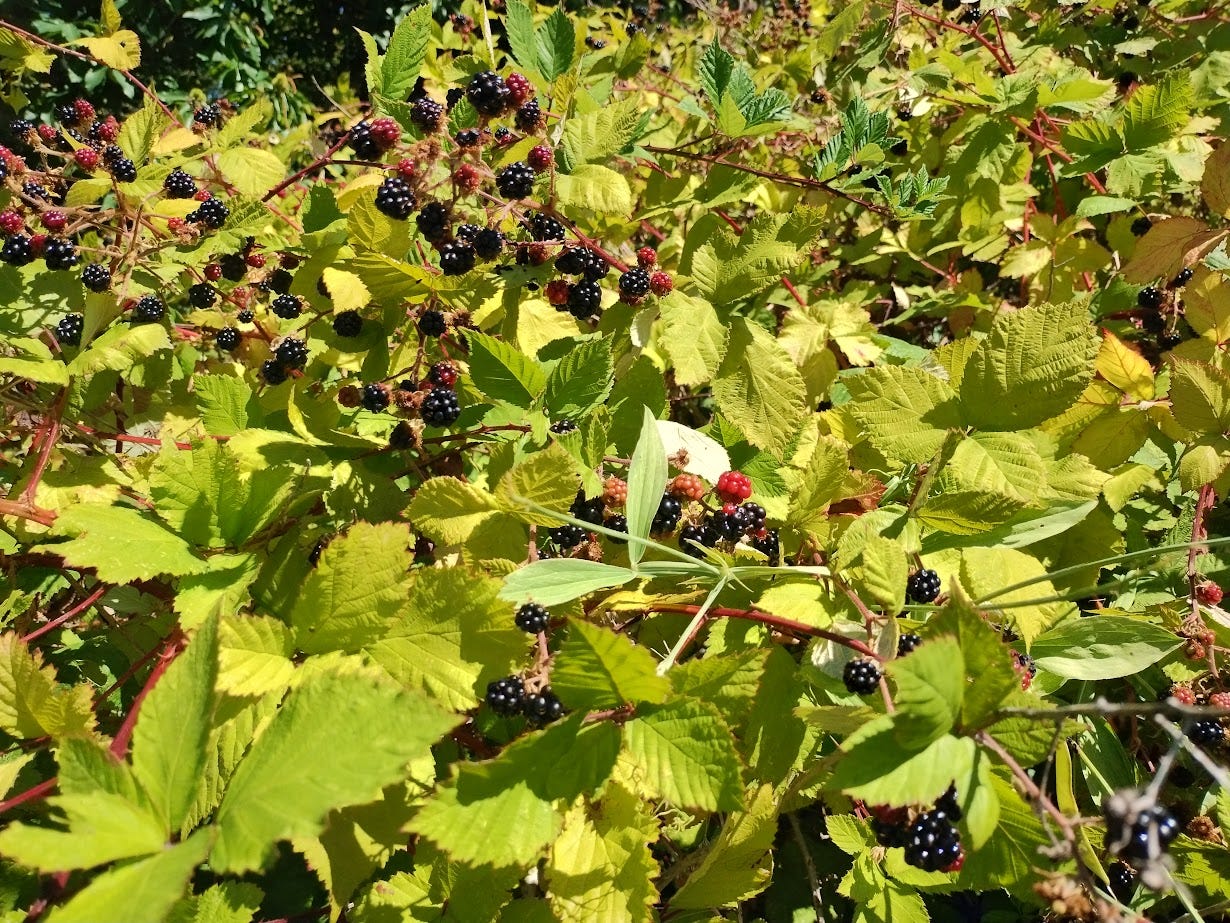
Blackberries Can Change the World
Description
Did you miss part one of this topic? You can find it here.
Confession: I hate the phrase “scarcity mindset.” I do a fair amount of work in lefty education advocacy circles and if there’s two things that are guaranteed at any such gathering, it will be a.) some weird ice breaker involving coloring and b.) the phrase “scarcity mindset.”
Is there a $100 million dollar budget deficit in our school district? That’s just a scarcity mindset. Our afterschool program is being cut? Seek abundance! This was especially egregious during pandemic school closures. I was stunned to hear many respected educational advocates suddenly saying that kids were learning plenty while schools were closed.
Too often this phrase feels like a way to dodge the problem before us and gesture vaguely at “the system” while paying lip service to some far-off day when taxes will be fair and we won’t need prisons, and all children will attend free, full-day anti-racist Montessori outdoor school, complete with organic, vegan lunch.
Heretic Hereafter is a reader-supported publication. To receive new posts and support my work, consider becoming a free or paid subscriber.
But it’s August now, and the Pacific Northwest is abundant with wild blackberries. When I first moved to Seattle and began foraging them, I always made sure to be clearly on public property and not to pick a bush clean. Always I was anxious that some property owner would appear and accuse me of stealing.
Of course, no one has ever cared. We are overflowing with blackberries. We have more than any person could ever eat. That’s abundance.
In The Serviceberry, Robin Wall Kimmerer delineates between gift economies and capitalism. Gift economies operate on a principal of abundance, while capitalism requires scarcity—you can’t price and sell something that’s freely available.
Unless you can manipulate people into buying it.
Capitalism creates scarcity. Marketing fools us into thinking that bottled water is better than tap, that blackberries from the store are superior to the ones growing on our street.
Hierarchies create scarcity. Having food, clothing, and shelter isn’t enough, we have to have trendy and fashionable items. It’s not enough that college has become widely accessible, it’s Ivy League or bust for our kids.
It’s as if we distrust abundance. Is this the scarcity mindset everyone is always telling me about? Is it possible to break free of this mentality?
The authors of The Cultural Contradictions of Neoliberalism would say so. In this paper, the authors posit that there are four categories of reaction to neoliberal capitalism:
* Strivers: these folks believe they can make it; they just need to try a little harder, find the right productivity hacks, align their chakras, or maybe go back to school? The authors also put those interested in Wellness and Self-Help (WASH) culture into this category, and talk about how wellness can become a pipeline to more dangerous ideologies (*cough* RFK Jr. *cough*)
* Innovators: these people see the problems in the system and look for alternative arrangements. We’ll come back to them in a sec.
* Dropouts: these people have lost hope. They don’t see a path towards getting what they want in life and often leave the workforce or are extremely dissatisfied/burnt out by work. The authors attribute many “deaths of despair” to thi