Episode Details
Back to Episodes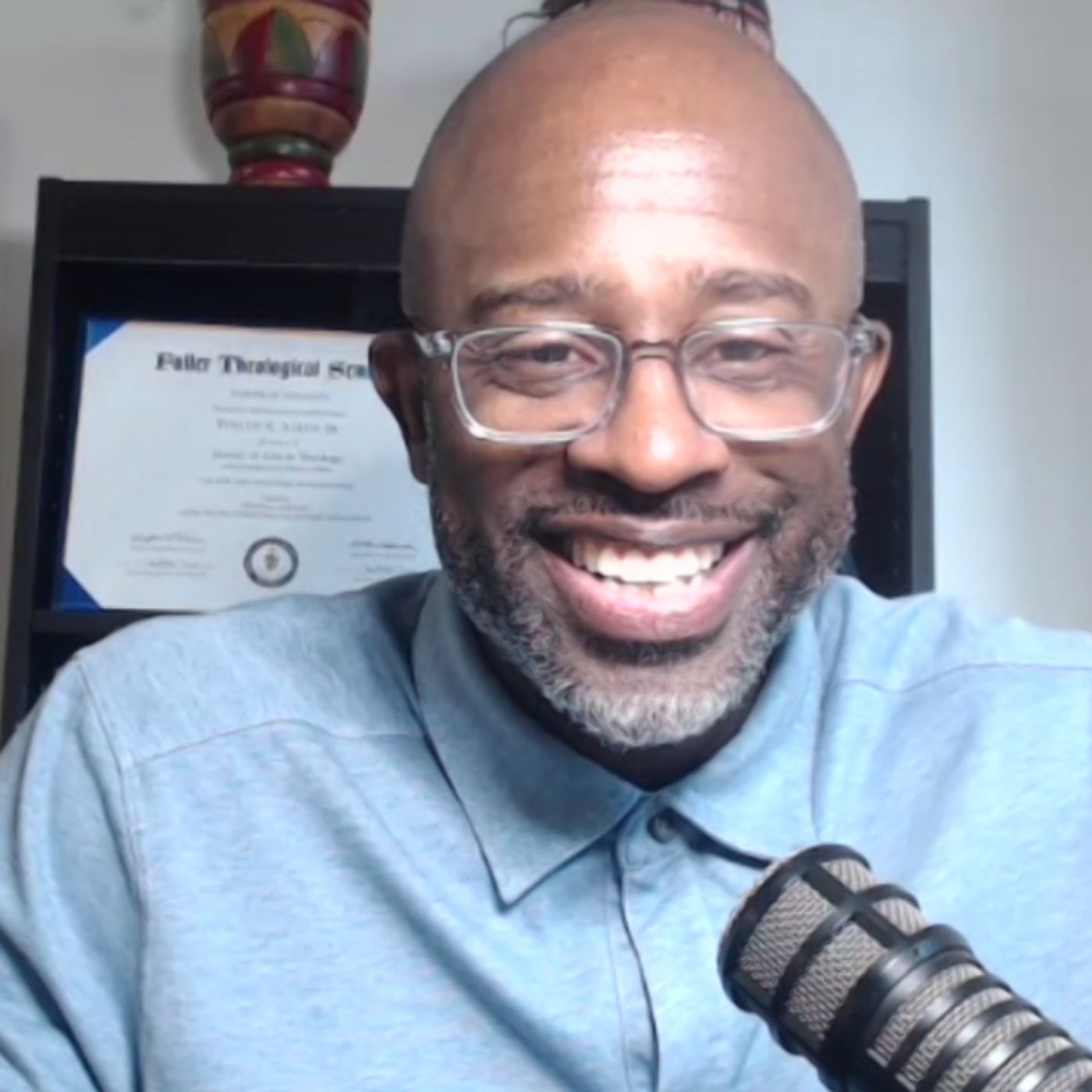
Phil Allen Jr on Racial Trauma, Resilience and Solidarity
Description
Phil Allen Jr is author of Open Wounds, a filmmaker, theologian, poet and PhD Candidate. He is founder of Racial Solidarity Project, an organization committed to justice through solidarity, community building and healing.
You can connect with Phil work at: www.philallenjr.com
Twitter @philallenjr
Instagram: www.instagram.com/philallenjrig/
facebook www.facebook.com/philallenjr
Get his new book is Open Wounds: A Story of Racial Tragedy, Trauma and Redemption
Check out his podcast "Intersections with Phil Allen Jr." wherever you get your podcasts.
Support his organization Racial Solidarity Project committed to justice through solidarity, community building and healing.
We start our conversation by checking in with Phil on how his life has been impacted by COVID. Danielle asks him to share how he’s doing during the pandemic and where he is located. Phil is located in Pasadena, CA. He is perpetually quarantined. He reads and goes out running, when out he wears a mask and is vaccinated. He’s been good through the pandemic. He’s highly introverted, learning this about himself about 7 years ago. The pandemic hasn’t affected him emotionally or mentally but in fact has allowed him to be very productive—he’s has nowhere to go, nowhere to be. He said since it hasn’t been too bad for him there, he’s more concerned with others.
His new book Open Wounds came out this year in February; Danielle asks how the process was to write the book.
Phil got the idea write book while taking a class at Fuller Seminary called Theology and Ethics of Martin Luther King. They were watching the series Eyes of the Prize about the Civil Rights Movements and he saw a picture of Emmett Till. Right then and there he made the connection to his grandfather’s murder (which happened in 1953)—he imagined that’s how his grandfather would have looked. He was in the river several days before his grandfather’s body floated up and they found him.
“I can’t see Emmett Till without seeing my grandfather.”
The response of his classmates really surprised him – he didn’t think it would matter to them but they were in tears. It was then that he realized he needed to tell this story. But he didn’t start writing right away. He went to Sundance [Institute] for a filmmaking class on directed reading, which turned out to be the most impactful class he has taken in his PhD studies because it’s produced the most work, and he did the same thing: He told the story of his grandfather and people were blown away.
He says he had made the content of film they were studying at Sundance real for his classmates. It became personal now because he had shared his family’s story. They encouraged him to make a film. He didn’t know he was going to make a film when he took that class. He didn’t start writing the book until after that. He outlined everything, wrote four chapters but had no prospects and thought maybe he would self-publish. A professor of Phil’s advocated for him with Fortress Press (publisher) and sent what he had over, they loved it. Phil said he has a tendency to start something and not finish it. With half the book written and having a full class load, he didn’t want to keep working on the book unless it was going to be published (not self-published). Once he signed the contract with Fortress Press, he wrote the rest of the book in three months. It was at the start of the pandemic, went through four rounds of edits, and got it done for release in Fe