Episode Details
Back to Episodes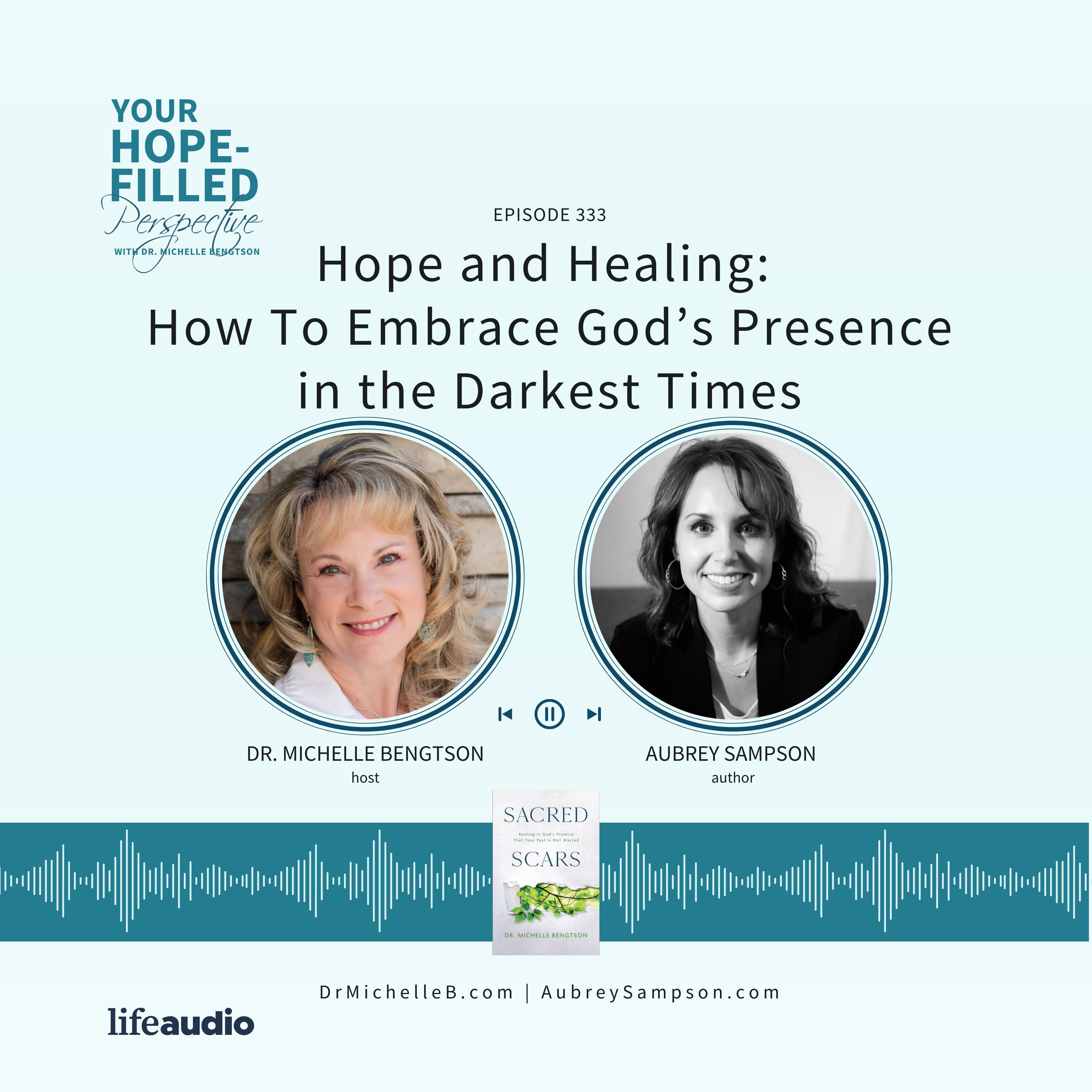
Your Hope-Filled Perspective with Dr. Michelle Ben... - Hope and Healing: How To Embrace God’s Presence in the Darkest Times
Description
Episode Summary:
Not one of us is exempt from loss. We lose what we expected, what we thought we believed, what we dreamed, our sense of security or identity. We lose friendships. We lose people we love.
What do we do with the disruption, the devastation of loss? How do we survive unpredictable grief, ongoing suffering, and the questions about God that happen in the dark nights of our lives? None of us want to be in seasons of sorrow. But sometimes the dark nights of life and faith have strange gifts. On the other side, we find ourselves free from the superficial in our lives. We discover peace and the assurance that we are loved. And we may experience a deeper, more honest relationship with the God we found in the dark.
In this episode, I sit down with pastor and author Aubrey Sampson to talk about navigating deep loss and learning to sense God’s presence in the darkest seasons.
Quotables from the episode:
- For me, writing was a prayer, writing was an anchor to God, writing was trying to figure out what in the world was happening when everything felt very out of control. And ultimately, writing did become a lifeline to hope in the midst of something that felt very hopeless.
- Grief is also very difficult to find language for, to explain, because it can feel like so many jumbled, opposed, and poignant metaphors or events all at once. Grief is like jumping on a cheerless trampoline, a constant disorientation between adrenaline and gravity. Grief is an empty, dilapidating playground, a sad, stoic icon of lost memories and what could have been. Grief is a firestone, full of uncontrollable destruction and rage and simultaneously a mudslide, sloppy, shocking and unstoppable. Grief is a planet, vast, cold, and mysterious, and grief is somehow also a roly-poly pill bug, often unnoticed by others, unarmored and earthy.
- The questions I was asking felt like almost like I described them in the book as like baby-deer questions. They just felt very vulnerable to me to be asking a God that I have centered my life around questions like, "Are you real? Is your arm too short to heal cancer? Where are you? Are my prayers hitting the ceiling fan or are they actually going to your ears, Lord?" I was asking some questions that I sort of felt like I should not be asking these, not because I felt ashamed. I know God can handle our hard questions. It wasn't that. It was just like, I should be beyond these questions by now. But the grief was so tender, Michelle, and so close.
- Some of my prayers were like, “how could you? Like, how dare you?” And part of it was her journey. She experienced healing from cancer about a year in and they didn't call it remission yet. But the doctors did say, this is great, cancer -free, the chemo's done what it should, and then about three months later, it came back with a vengeance. So that was some of it too. The whiplash of it made me ask God some really difficult questions. Like, “can you do anything good in this, God? Like, this feels so lacking in goodness, so lacking in hope, so lacking in beauty you are taking a mom away from three young sons you are taking a daughter away from parents a sister away from sister. Can your goodness reach even into this place?”
- There's just so many situations that prompt those honest gut level questions. Like, I know you God, but I don't understand. I don't understand and God often doesn't answer our why, but he does invite us to be honest with our questions. I mean, I think about so many in the Bible and some of the questions they ask, you know, it'd be easy to say, well, how could they dare? But we ask our own variety of those same questions. And I find it helpful to read those questions in scripture because, you know, you find some comfort in, "Okay, these were historical, ecumenical, faithful followers of God throughout history, and yet they are asking God the s