Episode Details
Back to Episodes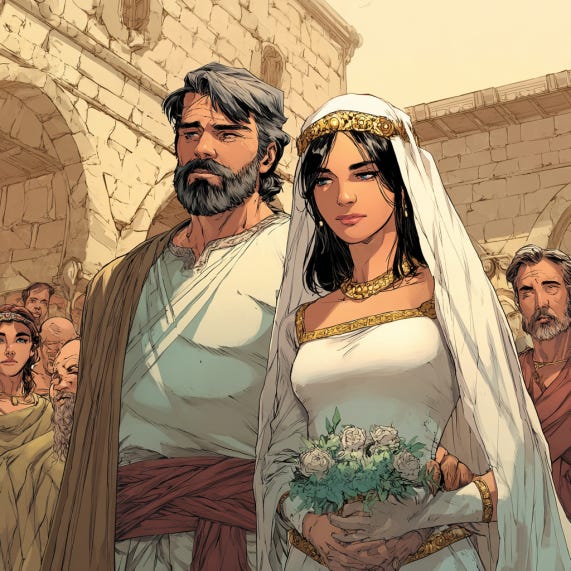
The Great Divorce (Hos 1:4-7).
Description
Prayer
Heavenly Father, I praise and thank you for this new day, I have done nothing to deserve it. For all of your manifold mercies, I confess that I have rendered a poor return unto you. How can I repay you, Lord, for all of your goodness to me? Help me, O Lord. I seek you this day, I want to walk before you and be blameless, I want to worship you in spirit and in truth. And yet my flesh constantly wages war against me. Be merciful to me, O Lord, do what work you must, please lead me in the way everlasting. Open my eyes that I may see wonderful things in your word. In Jesus’ name, Amen.
Reading
Hosea 1:4-7.
“And the Lord said to him, “Call his name Jezreel, for in just a little while I will punish the house of Jehu for the blood of Jezreel, and I will put an end to the kingdom of the house of Israel. And on that day I will break the bow of Israel in the Valley of Jezreel. She conceived again and bore a daughter. And the Lord said to him, “Call her name No Mercy, for I will no more have mercy on the house of Israel, to forgive them at all. But I will have mercy on the house of Judah, and I will save them by the Lord their God. I will not save them by bow or by sword or by war or by horses or by horsemen.””
Meditation
God had been patient with his people. He had endured adultery on the very first night of their union as the people built for themselves a golden calf (Exodus 32), and as you read the history of the people, it doesn’t get any better. Through Joshua, Judges, First and Second Samuel, and right through the book of Kings it is a sordid history of Israel’s shocking faithlessness, and God’s amazing faithfulness. But the time had at last come, the Northern Kingdom of Israel was now hardened in its spiritual adultery. God’s long patience had at last come to an end. Judgment was imminent.
Hosea was called to be a living metaphor of God’s covenant with Israel, and so as Hosea and Gomer have children together in verses two through nine, what we see is that the children themselves are symbolic of the judgments of God. As the three children are born to them in the course of time, three judgments are prophetically declared through the names that God tells Hosea to give to these children.
As the first son is born, in verse four we read: “Call his name Jezreel, for in just a little while I will punish the house of Jehu for the blood of Jezreel, and I will put an end to the kingdom of the house of Israel. On that day I will break the bow of Israel in the Valley of Jezreel.” Israel had been an unfaithful wife, and God was now enforcing the death penalty for adultery as the kingdom itself would be ended.
Now to understand this properly, we need to understand what the name Jezreel refers to. Jezreel was quite infamous in the history of the Northern Kingdom. It was the place where King Ahab, urged on by Jezebel, had slaughtered Naboth and taken his vineyard. And it was also the place where later, King Jehu had slaughtered the servants of Baal and others as well – and yet, in spite of that, Jehu persisted in idolatry – spiritual adultery. And so the reason God refers to Jezreel in verse four is because in a symbolic way, it represents some of the worst of Israel’s sins. Jezreel, if you like, is a symbol of Israel’s sin.
The reference to Jehu specifically is because he was the very best of the kings of the Northern Kingdom. As you read the history of the Northern Kingdom, every king without fail is an idolater and faithless to God. And so even Jehu, who rightly slaughtered the prophets of Baal, was guilty. The very best of the northern kings still had blood on his hands, that’s what Hosea’s prophecy is referring to here.
And so in calling the child Jezreel, the entirety of Israel’s guilt is symbolised and summarised, and because of their unrepentant guilt, God would put an end to this kingdom.<