Episode Details
Back to Episodes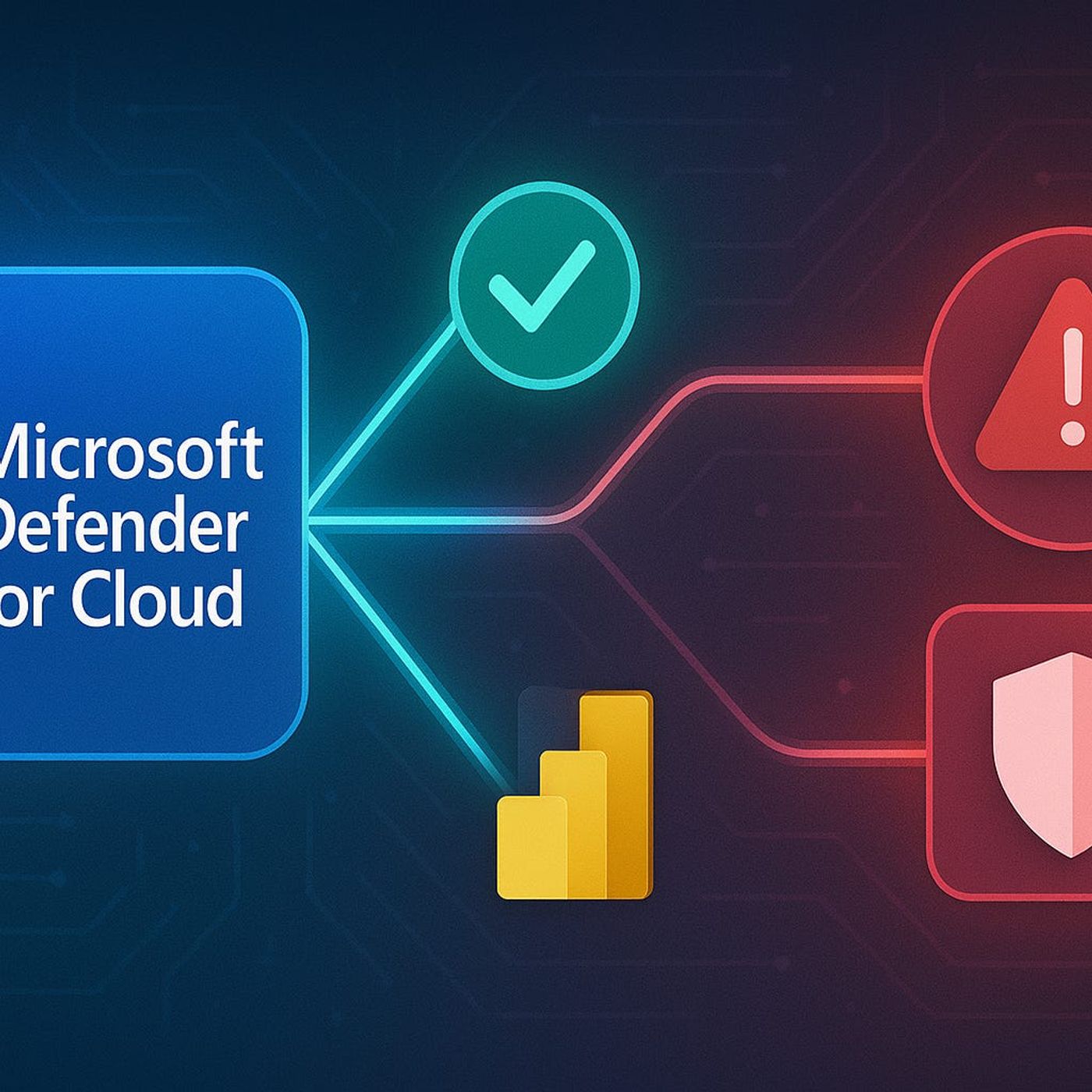
How to Monitor Compliance in Microsoft Defender for Cloud: From Static Frameworks to Real‑Time, Actionable Cloud Posture
Season 1
Published 11 months, 2 weeks ago
Description
How to Monitor Compliance in Microsoft Defender for Cloud
Compliance isn’t about filling binders, it’s about proving your controls still work while your cloud changes every day. Manual reviews and quarterly audits can’t keep up with constantly shifting workloads—by the time you’ve finished one round of evidence collection, your environment has already moved on. In this episode, we show how Microsoft Defender for Cloud can become your real‑time compliance radar: continuously mapping frameworks like ISO, NIST or PCI onto live Azure resources, highlighting where your environment has drifted away from policy, and turning static checklists into a living posture you can actually trust between audits.
We start with why “checklist compliance” routinely fails. On paper everything looks perfect: encryption “enforced,” access “restricted,” network rules “documented.” But as soon as new subscriptions, storage accounts or services appear, those paper truths go stale. You’ll hear the story of organizations that pass an audit in March and discover in May that key workloads are misconfigured—exposing exactly the controls they just claimed were in place. The lesson: frameworks like ISO 27001 and NIST don’t just ask for policies, they demand proof that controls are active and enforced in real time, not frozen in last quarter’s PowerPoint.
Then we move from frameworks to insight. Defender for Cloud ships with many regulatory standards pre‑mapped, so you can see at a glance how your resources align with NIST, PCI or ISO—without waiting for external assessments. But using every control in every framework creates noise and duplicates, so we walk through how to tune those initiatives: keep the controls that match your real obligations, switch off the ones that don’t apply, and add custom checks that reflect your own stricter internal rules. That way your compliance score stops being a generic “good or bad” number and becomes a focused view of whether your environment actually matches the policies your organization cares about.
Finally, we connect Defender’s dashboards to daily operations. A compliance score is only useful if someone owns the next step. You’ll learn how to turn failed controls into prioritized remediation tasks, where automation (Policies, Azure Policy initiatives, and Power Automate) can enforce fixes at scale, and how to build a continuous loop: detect drift, assign owners, remediate, and prove improvement over time. By the end, you’ll see how Defender for Cloud can act as your compliance “early‑warning system,” letting you walk into audits with confidence because you’ve been watching and fixing issues all year—not scrambling for evidence at the last minute.
WHAT YOU’LL LEARN
Compliance isn’t about filling binders, it’s about proving your controls still work while your cloud changes every day. Manual reviews and quarterly audits can’t keep up with constantly shifting workloads—by the time you’ve finished one round of evidence collection, your environment has already moved on. In this episode, we show how Microsoft Defender for Cloud can become your real‑time compliance radar: continuously mapping frameworks like ISO, NIST or PCI onto live Azure resources, highlighting where your environment has drifted away from policy, and turning static checklists into a living posture you can actually trust between audits.
We start with why “checklist compliance” routinely fails. On paper everything looks perfect: encryption “enforced,” access “restricted,” network rules “documented.” But as soon as new subscriptions, storage accounts or services appear, those paper truths go stale. You’ll hear the story of organizations that pass an audit in March and discover in May that key workloads are misconfigured—exposing exactly the controls they just claimed were in place. The lesson: frameworks like ISO 27001 and NIST don’t just ask for policies, they demand proof that controls are active and enforced in real time, not frozen in last quarter’s PowerPoint.
Then we move from frameworks to insight. Defender for Cloud ships with many regulatory standards pre‑mapped, so you can see at a glance how your resources align with NIST, PCI or ISO—without waiting for external assessments. But using every control in every framework creates noise and duplicates, so we walk through how to tune those initiatives: keep the controls that match your real obligations, switch off the ones that don’t apply, and add custom checks that reflect your own stricter internal rules. That way your compliance score stops being a generic “good or bad” number and becomes a focused view of whether your environment actually matches the policies your organization cares about.
Finally, we connect Defender’s dashboards to daily operations. A compliance score is only useful if someone owns the next step. You’ll learn how to turn failed controls into prioritized remediation tasks, where automation (Policies, Azure Policy initiatives, and Power Automate) can enforce fixes at scale, and how to build a continuous loop: detect drift, assign owners, remediate, and prove improvement over time. By the end, you’ll see how Defender for Cloud can act as your compliance “early‑warning system,” letting you walk into audits with confidence because you’ve been watching and fixing issues all year—not scrambling for evidence at the last minute.
WHAT YOU’LL LEARN
- Why traditional, document‑driven compliance breaks down in fast‑moving cloud environments.
- How Defender for Cloud maps frameworks like ISO, NIST and PCI onto your actual Azure resources.
- How to customize built‑in regulatory standards so they reflect your real policies, not just generic templates.
- How to turn compliance findings into continuous remediation and evidence, instead of one‑off audit projects.
Listen Now
Love PodBriefly?
If you like Podbriefly.com, please consider donating to support the ongoing development.
Support Us