Episode Details
Back to Episodes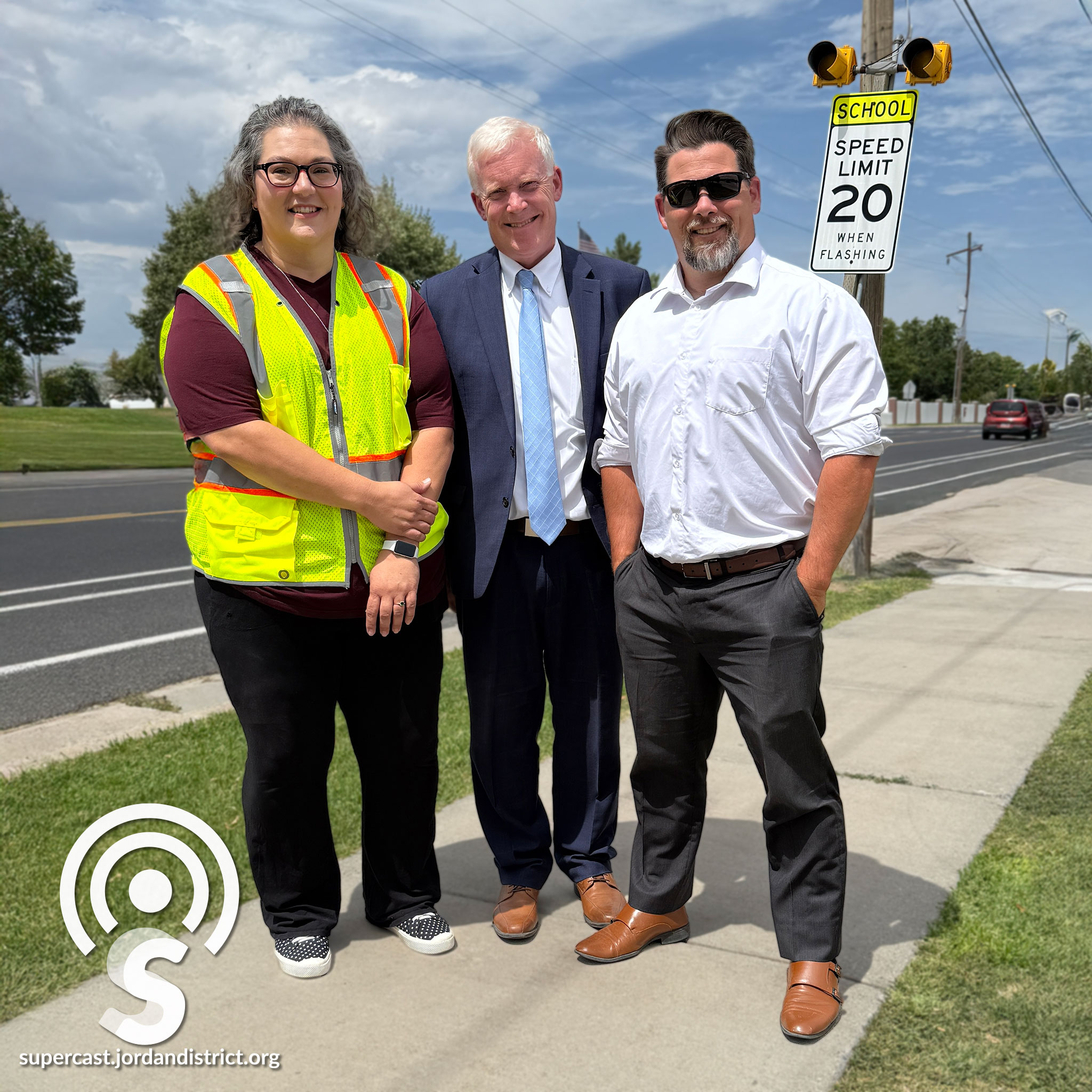
Let’s All Stop, Look, and Listen to Keep Kids Safe Walking to School
Description
It’s that time of year when thousands of students are making their way to school walking eagerly through neighborhoods, along established safe walking routes.
On this episode of the Supercast, find out how we can all work together to better protect young pedestrians and make sure their travel to and from school is safe.
Audio Transcription
[MUSIC]Sarah Elliott:
If we all did what we were supposed to do, the world would be a better place. But it doesn't always work that way. There are distractions and things happen and you've just gotta be aware, no matter which side you're on.
Matt Alvernaz:
What we're looking at is more than just how can we get the kid to school. It's what is the safest route?
Sarah Elliott:
Nothing's more important than keeping these kids safe.
Anthony Godfrey:
Absolutely.
Anthony Godfrey:
Hello and welcome to the Supercast. I'm your host, Superintendent Anthony Godfrey. It's the time of year when thousands of students are making their way to school, walking eagerly through neighborhoods along established safe walking routes. On this episode of the Supercast, find out how we work together to better protect young pedestrians and to make sure their travel to and from school is safe.
Anthony Godfrey:
We're here in front of Oquirrh Hills Middle School to talk about safe walking routes. Introduce yourselves and let's talk about being safe getting to school.
Sarah Elliott:
My name is Sarah Elliott. I'm the crossing guard coordinator for the Riverton City Police Department.
Matt Alvernaz:
I'm Matt Alvernaz, the school safety coordinator for Jordan School District.
Anthony Godfrey:
Sarah, tell me how many crossing guards do you have in Riverton City?
Sarah Elliott:
We have about 46 on our payroll right now.
Anthony Godfrey:
And many people misunderstand this, but actually the cities have the responsibility for coordinating the efforts of crossing guards, not the school districts. Tell me about how all of that works and if someone's hearing this and they're interested in applying, how they do that?
Sarah Elliott:
Right, so usually we're coordinated through the police departments of each city. So usually if you just Google it, you can find it pretty easily. But each police department will have their crossing guard jobs listed.
Anthony Godfrey:
Tell us a little bit about the training that goes into becoming a crossing guard.
Sarah Elliott:
So UDOT has some really great training materials that we use, videos and things, and then mostly just on the job training. Shadow a couple of shifts and then get ready to get out there and keep those kids safe.
Anthony Godfrey:
What are the best tips for students who are crossing the street? Let's start with the students to make sure that they're doing that safely, whether there's a crossing guard there or not.
Sarah Elliott:
For sure, being a responsible pedestrian is super important. The kids need to learn to make eye contact with drivers. Looking both ways obviously, but really trying to make eye contact with the driver to make sure that the driver sees them before they step out into the road.
Anthony Godfrey:
Should they point at their eyes with their fingers and point at the eyes of the driver, Robert De Niro style, I'm watching you?
Sarah Elliott:
It would probably help us out a little bit maybe. Yeah, I might put that on my guard's responsibility.
Anthony Godfrey:
But I have heard that over the years, make eye contact with the driver so you know that they see you.
Sarah Elliott:
Exactly, yeah. Then of course if it's a staffed crosswalk, kids need to wait until the crossing guard will vocally tell them to cross and also signal them to cross and