Episode Details
Back to Episodes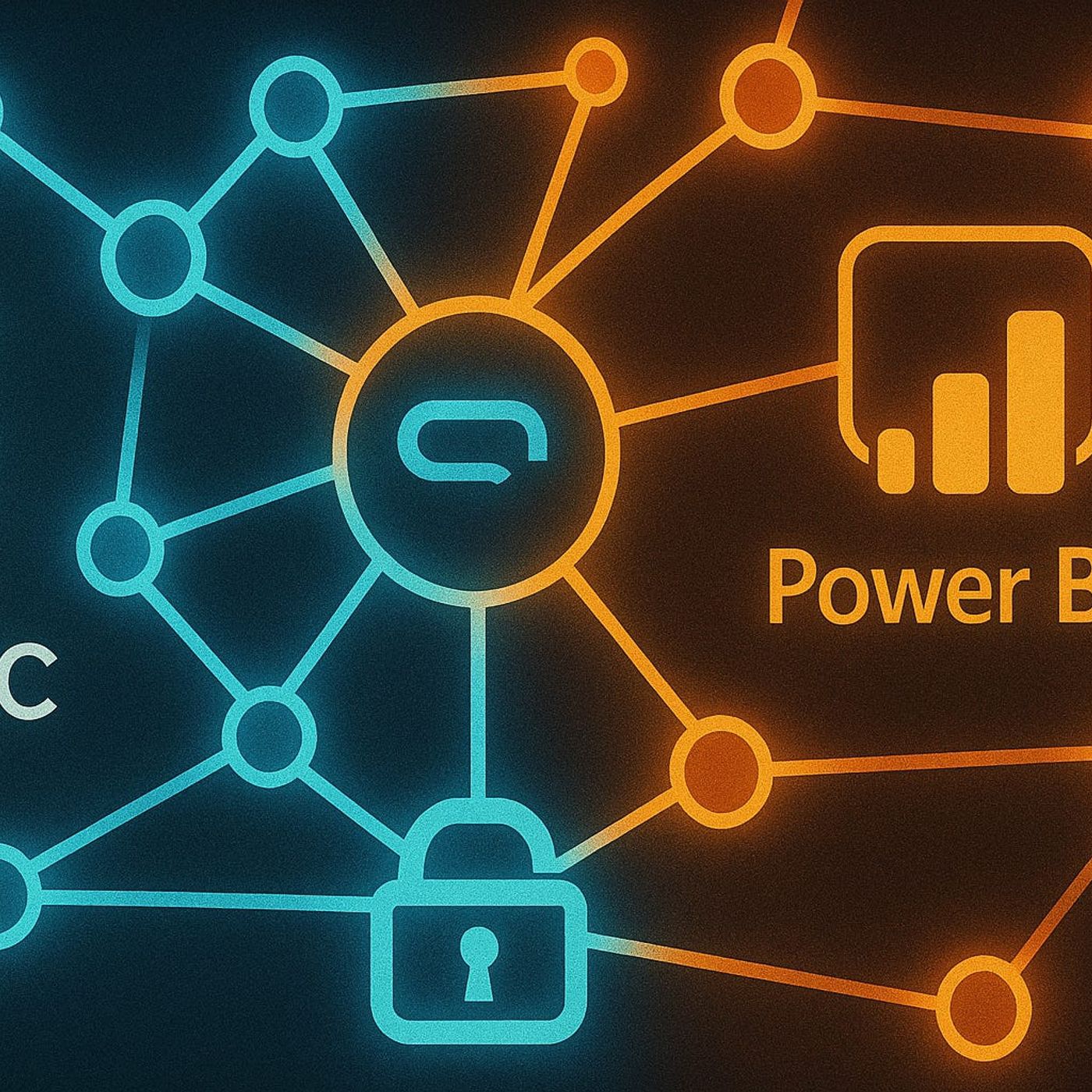
Fabric Lakehouse Governance & Data Lineage: How Microsoft Fabric Tracks Data Flows, Permissions and Audit End to End
Season 1
Published 11 months, 3 weeks ago
Description
Fabric Lakehouse Governance & Data Lineage
Most teams only notice their data lineage when something breaks—a number changes, a column disappears, or a report no longer matches the source. In this episode, we trace the full journey of your data inside Microsoft Fabric’s Lakehouse, from ingestion through transformation into analytics, and show how automatic lineage, permission inheritance and audit trails turn that “invisible middle” into a map you can actually govern.
We start with why modern analytics environments feel like a renovated building rather than a straight hallway. Data doesn’t flow in one simple pipeline; it weaves through pipelines, Lakehouse tables, semantic models and reports, often across multiple workspaces and teams. You’ll hear how Fabric’s built‑in lineage capture turns that maze into a visual chain: every Data Factory pipeline run, every Lakehouse table, every downstream dataset and report are linked automatically, so you can see exactly where a value changed instead of guessing across tools and exports.
Then we connect lineage to permissions and governance. Fabric uses workspaces as the central control point, so the same permission model applies across Lakehouse, semantic models and Power BI reports instead of fragmenting into separate ACLs at every layer. We unpack how permission inheritance means a locked‑down Lakehouse table stays locked when it feeds a dataset or report, reducing security drift and eliminating the classic gap where someone only meant to share a dashboard but accidentally exposed raw data underneath.
Finally, we look at why the audit trail is just as important as access control. With Fabric logging who changed what and when, you can move beyond “check the logs” as a last‑minute panic and treat it as a routine part of operations and compliance. By the end of the episode, you’ll see how lineage, permissions and audit work together: you don’t just know the current state of a dataset, you can reconstruct the full path it took, who touched it along the way, and where to focus your governance rules so they follow the data automatically instead of being maintained by hand.
WHAT YOU’LL LEARN
The core insight of this episode is that governance only really works when it travels with the data. Once Microsoft Fabric captures lineage by default, applies permissions consistently across Lakehouse and analytics, and records who changed what and w
Most teams only notice their data lineage when something breaks—a number changes, a column disappears, or a report no longer matches the source. In this episode, we trace the full journey of your data inside Microsoft Fabric’s Lakehouse, from ingestion through transformation into analytics, and show how automatic lineage, permission inheritance and audit trails turn that “invisible middle” into a map you can actually govern.
We start with why modern analytics environments feel like a renovated building rather than a straight hallway. Data doesn’t flow in one simple pipeline; it weaves through pipelines, Lakehouse tables, semantic models and reports, often across multiple workspaces and teams. You’ll hear how Fabric’s built‑in lineage capture turns that maze into a visual chain: every Data Factory pipeline run, every Lakehouse table, every downstream dataset and report are linked automatically, so you can see exactly where a value changed instead of guessing across tools and exports.
Then we connect lineage to permissions and governance. Fabric uses workspaces as the central control point, so the same permission model applies across Lakehouse, semantic models and Power BI reports instead of fragmenting into separate ACLs at every layer. We unpack how permission inheritance means a locked‑down Lakehouse table stays locked when it feeds a dataset or report, reducing security drift and eliminating the classic gap where someone only meant to share a dashboard but accidentally exposed raw data underneath.
Finally, we look at why the audit trail is just as important as access control. With Fabric logging who changed what and when, you can move beyond “check the logs” as a last‑minute panic and treat it as a routine part of operations and compliance. By the end of the episode, you’ll see how lineage, permissions and audit work together: you don’t just know the current state of a dataset, you can reconstruct the full path it took, who touched it along the way, and where to focus your governance rules so they follow the data automatically instead of being maintained by hand.
WHAT YOU’LL LEARN
- Why data paths in Fabric Lakehouse are more like a maze than a straight pipeline—and how automatic lineage makes that maze visible.
- How Fabric’s workspace‑based permission model and inheritance keep Lakehouse, datasets and reports aligned.
- How lineage metadata becomes the foundation for governance rules, not just pretty diagrams.
- Why a unified audit trail across transformations and access changes is critical for troubleshooting and compliance.
The core insight of this episode is that governance only really works when it travels with the data. Once Microsoft Fabric captures lineage by default, applies permissions consistently across Lakehouse and analytics, and records who changed what and w