Episode Details
Back to Episodes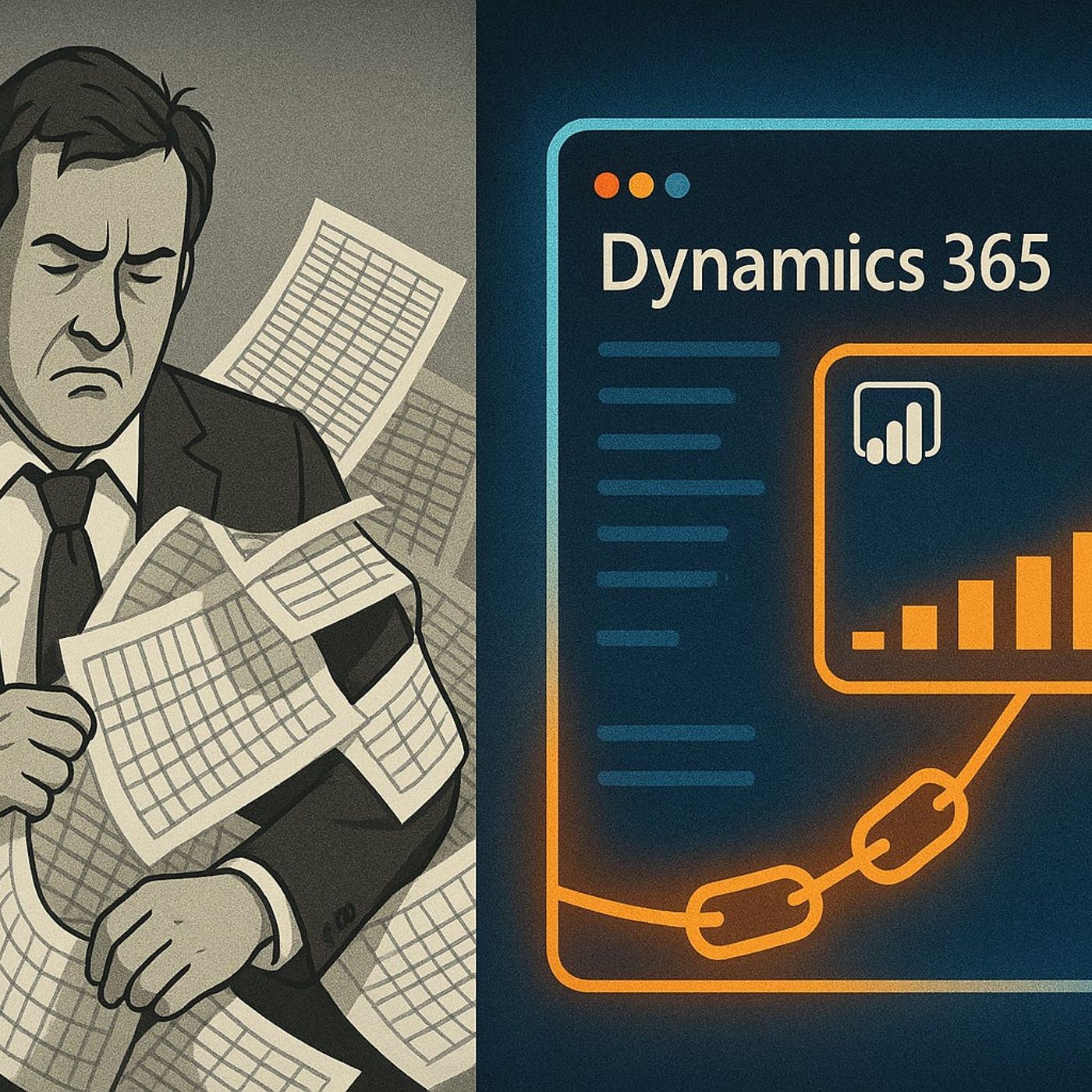
Dynamics 365 Embedded Analytics with Fabric & Power BI
Published 6 months, 2 weeks ago
Description
If you’re still exporting Dynamics 365 data to Excel just to make a chart, you’re losing hours you’ll never get back. What if those insights could appear live, inside the CRM or ERP screens your team already lives in? Today, we’re connecting Dynamics 365 directly to Microsoft Fabric’s analytics models — and then embedding Power BI so your data updates instantly, right where you need it. Forget static spreadsheets. Let’s see how real-time, in-app analytics can change your sales and operations game.When Reporting Feels Like Groundhog DayImagine pulling the same sales or ops report every morning, opening it in Excel, tweaking the formulas just enough to make it work, and then realising that by the time you press save, the numbers are already stale. For a sales manager, that might be this morning’s revenue by region. For an operations lead, it’s the latest order fulfilment rates. Either way, the day starts with the same ritual: download from Dynamics 365, open the spreadsheet template, reapply pivot table filters, and hope nothing in the export broke. It’s a routine that feels productive, but it’s really just maintenance work — updating a picture of the business that’s no longer accurate by the time the first meeting rolls around.In most organisations, this happens because it’s still the fastest way people know to get answers. You can’t always wait for IT to build a new dashboard. You need the numbers now, so you fall back on what you control — a spreadsheet on your desktop. But that’s where the trouble begins. Once the file leaves Dynamics 365, it becomes a standalone snapshot. Someone else in the team has their own spreadsheet with the same base data but a filter applied differently. Their totals don’t match yours. By mid-morning, you’re in a call debating which version is “right” rather than discussing what to do about the actual trend in the numbers.Those mismatches don’t just appear once in a while — they’re baked into how disconnected reporting functions. One finance analyst might be updating the same report you created yesterday with their own adjustments. A territory manager might be adding in late-reported deals you didn’t see. When you eventually try to combine these different sources for a management review, it can take hours to reconcile. A team of six working through three separate versions can lose half a day chasing down why totals differ by just a few percentage points. By the time it is sorted, whatever advantage you had in acting early is gone.And this isn’t just about spreadsheets. Even so-called “live” dashboards can end up pulling stale data if they live in a different tool or need to be manually refreshed. Maybe your Dynamics 365 instance syncs with a separate analytics platform overnight. That means the sales pipeline you’re looking at during a 9 a.m. meeting is really from yesterday afternoon. In fast-moving environments, that delay matters. A prime example: a regional sales push for a limited-time promotion that didn’t register in the report until after the campaign window closed. Because leadership didn’t see the lagging numbers, they didn’t deploy extra resources to help — and the shortfall in orders was baked in before anyone could respond.Over time, this kind of lag erodes trust in the numbers. When teams know the stats aren’t current, they start making decisions based on gut feel, back-channel updates, or whatever data source they like best. It becomes harder to align on priorities. People hedge their bets in meetings with “well, according to my numbers…” and nobody’s quite sure which dataset should decide the next move. The more these manual steps pile up, the more your so-called data-driven culture turns into a cycle of checking, re-checking, and second-guessing.The irony is, none of this points to a skill gap or a motivation problem. The people involved are experienced. The processes they follow might even be documented. The real block is that operational systems and analytical systems aren’t wired