Episode Details
Back to Episodes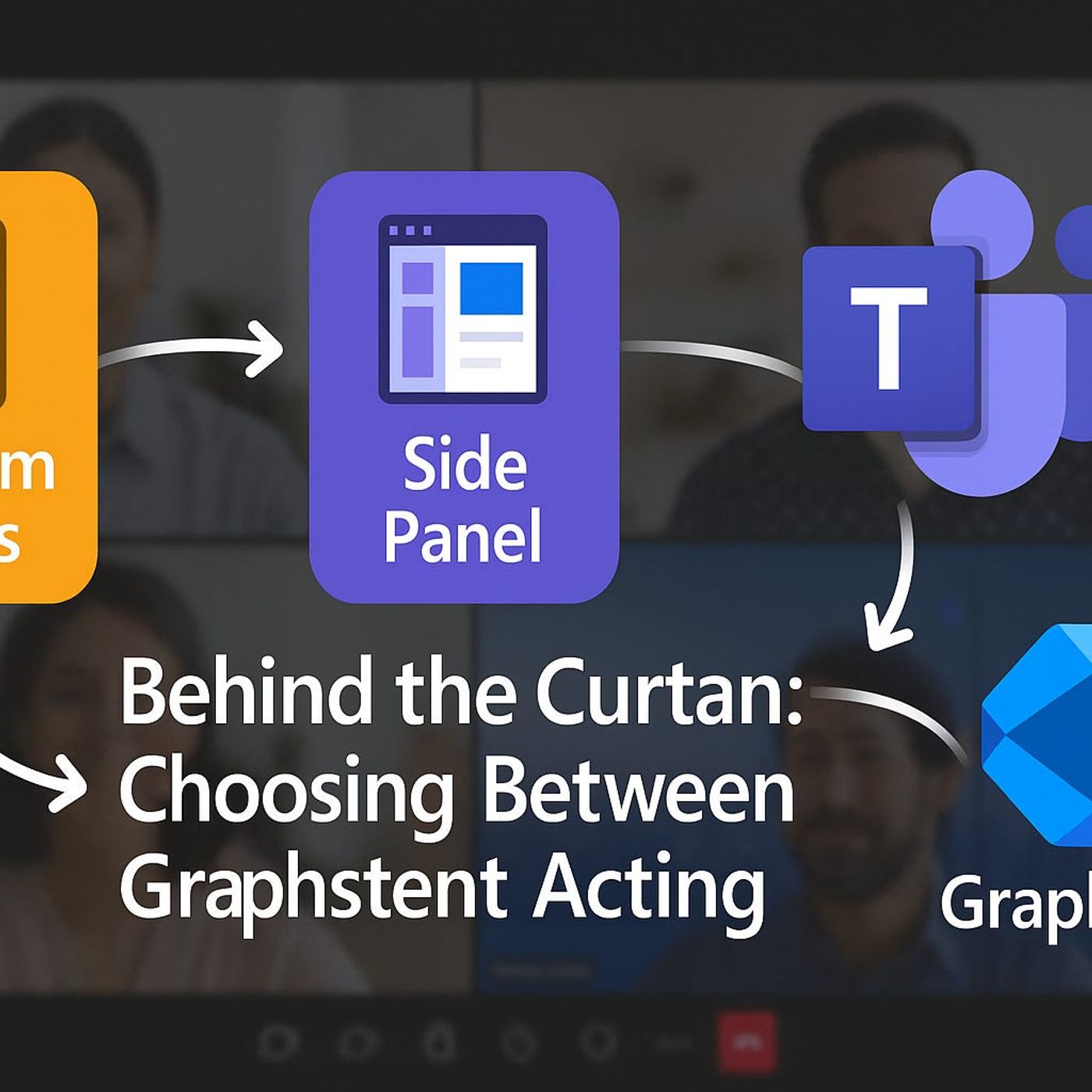
Teams Meeting Extensibility: How Custom Apps, Side Panels and Graph Events Turn Meetings into Real Workspaces
Season 1
Published 11 months, 3 weeks ago
Description
If you think Teams meetings are just video calls and screen shares, you’re missing the real surface where work can happen. In this episode, we break down how custom apps, in‑meeting side panels, and Graph meeting lifecycle events turn a simple call into a live workspace that triggers workflows, surfaces business data, and runs internal tools right next to the conversation. You’ll see why treating these pieces separately leaves value on the table—and how connecting them changes the way your teams run project reviews, escalations, and decision meetings.
We start with the hidden framework under every Teams meeting: custom apps embedded as tabs, side panels that deliver real‑time context, and lifecycle events that act as signals (“meeting started,” “participant joined,” “meeting ended”) for automation. Instead of reading three separate docs, you’ll get one mental model for how these components interact: apps handle structured work, side panels keep people in the flow with relevant data, and lifecycle events quietly drive workflows in the background. With concrete scenarios—from status meetings with live project trackers to support calls with in‑panel tickets—you’ll see how each part plays its role without fighting the meeting flow.
Then we zoom into custom apps built specifically for the meeting surface. You’ll learn how manifest design, deep links, and context parameters turn generic web apps into meeting‑aware experiences that automatically pick the right team, project, or record without users clicking through menus. We talk about UI consistency, single sign‑on, and permission prompts that either make your app feel native—or instantly break trust if handled poorly.
Then we zoom into custom apps built specifically for the meeting surface. You’ll learn how manifest design, deep links, and context parameters turn generic web apps into meeting‑aware experiences that automatically pick the right team, project, or record without users clicking through menus. We talk about UI consistency, single sign‑on, and permission prompts that either make your app feel native—or instantly break trust if handled poorly.
WHAT YOU LEARN
The core insight of this episode is that Teams meeting extensibility only shows its power when you stop treating apps, side panels, and lifecycle events as separate tricks and start designing them as one system. When your custom
We start with the hidden framework under every Teams meeting: custom apps embedded as tabs, side panels that deliver real‑time context, and lifecycle events that act as signals (“meeting started,” “participant joined,” “meeting ended”) for automation. Instead of reading three separate docs, you’ll get one mental model for how these components interact: apps handle structured work, side panels keep people in the flow with relevant data, and lifecycle events quietly drive workflows in the background. With concrete scenarios—from status meetings with live project trackers to support calls with in‑panel tickets—you’ll see how each part plays its role without fighting the meeting flow.
Then we zoom into custom apps built specifically for the meeting surface. You’ll learn how manifest design, deep links, and context parameters turn generic web apps into meeting‑aware experiences that automatically pick the right team, project, or record without users clicking through menus. We talk about UI consistency, single sign‑on, and permission prompts that either make your app feel native—or instantly break trust if handled poorly.
Then we zoom into custom apps built specifically for the meeting surface. You’ll learn how manifest design, deep links, and context parameters turn generic web apps into meeting‑aware experiences that automatically pick the right team, project, or record without users clicking through menus. We talk about UI consistency, single sign‑on, and permission prompts that either make your app feel native—or instantly break trust if handled poorly.
WHAT YOU LEARN
- How the three core building blocks—custom apps, in‑meeting side panels, and Graph meeting lifecycle events—work and why they’re designed to be interoperable, not dependent.
- How to design custom apps that feel native in meetings using manifests, deep links, context parameters, and single sign‑on.
- How side panels deliver real‑time context (like CRM or ticket data) without forcing users to switch tabs or lose the conversation.
- How lifecycle events act as signals to trigger automations before, during, and after meetings.
- How to think about meeting extensibility as an architecture you control, not a collection of isolated features.
The core insight of this episode is that Teams meeting extensibility only shows its power when you stop treating apps, side panels, and lifecycle events as separate tricks and start designing them as one system. When your custom