Episode Details
Back to Episodes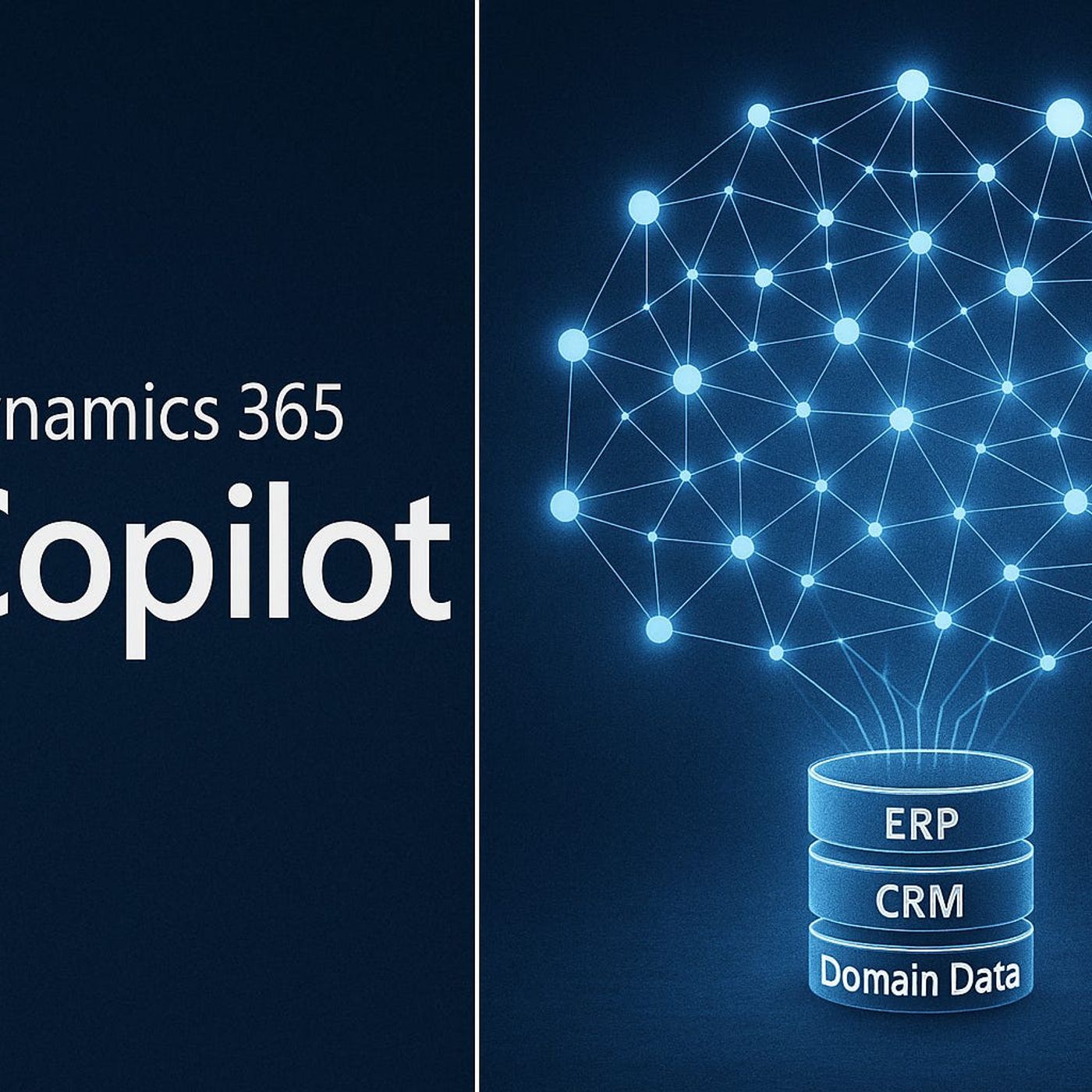
Copilot in Dynamics 365: Extending AI for CRM & ERP
Published 6 months, 2 weeks ago
Description
Ever wondered why Copilot in Dynamics 365 feels generic, even when your business data is anything but? The truth is, Copilot only knows what it’s been fed—and right now, that’s a general-purpose diet. What if you could connect it to your own private, domain-specific library? In the next few minutes, we’ll walk through the exact steps to make Copilot speak your industry’s language, process your business workflows, and give you recommendations that actually make sense for your world—not some imaginary average customer.Why Copilot Needs More Than Default DataMost businesses expect AI to come in already fluent in their products, processes, and customer quirks. It’s easy to assume it will “just know” how your sales team tracks renewals or the way your supply chain handles seasonal spikes. But Dynamics 365 Copilot doesn’t start with that understanding. It begins with a broad, general-purpose knowledge base. That means it can work impressively well on common tasks, but the guidance it gives is shaped by patterns seen across all kinds of companies, not specifically yours.This can be a bigger gap than people realize. Copilot has strong capabilities baked in, but it’s like hiring a smart generalist who’s never set foot in your industry. Point it at a customer record, and it can summarize the history neatly. Ask it to draft a follow-up, and it’ll produce a sensible email. The problem is when you push for judgment calls or predictions. The AI will fill in the blanks using what it thinks is normal — and without your business data as its primary reference, “normal” will be average, not customized.I worked with a CRM manager recently who noticed her pipeline forecasts always felt just a bit off. The deals were real, the opportunities were correctly tagged, yet Copilot kept assigning close probabilities that didn’t make sense. It wasn’t broken — it was guessing based on generalized sales trends, not based on the way her company historically moved prospects through the funnel. What looked like a confident AI prediction was, in practice, a pattern match to someone else’s sales cycle.ERP users have hit similar walls. One manufacturing company asked Copilot to suggest adjustments for a raw materials order, based on supplier lead times. The suggestion they got back was technically reasonable — spread the orders over a few shipments to reduce inventory holding costs — but it ignored the fact that their primary supplier actually penalized small orders with extended lead times. That critical detail lived in their internal system. Without pulling it into the AI’s view, the recommendation stayed surface-level, and acting on it would have slowed production.That’s the inherent trade-off in Microsoft’s approach to default Copilot models. They’re built to be broadly applicable so anyone can get started without custom setup. But that design means general rather than domain-specific context. For daily reference tasks, this works fine. When you’re trying to guide high-stakes business decisions, the lack of local context can leave the advice feeling shallow or mismatched.The point isn’t that Copilot can’t make good recommendations — it’s that the edge comes from feeding it exactly the right data. If you don’t integrate the systems that hold your company’s unique knowledge, you’re asking the AI to compete at your level while playing with a half-empty playbook. The models aren’t flawed; they just don’t know what they haven’t been told.And this is where the conversation shifts from “Is Copilot smart enough?” to “What are we actually giving it to learn from?” Internal service metrics, long-term customer history, supplier contracts, region-specific market data — these are all invisible to Copilot until you bring them in. If you only rely on the out-of-the-box model, the AI’s answers will stay safe, generic, and uninspired. The moment you feed it the depth of your own business, that’s when it starts to sound like a seasoned insider instead of a well-meaning consulta