Episode Details
Back to Episodes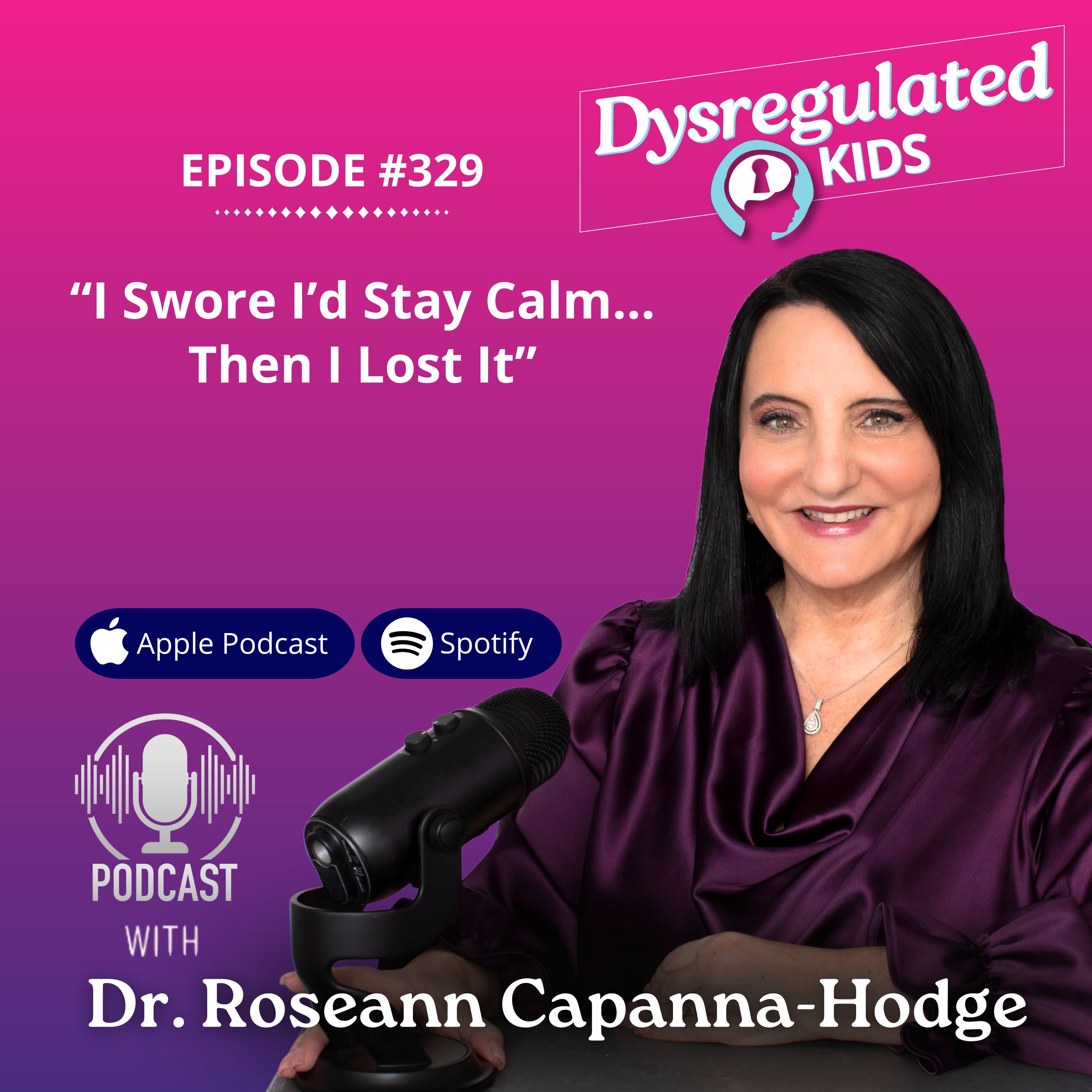
"I Swore I'd Stay Calm ... Then I lost It" | How to Self Regulate as a Parent | E329
Description
Estimated Reading Time: 5 minutes
Have you ever promised yourself you wouldn't yell, only to lose your temper again? If you've wondered how to self regulate as a parent, you're not alone. Parenting a child with big emotions can push even the most patient parent to their limit.
In this episode, you'll learn:
• Why parents become reactive during stressful moments
• Practical strategies for how to self regulate as a parent
• How your regulation affects your child's behavior
• Ways to repair and reconnect after you've lost your cool
Why do I lose it when I swore I wouldn't?
Even when we know what to do, our nervous system doesn't always cooperate. Stress can hijack the thinking brain and push us into fight, flight, or freeze.
Common triggers include:
• Feeling overwhelmed or exhausted
• Hunger and physical stress
• Noise and sensory overload
• Feeling disrespected or out of control
What sets us off is often much bigger than the moment itself.
One thing I remind myself often is: "My calm is their calm."
When you're parenting a dysregulated child, your nervous system becomes the model for theirs.
Behavior is communication. It's not bad behavior. It's a dysregulated brain.
What can I do instead of yelling?
Learning how to self regulate as a parent starts with noticing your own nervous system before it reaches the breaking point.
Try:
• Pausing before you respond
• Taking a slow, deep breath
• Saying, "I'm feeling overwhelmed. I need a minute."
• Reminding yourself that your child's behavior is communication
These small moments of awareness can interrupt the reactivity cycle before it escalates.
Want to stay calm when your child pushes every button?
Become a Dysregulation Insider VIP and get the FREE Regulation Rescue Kit, your step-by-step guide to stop oppositional behaviors without yelling or giving in.
Go to www.drroseann.com/newsletter and grab your kit today.
How do I stop the reactivity cycle?
Awareness is key.
Notice signs such as:
• Clenched jaw or tight muscles
• Shallow breathing
• Irritability
• Feeling emotionally flooded
Helpful regulation tools include:
• Movement such as stretching or walking
• Heat or cold therapy
• Grounding phrases like, "I will not lose my stuff."
• Brief sensory breaks
These simple regulation techniques for kids also work surprisingly well for parents.
What should I do after I've already blown up?
Repair is one of the most powerful parenting tools you have.
Try:
• Reflecting with self-compassion
• Identifying what triggered you
• Apologizing without excuses
• Reconnecting through empathy and validation
You can say:
• "I'm sorry I lost my temper."
• "That wasn't your fault."
• "I'm learning too."
Children develop self-regulation skills for children by watching adults model accountability, reflection, and repair.
How do I rebuild trust and connection?
Trust grows when children consistently experience safety, empathy, and repair.
Focus on:
• Apologizing with sincerity
• Modeling healthy coping skills
• Setting calm boundaries
• Showing love even after difficult moments
W