Episode Details
Back to Episodes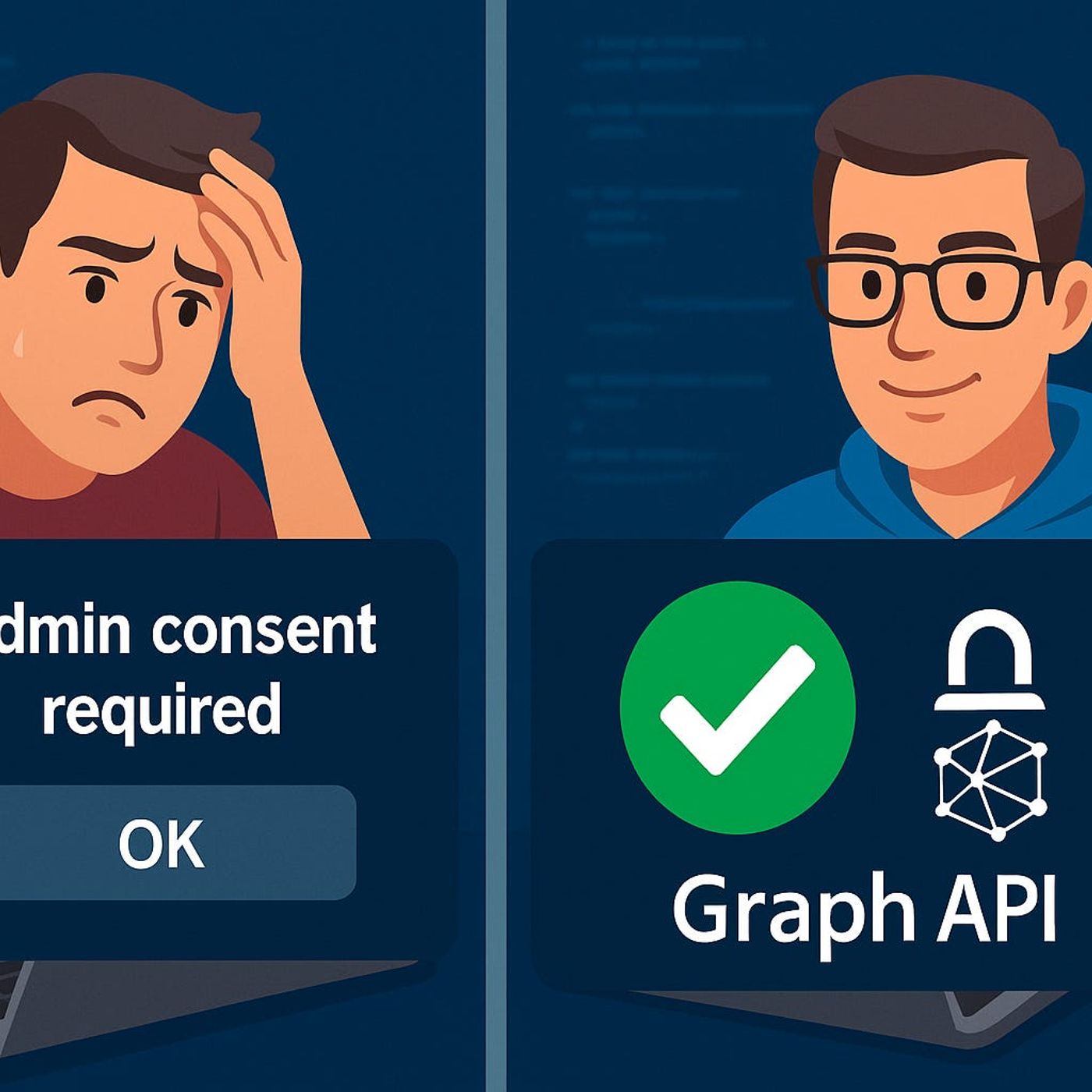
Graph API Permissions and Consent Models: How Delegated vs Application Permissions Decide Whether Your App Succeeds in Production
Season 1
Published 11 months, 4 weeks ago
Description
Ever clicked “Consent” in Azure and wondered what you just allowed? In this episode, we turn that uneasy moment into a clear mental model for how Microsoft Graph actually handles permissions and consent in real tenants—not just in dev sandboxes. Starting from the familiar story of “worked perfectly in test, exploded in production,” we unpack why apps run smoothly in your playground tenant but slam into admin‑consent walls, cryptic error codes, and security reviews the moment real users and real policies show up.
We follow the journey of a typical Graph‑powered app: flawless demos, silent optimism, and then a flood of “Need admin approval” pop‑ups and AADSTS errors once you hit production. You’ll see how the difference between a relaxed dev tenant and a locked‑down enterprise environment isn’t your code quality—it’s how Graph permissions interact with consent policies, who’s allowed to grant which rights, and how Microsoft tries to balance user empowerment with protection against rogue apps. With concrete examples like calendar‑reading flows for out‑of‑office checks, we show how the exact same permission request looks harmless to a developer and like a potential data‑exfiltration vector to security.
From there, we break down delegated versus application permissions in plain language. Delegated permissions let your app “borrow” a signed‑in user’s identity and act only within what that user can already see; application permissions let the app act on its own, often with organization‑wide reach. We translate the documentation into real scenarios—user‑driven calendar apps versus unattended HR exports—and show why the latter always triggers stricter admin controls, longer reviews, and tighter defaults. Research and Microsoft’s own tightening of app‑only defaults make it clear: application permissions are treated like master keys, and your consent journey changes completely once you cross that line.
Finally, we connect these models back to architecture and rollout strategy. You’ll learn how early permission choices lock in your app’s risk profile, why most Graph deployment incidents trace back to misunderstood consent flows, and how to design with production policies in mind from day one instead of relying on “trampoline” dev tenants. By the end, you’ll know how to read those consent prompts as architecture decisions, not just pop‑ups—and how to pick the right permission model so your next Graph app survives contact with real admins, real policies, and real users.
WHAT YOU LEARN
We follow the journey of a typical Graph‑powered app: flawless demos, silent optimism, and then a flood of “Need admin approval” pop‑ups and AADSTS errors once you hit production. You’ll see how the difference between a relaxed dev tenant and a locked‑down enterprise environment isn’t your code quality—it’s how Graph permissions interact with consent policies, who’s allowed to grant which rights, and how Microsoft tries to balance user empowerment with protection against rogue apps. With concrete examples like calendar‑reading flows for out‑of‑office checks, we show how the exact same permission request looks harmless to a developer and like a potential data‑exfiltration vector to security.
From there, we break down delegated versus application permissions in plain language. Delegated permissions let your app “borrow” a signed‑in user’s identity and act only within what that user can already see; application permissions let the app act on its own, often with organization‑wide reach. We translate the documentation into real scenarios—user‑driven calendar apps versus unattended HR exports—and show why the latter always triggers stricter admin controls, longer reviews, and tighter defaults. Research and Microsoft’s own tightening of app‑only defaults make it clear: application permissions are treated like master keys, and your consent journey changes completely once you cross that line.
Finally, we connect these models back to architecture and rollout strategy. You’ll learn how early permission choices lock in your app’s risk profile, why most Graph deployment incidents trace back to misunderstood consent flows, and how to design with production policies in mind from day one instead of relying on “trampoline” dev tenants. By the end, you’ll know how to read those consent prompts as architecture decisions, not just pop‑ups—and how to pick the right permission model so your next Graph app survives contact with real admins, real policies, and real users.
WHAT YOU LEARN
- Why Graph apps that work in dev often break in production with “admin consent required” messages and AADSTS errors.
- How the difference between dev and enterprise tenants (policies, roles, consent restrictions) shapes Graph behavior more than your code does.
- What delegated permissions really mean in practice—apps acting in a signed‑in user’s bubble, limited to what they can already access.
- What application permissions mean—apps acting on their own with potentially org‑wide reach—and why they trigger strict admin review.
- How early choices between delegated and application permissions define your rollout path, security posture, and likelihood of hitting consent roadblock