Episode Details
Back to Episodes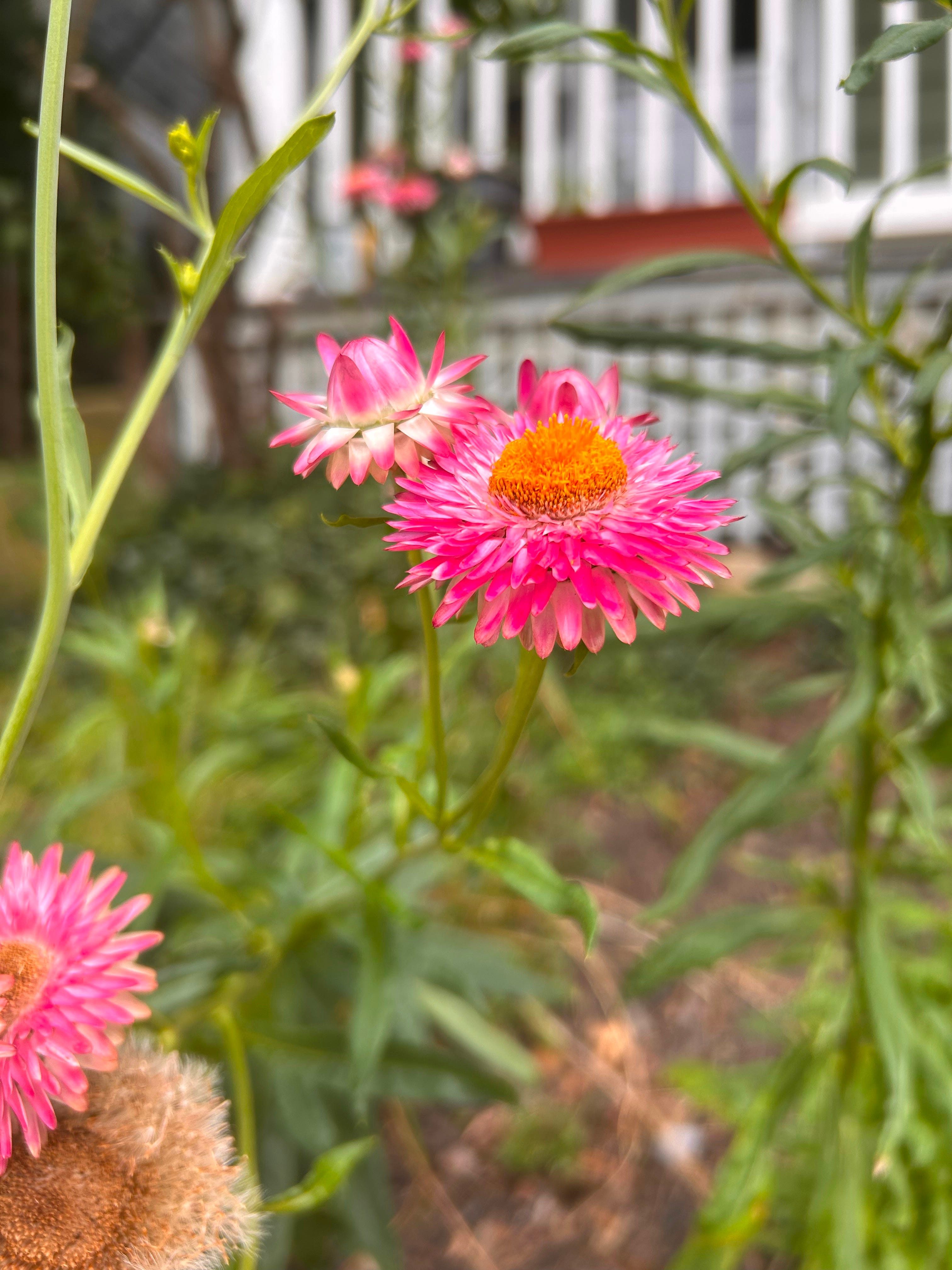
Remember Being A Flower?
Description
Being Flower
On Monday night during meditation we sat together as a community of flowers. Sun flower, daisy, rose, violet, marigold, milkweed, celosia, echinacea, blue vervain, poppy, queen anne’s lace, crocosmia, zinnia.
We were studying the koan Case 19 from the Hidden Lamp, Flowers in the Buddha Hall.
The nuns of Tokeiji were famous for their beautiful elaborate flower decorations on Buddha’s Birthday. Zen Teacher Yodo, the abbess wrote a verse for the occasion:
Decorate the heart of the beholder,
for the Buddha of the flower hall
in nowhere else.
Her attendants also wrote verse. Ika wrote:
Throw away into the street the years of the past.
What is born now on the flower dais—
let it raise its newborn cry.
Why sit as a flower? It might seem foolish or arrogant.
Maybe it is.
But its part of the invitation of the koans. To be inhabited by them. To practice seeing through the face of a sunflower—breathing in light—deeply connected to earth and sky. Opening petal by petal into this troubled and mysterious world.
Some call the wide-eyed flower jasmine.
Some call the wide-eyed flower thorn.
The wide-eyed flower doesn’t care what you call it.
I bow to such freedom. —Rumi
We’ve spent our lives practicing our human conditioning. Telling ourselves things that aren’t true about our worth, our lacks. Reinforcing a sense of separation, loneliness, fear.
What happens when you take-up the practice of being a flower?
How does a flower respond to you human thoughts and worries?
What does a flower think of your so called problems?
We find flowers throughout the buddhist teachings and koans. The Buddha gave a whole sermon—holding up a flower. There are recorded stories of practitioners having awakening experiences upon seeing a flower.
flowers are silent
silence is silent
the mind is a silent flower
the silent flower of the world open—Ikkyu
Remembering
In this koan the nuns of Tokeiji are re-enacting the story of the Buddha’s birth where flowers rained from the heavens. The story is ancient and the ceremony seems to have roots prior to buddhism. We build a flower bower in the shape of a white elephant that came to Maya in a dream. We decorate the bower in the fresh flowers of spring, and bathe the awakened child who stands on Great Mother Earth, pointing to the sky with one hand and the ground with the other.
There is something child-like and innocent about creating a flower dais and bathing the baby buddha in sweet tea. I don’t know the origins of the ritual, but it was something that we practiced when I lived at the monastery, and is part of the Japanese Zen tradition.
When we prepare for and participate in the ceremony, we are practicing a kind of remembering.
Remembering our own child-like innocence.
Remembering how malleable and playful the heart-mind of a child is.
Remembering a time in our life where our imagination was ripe. And we really were flowers. Or could become one at anytime. A time when hours could go by and we were perfectly content to sit and watch the daisies bob in the wind. Where we made crowns and wands and palaces out of flowers. A time when we could consult flowers for advice, and laugh with them in yellows, oranges, rubies and pinks.
This remembering stretches back before childhood, before we were born.
We are remembering who we are—before thought, before we got overly identified with this body. We are remembering our unborn buddha mind—our awakened nature.
Yodo’s poem is a reminder that the baby buddha in the ceremony—is us. Our buddha nature, our awakened nature is only right here.
Sometimes appearing as a flower