Episode Details
Back to Episodes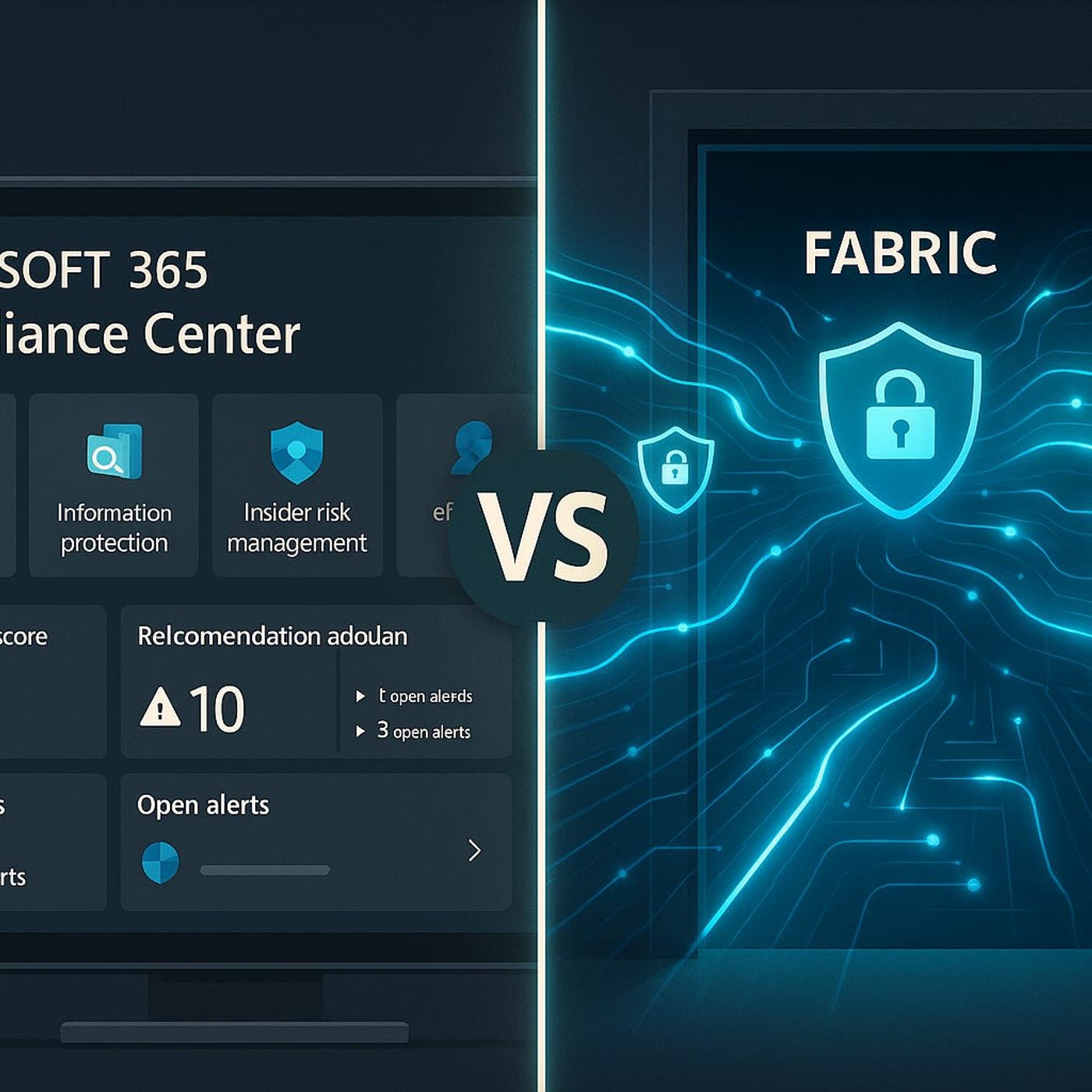
Microsoft Fabric Governance Admins: Avoid Permission Traps, Label Gaps, and Missing Audit Trails When You Bring Analytics into Fabric
Season 1
Published 1 year, 2 months ago
Description
If you run Microsoft 365 governance with your eyes closed but feel instantly lost the moment someone says “Fabric domain” or “workspace role”, you are in the danger zone. Fabric looks like just another Microsoft 365 workload, yet the way permissions, labels, and audit trails actually work is different enough that your usual playbook can leave sensitive data exposed, logs incomplete, and ownership unclear. In this episode, you learn how Fabric governance really behaves so you stop relying on M365 instincts and start closing the gaps before they turn into incidents.
We break down the false sense of security many teams live with today: admins assume existing M365 policies automatically cover Fabric, data teams believe labels and DLP “just apply”, and everyone is surprised when access or audit gaps show up during an internal review. You will hear where the model diverges—how domains change ownership, how workspace roles reshape access, and why items like lakehouses, warehouses, and notebooks shift the conversation away from classic SharePoint-style thinking.
From there, we walk through the messy reality of sensitivity labels, DLP, and audit logs in Fabric. You learn what really happens when labels move with data, where DLP enforcement stops, and how audit events are distributed across Fabric and M365 so you know where to look when something goes wrong. Instead of hoping your existing controls “probably cover it,” you will understand the boundaries and design guardrails that match how Fabric actually works.
By the end of this episode, you will have a concrete mapping from your current Microsoft 365 governance model to Fabric’s concepts, roles, and controls. If you are the person who will get the call when a sensitive dataset leaks out through a Fabric workspace, this conversation gives you the mental model and practical steps to stay ahead of the problem—not react after the fact.
WHAT YOU LEARN
The core insight of this episode is that Fabric governance is a different control plane hiding behind familiar Microsoft branding. Once you understand how domains, roles, labels, and logs actually interact, you can stop trusting assumptions from SharePoint and Teams and build a Fabric governance model that truly protects analytical data at scale.
WHO THIS IS FOR
We break down the false sense of security many teams live with today: admins assume existing M365 policies automatically cover Fabric, data teams believe labels and DLP “just apply”, and everyone is surprised when access or audit gaps show up during an internal review. You will hear where the model diverges—how domains change ownership, how workspace roles reshape access, and why items like lakehouses, warehouses, and notebooks shift the conversation away from classic SharePoint-style thinking.
From there, we walk through the messy reality of sensitivity labels, DLP, and audit logs in Fabric. You learn what really happens when labels move with data, where DLP enforcement stops, and how audit events are distributed across Fabric and M365 so you know where to look when something goes wrong. Instead of hoping your existing controls “probably cover it,” you will understand the boundaries and design guardrails that match how Fabric actually works.
By the end of this episode, you will have a concrete mapping from your current Microsoft 365 governance model to Fabric’s concepts, roles, and controls. If you are the person who will get the call when a sensitive dataset leaks out through a Fabric workspace, this conversation gives you the mental model and practical steps to stay ahead of the problem—not react after the fact.
WHAT YOU LEARN
- Why Microsoft Fabric governance feels familiar but quietly breaks your standard M365 governance patterns.
- How Fabric domains, workspaces, and item roles change where you define ownership and access.
- How sensitivity labels, DLP, and audit logs behave differently in Fabric compared to classic Microsoft 365 workloads.
- Where the most common governance gaps appear, from mislabeled datasets to missing or split audit detail.
- How to translate your existing M365 compliance setup into a Fabric-ready governance and security blueprint.
The core insight of this episode is that Fabric governance is a different control plane hiding behind familiar Microsoft branding. Once you understand how domains, roles, labels, and logs actually interact, you can stop trusting assumptions from SharePoint and Teams and build a Fabric governance model that truly protects analytical data at scale.
WHO THIS IS FOR
- Microsoft 365 admins who now own