Episode Details
Back to Episodes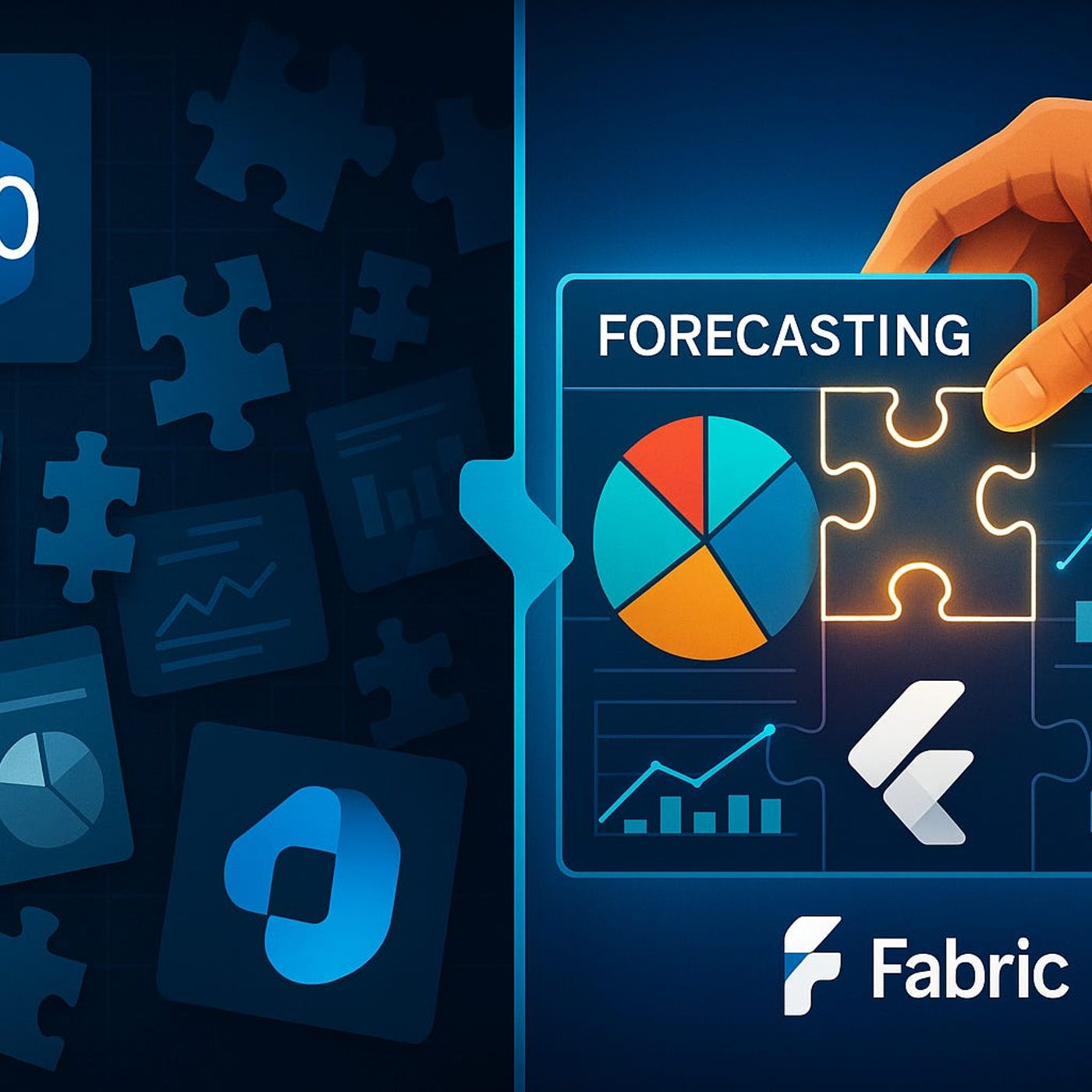
Using Dynamics 365 Finance Data in Fabric for Financial Forecasting
Season 1
Published 1 year, 2 months ago
Description
Rolling forecasts in Dynamics 365 Finance rarely match reality when your data is fragmented across GL, sub-ledgers, budgets, and endless Excel exports. In this episode, you learn how to use Microsoft Fabric with D365 Finance to unify financial data into one analytics-ready model so your forecasts, variance analyses, and Power BI reports finally align with what actually happens in the business. We walk through how to turn messy ERP modules into a single financial data estate that feeds reliable forecasting instead of late-night spreadsheet reconciliations.
If your current forecasting cycle depends on manual GL downloads, one-off AP and AR extracts, and budget files that have lived in inboxes for weeks, this conversation shows a different way. We break down why D365 Finance data often feels disjointed—separate modules, changing dimensions, timing differences—and how Fabric helps you connect these pieces through governed pipelines, a shared semantic model, and repeatable transformations. The result: variance reports and rolling forecasts you can refresh on demand, not rebuild from scratch.
You will discover which D365 Finance tables matter most for forecasting scenarios (GL journals, sub-ledger transactions, budget registers) and how to land them correctly into Fabric using Dataflows, Synapse-style pipelines, and a robust dimensional model. We cover practical design decisions such as handling chart of accounts changes, mapping cost centers and projects, and keeping security and least-privilege access intact while still giving finance teams the self-service reporting they need.
By the end of this episode, you will have a clear blueprint for turning D365 Finance into a trustworthy forecasting engine powered by Fabric: unified data, consistent dimensions, and analytics that explain variances instead of introducing new questions. Whether you own FP&A, finance operations, or the data platform behind D365, you will see how to move from ad-hoc exports to a sustainable forecasting stack built on Microsoft Fabric.
WHAT YOU LEARN
The core insight of this episode is that accurate financial forecasting with D365 Finance is less about another Excel template and more about consolidating your ERP data into a single, trusted model in Microsoft Fabric. When GL, sub-ledgers, and budgets flow into one governed financial dataset, forecasting, variance analysis, and repo
If your current forecasting cycle depends on manual GL downloads, one-off AP and AR extracts, and budget files that have lived in inboxes for weeks, this conversation shows a different way. We break down why D365 Finance data often feels disjointed—separate modules, changing dimensions, timing differences—and how Fabric helps you connect these pieces through governed pipelines, a shared semantic model, and repeatable transformations. The result: variance reports and rolling forecasts you can refresh on demand, not rebuild from scratch.
You will discover which D365 Finance tables matter most for forecasting scenarios (GL journals, sub-ledger transactions, budget registers) and how to land them correctly into Fabric using Dataflows, Synapse-style pipelines, and a robust dimensional model. We cover practical design decisions such as handling chart of accounts changes, mapping cost centers and projects, and keeping security and least-privilege access intact while still giving finance teams the self-service reporting they need.
By the end of this episode, you will have a clear blueprint for turning D365 Finance into a trustworthy forecasting engine powered by Fabric: unified data, consistent dimensions, and analytics that explain variances instead of introducing new questions. Whether you own FP&A, finance operations, or the data platform behind D365, you will see how to move from ad-hoc exports to a sustainable forecasting stack built on Microsoft Fabric.
WHAT YOU LEARN
- Why D365 Finance data often lives in silos across GL, sub-ledgers, and budget files.
- How Microsoft Fabric unifies Dynamics 365 Finance data into a single, governed financial model.
- Which core D365 Finance tables to bring into Fabric for forecasting and variance analysis.
- How to design data pipelines, dimensions, and security so finance can trust and reuse the model.
- How unified D365 Finance data in Fabric improves rolling forecasts, variance reports, and Power BI dashboards.
The core insight of this episode is that accurate financial forecasting with D365 Finance is less about another Excel template and more about consolidating your ERP data into a single, trusted model in Microsoft Fabric. When GL, sub-ledgers, and budgets flow into one governed financial dataset, forecasting, variance analysis, and repo