Episode Details
Back to Episodes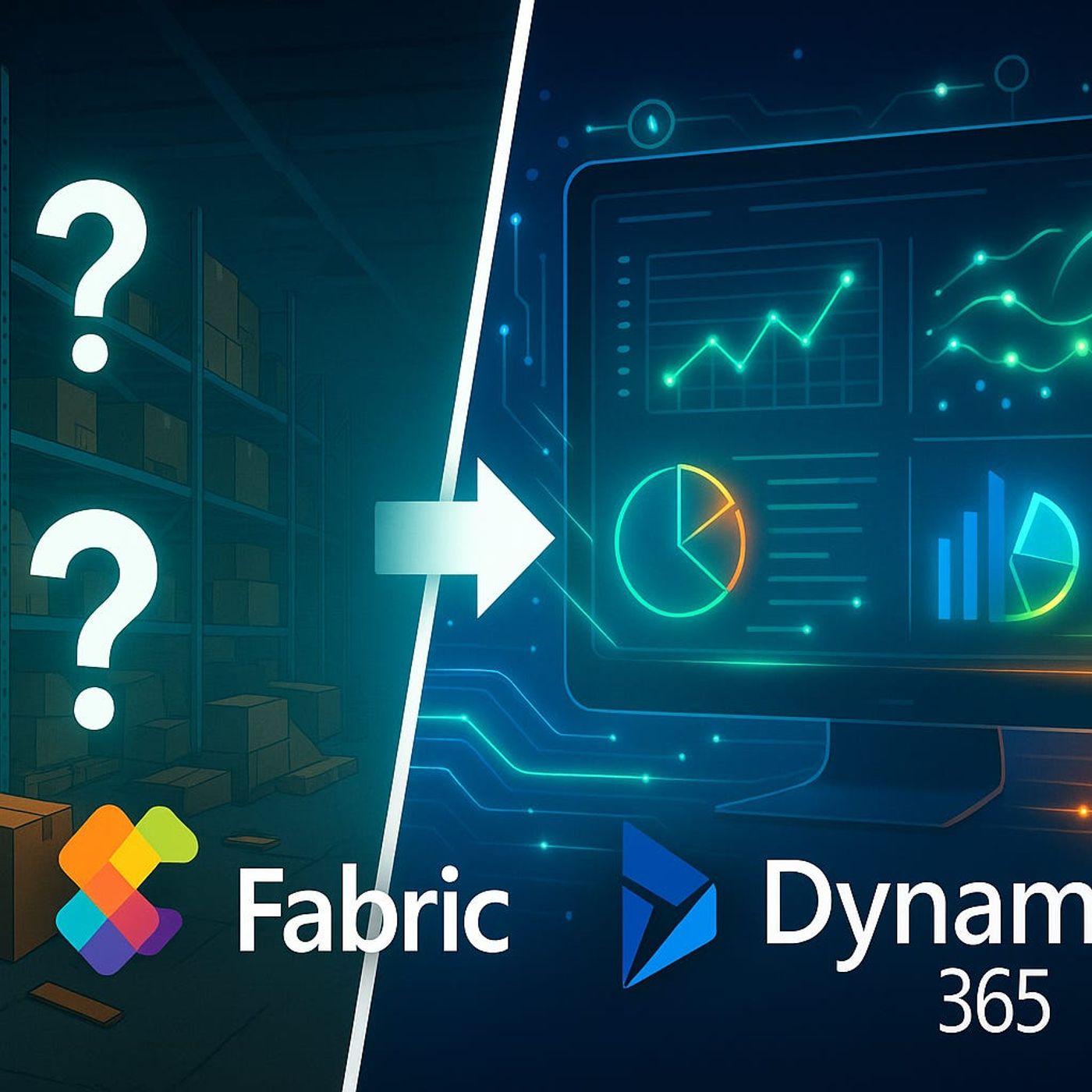
Microsoft Fabric and Dynamics 365 SCM: How to Turn Black‑Box Operations into a Real‑Time, End‑to‑End View
Season 1
Published 1 year ago
Description
Most supply chains are still black boxes: dashboards everywhere, but no one can answer the simple question “Where is this order right now—and what happens if it’s late?” In this episode, I take you through that reality and show how Microsoft Fabric, wired into Dynamics 365 Supply Chain Management, turns scattered ERP data into an end‑to‑end nervous system for your operations. We start from the moments everyone knows too well—lines stopped because a part is “somewhere in the warehouse,” customers chasing updates you don’t really trust, and teams piecing together the story from emails, exports, and siloed modules.
You’ll hear why more dashboards rarely fix this. We break down how traditional ERP and spreadsheet reporting slice information into isolated views—inventory here, transport there, production somewhere else—without capturing the full journey of each item across suppliers, inbound, manufacturing, and outbound. Using the IPO (Input‑Process‑Output) model from your text, we walk through how most systems record transactions but lose the relationships between them, which is exactly why one stuck pallet can quietly stall a week of output before anyone realizes what’s really wrong.
From there, we look at what changes when Dynamics 365 SCM events stream into Microsoft Fabric. Fabric stops being “just another data lake” and becomes the place where orders, purchase lines, vendor performance, sensor data, and transport updates are stitched into one timeline you can query in real time. We follow a concrete scenario—from a big Friday order spike to supplier checks, production scheduling, and logistics planning—to show how Fabric pipelines, models, and alerting flip your visibility from lagging reports to leading signals that can trigger action before the backlog hits.
By the end, supply chain visibility stops meaning “more KPIs” and starts meaning “fewer surprises.” You’ll walk away with a mental model where Dynamics 365 SCM is the system of record for transactions, Fabric is the nervous system that connects them, and your teams finally see the whole flow—from vendor to truck to customer—in one place instead of peeking through disconnected pinholes.
WHAT YOU LEARN
The core insight of this episode is that you don’t fix supply‑chain blind spots by adding more dashboards—you fix them by connecting the dots. When Dynamics 365 SCM provides the facts and Microsoft Fabric stitches those facts into a living, queryable flow, you stop chasing symptoms with emails and spreadsheets and start running your supply chain with rea
You’ll hear why more dashboards rarely fix this. We break down how traditional ERP and spreadsheet reporting slice information into isolated views—inventory here, transport there, production somewhere else—without capturing the full journey of each item across suppliers, inbound, manufacturing, and outbound. Using the IPO (Input‑Process‑Output) model from your text, we walk through how most systems record transactions but lose the relationships between them, which is exactly why one stuck pallet can quietly stall a week of output before anyone realizes what’s really wrong.
From there, we look at what changes when Dynamics 365 SCM events stream into Microsoft Fabric. Fabric stops being “just another data lake” and becomes the place where orders, purchase lines, vendor performance, sensor data, and transport updates are stitched into one timeline you can query in real time. We follow a concrete scenario—from a big Friday order spike to supplier checks, production scheduling, and logistics planning—to show how Fabric pipelines, models, and alerting flip your visibility from lagging reports to leading signals that can trigger action before the backlog hits.
By the end, supply chain visibility stops meaning “more KPIs” and starts meaning “fewer surprises.” You’ll walk away with a mental model where Dynamics 365 SCM is the system of record for transactions, Fabric is the nervous system that connects them, and your teams finally see the whole flow—from vendor to truck to customer—in one place instead of peeking through disconnected pinholes.
WHAT YOU LEARN
- Why traditional ERP modules and spreadsheets create the illusion of visibility while hiding real supply‑chain relationships.
- How to think about your operations with the IPO model and where most visibility breaks down at the handoffs.
- How Dynamics 365 SCM events feed Microsoft Fabric to build a live, end‑to‑end picture of orders, inventory, and flows.
- How real‑time signals and models in Fabric help you move from lagging “what happened” to leading “what’s about to break.”
- Why treating Fabric as a central nervous system—not just storage—changes how you manage incidents, backlogs, and customer promises.
The core insight of this episode is that you don’t fix supply‑chain blind spots by adding more dashboards—you fix them by connecting the dots. When Dynamics 365 SCM provides the facts and Microsoft Fabric stitches those facts into a living, queryable flow, you stop chasing symptoms with emails and spreadsheets and start running your supply chain with rea