Episode Details
Back to Episodes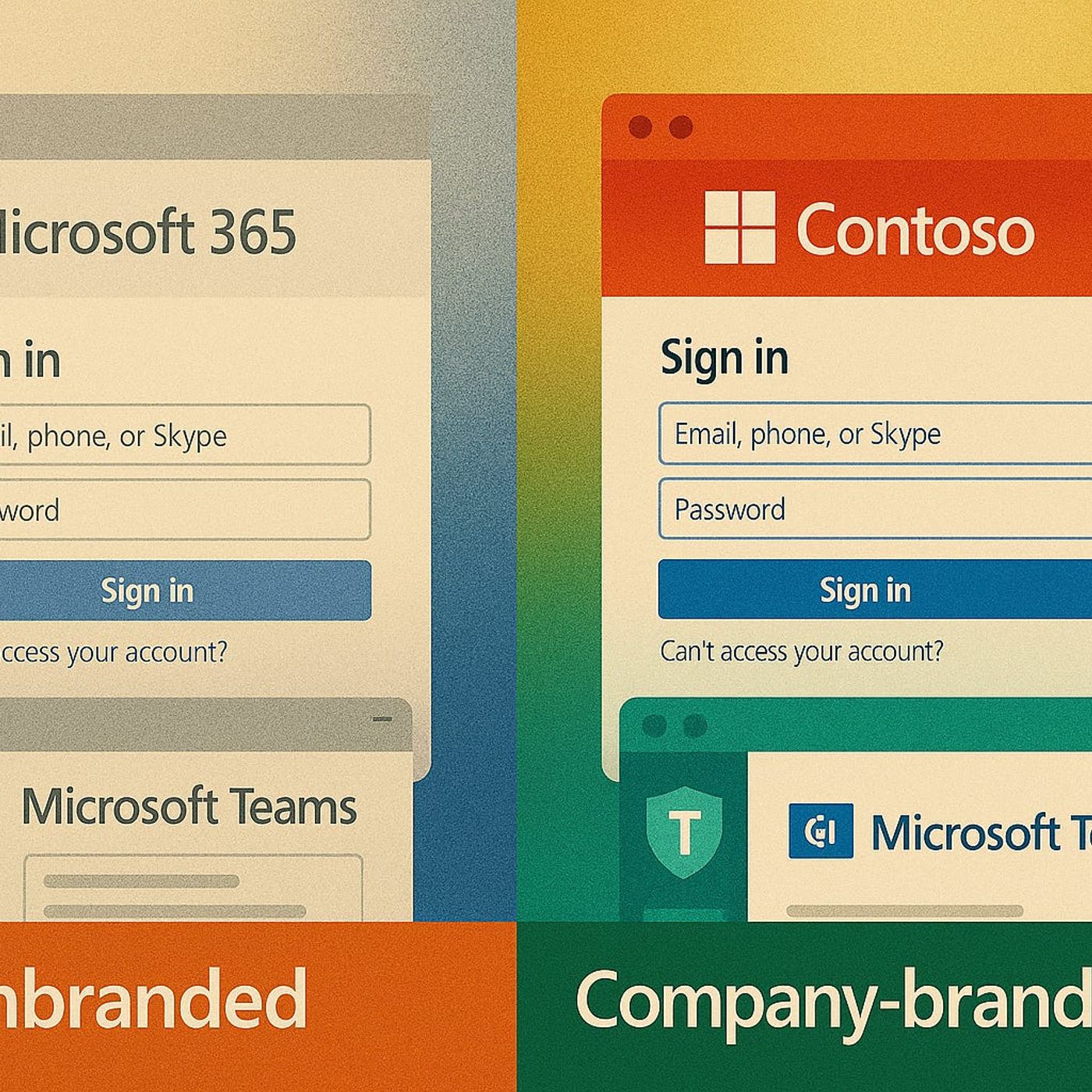
Forgotten Branding Settings That Break M365 Consistency
Published 7 months ago
Description
Ever noticed how your company logo looks perfect in Teams, but disappears when users hit the login screen or open SharePoint? We’re about to reveal why those tiny branding gaps can hurt trust and user confidence—and exactly where most businesses go wrong inside M365.Most admins fix the obvious settings and miss the hidden ones. Stick around and we’ll map out the real trouble spots you can’t afford to overlook if you want true, end-to-end consistency.The Hidden Cost of Forgetting Your BrandIf you’ve ever watched employees bounce from Teams to SharePoint to the login screen, eyebrows furrowed, you already know the feeling. Teams is smooth, the logo’s right, colors dialed in. But SharePoint? Suddenly, it’s a mess of blues and whites. Out comes the default Microsoft logo. Open the login screen and now it’s Office 365 orange with no sign of your company’s colors anywhere. Most users won’t say a word, but you’ll see that look—“Am I even in the right place?” That creeping sense of, “Did I just get phished?” Even when they’re staring at perfectly legitimate company resources, a little doubt sets in.Let’s pin down exactly how this plays out. Picture an employee starting their morning. They open Teams, see your company’s blue and gold banner, maybe even a custom icon. It almost feels like home. Five minutes later, they need a client file so they jump to SharePoint. Suddenly, everything’s boxy, brand colors are gone, and there's a default SharePoint logo up top. Navigation feels different—like wandering into somebody else’s office by accident. Then, when they hit the Office 365 login screen later, they see Microsoft’s branding, no trace of the company’s look, and maybe even a generic background image. These micro-contrasts seem harmless, but for users, they signal disconnection. No matter how many posters you hang about cyber security or digital trust, that instant hesitation pops up. Nothing tanks confidence faster.Now, let’s ground this in the real world. I worked with a manufacturing firm that invested a chunk of budget rolling out Teams globally. They set up custom logos, configured the perfect accent color, and even tuned notifications. But SharePoint was still running the vanilla Microsoft theme. Login screens? Still orange and white. No custom banners. After launch, tickets rolled in: users thought they’d landed on untrusted sites. One group reported they’d accidentally sent sensitive files through personal email, just because they couldn’t recognize “their” SharePoint. Adoption lagged. Three months later, execs asked if the Teams push was broken. It wasn’t the tools—it was that whiplash from branded to default, over and over.The more you look into it, the less surprising it gets. Dr. Susan Weinschenk, a behavioral psychologist, points out that “users make decisions about trust in under a second, based on visual cues.” Companies pour resources into securing their environments, but inconsistent branding leaves visual trails that whisper, “you’re not home.” In fact, studies from the Nielsen Norman Group show that interface inconsistency increases cognitive load—meaning people have to think harder to confirm they’re safe, or even that they’re working in the right place. The more steps it takes for an employee to orient themselves, the slower things get. And when that trust erodes, adoption takes a hit.Let’s talk about where Microsoft itself gets in the way. Even if you customize every possible surface today, a default theme is always lurking. Microsoft’s design updates happen behind the scenes—sometimes without warning. Suddenly, a button or banner quietly reverts to the standard blue, and users notice before admins do. It’s like tidying up three rooms of your house, then having a contractor repaint the hallway without asking. HR announces “we’re one team” but login pages still push Microsoft’s brand front and center. That disconnect seeps into company culture, eroding the sense of unity you’re trying to build.It might sound like nit