Episode Details
Back to Episodes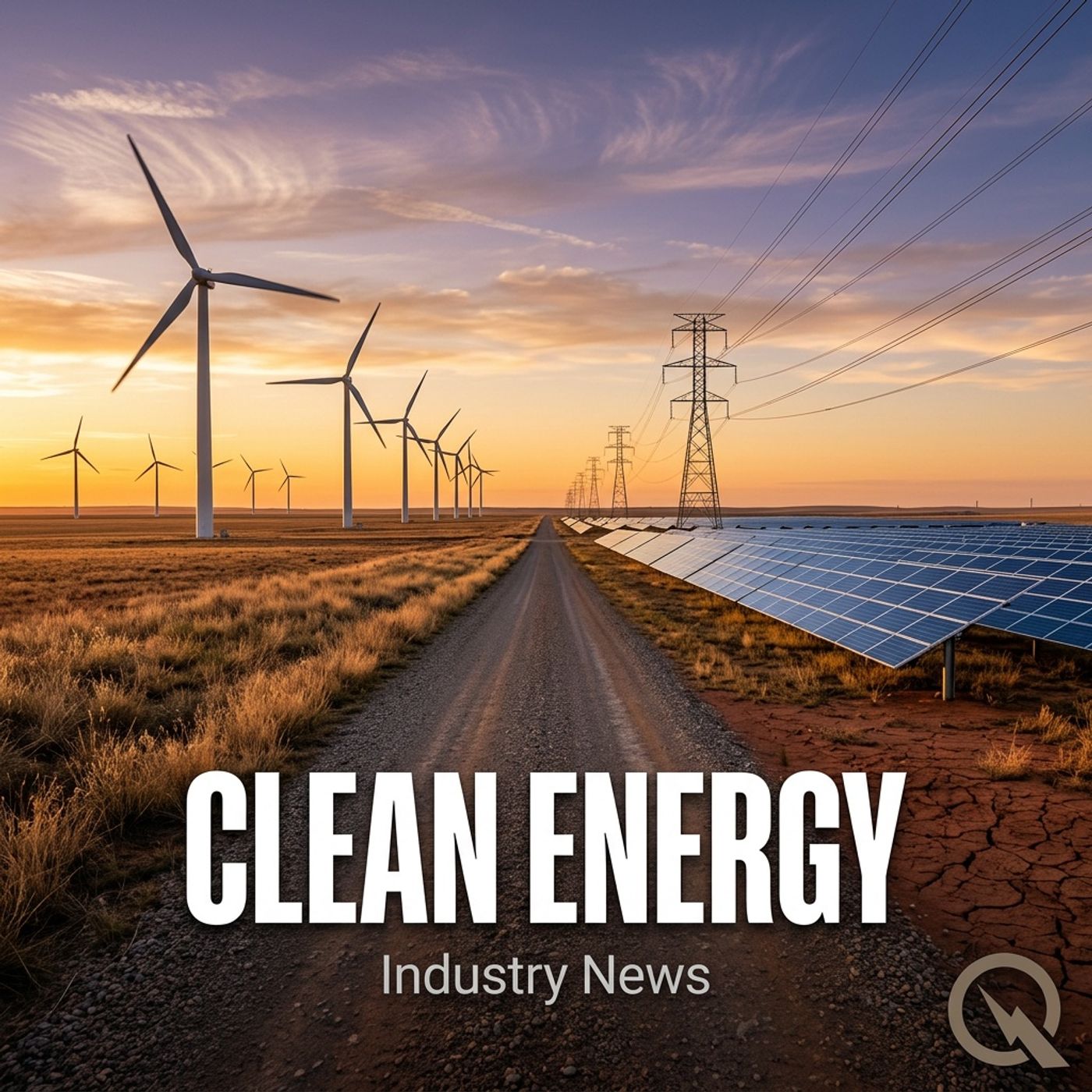
Title: Clean Energy Investment Soars Worldwide, Transforming the Future of Power
Published 8 months, 3 weeks ago
Description
Global clean energy investment has surged in the past 48 hours, with projections for 2025 now reaching a record $2.2 trillion, surpassing fossil fuel investments for the first time according to the International Energy Agency. Clean technology is expected to comprise two thirds of all energy capital allocation worldwide this year, up from 40 percent in 2020, with the United States contributing $400 billion and China, the European Union, and India also driving significant growth. Solar, wind, battery storage, and electric vehicles are leading sectors, aided by a 30 percent drop in solar panel prices in just the past two years. These trends are slashing energy bills and creating jobs[1].
Major deals are propelling the sector: In the UK and India, a new trade agreement focused on clean energy will unlock $31.7 billion in annual bilateral trade and draw UK firms into India’s expanding green tech market[2][6]. Companies like Airbus and Rolls-Royce signed $5 billion in contracts under this landmark pact[6]. Meanwhile, National Grid announced an $10 billion supply chain plan to accelerate clean project timelines and job creation in the UK[4].
In the US, regulatory deadlines are pushing states like Maine to fast-track renewable projects before tax credits from the Inflation Reduction Act expire. Maine’s unique approach includes siting solar panels on PFAS-contaminated land, turning unusable areas into clean power assets[5]. Federally, hydrogen is emerging as a centerpiece, backed by $7 billion in new Department of Energy hydrogen hub grants, bolstering companies like Plug Power and Bloom Energy[3].
Globally, recent data from the International Renewable Energy Agency shows renewables now account for 91 percent of all utility-scale projects beating fossil fuel prices, and nearly 600 gigawatts of new renewable capacity was added last year. Battery storage prices have plummeted over 90 percent since 2010, and renewables saved $467 billion in avoided fossil fuel costs in 2024 as consumer interest in clean energy continues to rise[7].
Despite macroeconomic and geopolitical volatility, leaders such as Constellation Energy, NRG, and Vistra are adapting by expanding capacity, pioneering AI-driven grid management, and securing long-term power deals with hyperscalers like Microsoft, reinforcing aggressive trajectories for growth amid industry disruption[8].
For great deals today, check out https://amzn.to/44ci4hQ
This content was created in partnership and with the help of Artificial Intelligence AI
Major deals are propelling the sector: In the UK and India, a new trade agreement focused on clean energy will unlock $31.7 billion in annual bilateral trade and draw UK firms into India’s expanding green tech market[2][6]. Companies like Airbus and Rolls-Royce signed $5 billion in contracts under this landmark pact[6]. Meanwhile, National Grid announced an $10 billion supply chain plan to accelerate clean project timelines and job creation in the UK[4].
In the US, regulatory deadlines are pushing states like Maine to fast-track renewable projects before tax credits from the Inflation Reduction Act expire. Maine’s unique approach includes siting solar panels on PFAS-contaminated land, turning unusable areas into clean power assets[5]. Federally, hydrogen is emerging as a centerpiece, backed by $7 billion in new Department of Energy hydrogen hub grants, bolstering companies like Plug Power and Bloom Energy[3].
Globally, recent data from the International Renewable Energy Agency shows renewables now account for 91 percent of all utility-scale projects beating fossil fuel prices, and nearly 600 gigawatts of new renewable capacity was added last year. Battery storage prices have plummeted over 90 percent since 2010, and renewables saved $467 billion in avoided fossil fuel costs in 2024 as consumer interest in clean energy continues to rise[7].
Despite macroeconomic and geopolitical volatility, leaders such as Constellation Energy, NRG, and Vistra are adapting by expanding capacity, pioneering AI-driven grid management, and securing long-term power deals with hyperscalers like Microsoft, reinforcing aggressive trajectories for growth amid industry disruption[8].
For great deals today, check out https://amzn.to/44ci4hQ
This content was created in partnership and with the help of Artificial Intelligence AI