Episode Details
Back to Episodes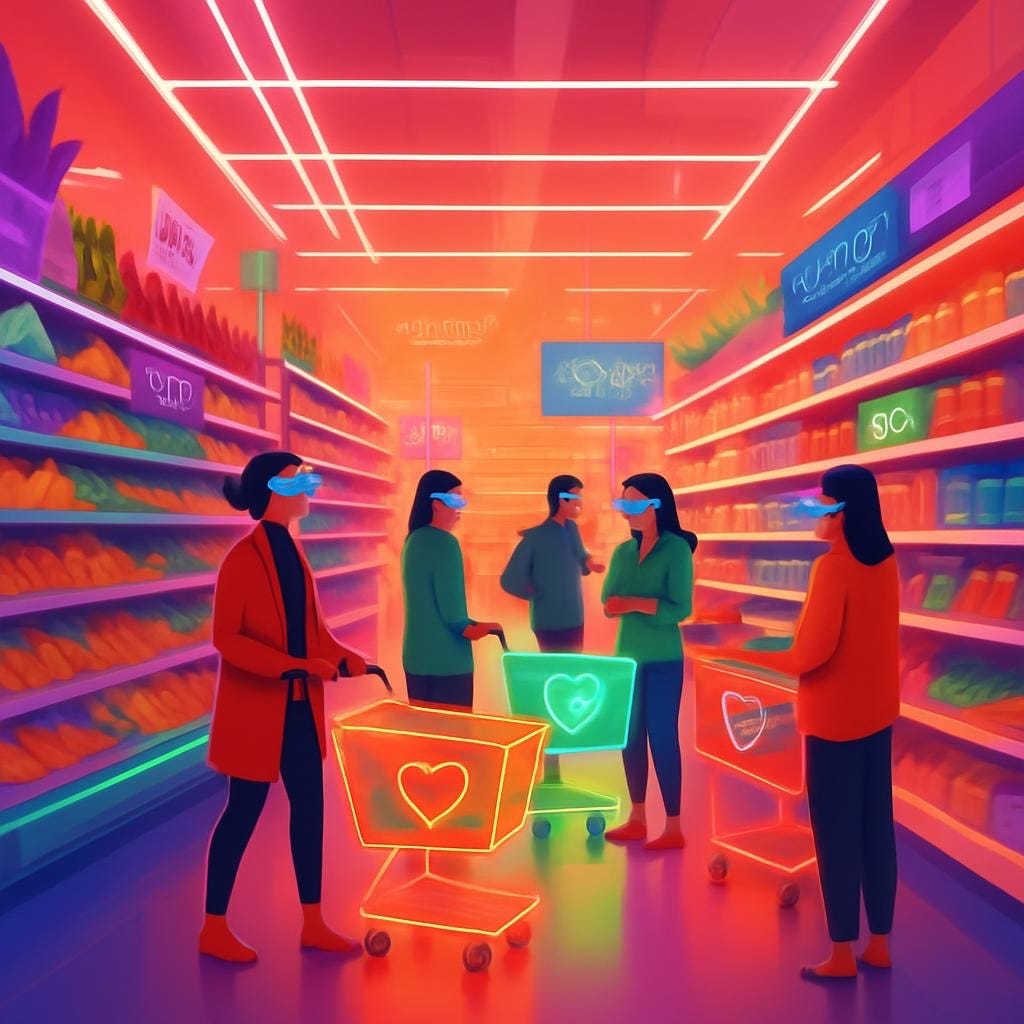
FutureCast: How Nutrition & Heartland Mart Went On to End America's Chronic Disease Epidemic (Audio)
Description
Introduction
You may remember the first part of this story from a few weeks ago. How Heartland Mart became the epicenter of a revolution that transformed American agriculture, led to the collapse of healthcare costs by 47%, and proved that the shortest distance between soil and health runs straight through a rural grocery store. It all began with an old Dollar General on Highway 41 that was repurposed to offer affordable nutrition and prioritized nutrient density.
The story began with Marcus Chen, the store's "Nutrition Navigator"—a job title that didn't exist when this was still a Dollar General—standing in front of a digital display that shows real-time nutrient density scores for the day's produce, traced back to the exact field where each item was grown. A bushel of sweet corn from the Hendricks farm twelve miles away glows with a golden "97" score. Next to it, imported corn from an industrial operation shows a dismal "31."
Today's FutureCast is another important chapter in that story. The one that dives deeper into how Heartland Mart went from soil minerals to metabolic impact because once customers could see the difference, everything changed. And how this links to the story of The Healthspan Revolution and Healthspitals.
But First a Disclaimer: This is a "future cast" - a fictional exploration of one possible future based on current trends and emerging technologies. While the companies and technologies mentioned are real, the events described are speculative fiction intended to help visualize potential outcomes. Like any forward-looking statement, actual results may vary significantly. This is not investment advice, predictive analysis, or a guarantee of future events. Consider it a thought experiment in what could be possible if current innovations in food, agriculture, and healthcare converge in transformative ways.
Memphis, Tennessee, 2037
Maria Rodriguez stands in the produce aisle of Heartland Mart, her smart cart glowing with a soft green light as she reaches for a bundle of kale. The moment her hand breaks the invisible sensor field around the vegetables, her cart display springs to life.
"Based on your current inflammation markers and this morning's glucose pattern, this Purple Moon kale will reduce your C-reactive protein by approximately 18% within 72 hours, Your sleep quality score should improve by 2.3 points tonight if consumed with dinner." The display noted
Maria smiles, remembering her first visit here three years ago. She'd been skeptical, even scared of all the technology. But Jennifer, one of the store's Nutrition Navigators, had walked her through everything. "Think of me as your translator, The technology knows the science, but I help you understand what it means for your life."
"The grocery store became our pharmacy, our nutritionist, our health coach, and our community center all at once. My doctor still oversees my clinical needs, but now she prescribes foods and lifestyle instead of pills." — Maria Rodriguez, Memphis resident
Around her, the store pulses with purposeful activity. Near the entrance, new customers sit with Nutrition Navigators for their onboarding sessions, learning to interpret their metabolic data. A grandfather receives real-time coaching on reversing his pre-diabetes, his plan approved by Dr. Martinez at the Memphis Lifestyle Medicine Clinic. In the community coaching corner, a group of construction workers compare their metabolic improvements on the leader board, their employer's wellness physician stopping by weekly to review progress.
This is the story of how a digital revolution in grocery stores, powered by personal health data, community incentives, and collaborative healthcare, transformed how America prevents and reverses chronic disease. How physicians evolved from prescribing pills to designing nutrition protocols. How a simple coin system aligned individual health with collective wealth. How human