Episode Details
Back to Episodes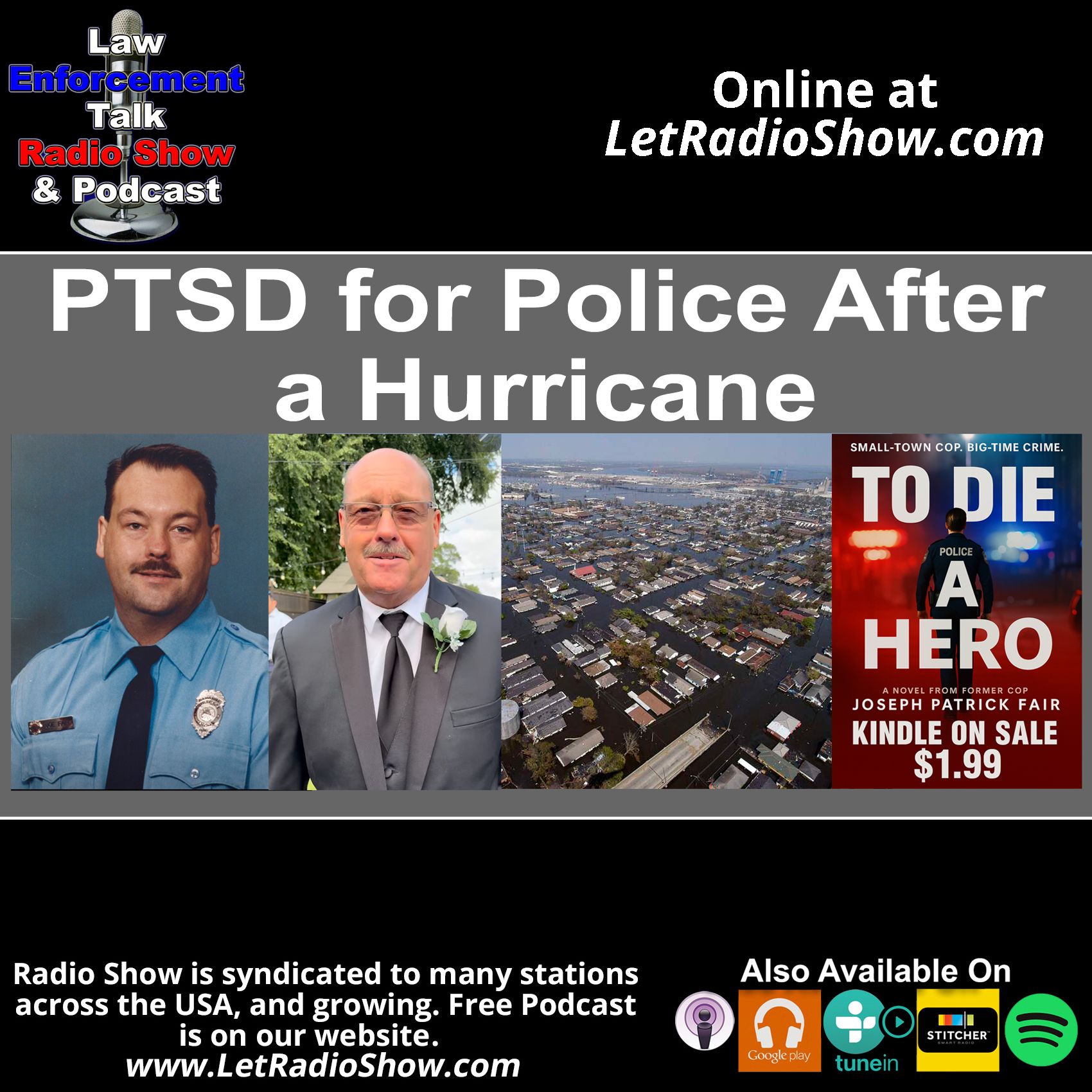
PTSD for Police After a Hurricane
Description
PTSD for Police After a Hurricane. In the wake of Hurricane Katrina’s devastation, many of the unsung heroes who rushed into chaos were first responders, police officers, firefighters, paramedics, putting their lives on the line to save others. One of them was Joseph Patrick Fair, a now retired Michigan, based police officer and firefighter, who served with distinction for over 25 years. His experiences during Katrina’s aftermath became a turning point, one that would ultimately reveal the hidden wounds of trauma and ignite a new chapter in his life as a writer, speaker, and advocate for recovery. The Law Enforcement Talk Radio Show and Podcast interview, available for free on their website, on Apple Podcasts, Spotify, Youtube and more podcast platforms.
“I was addicted to adrenaline,” says Fair, reflecting on his years in public safety. “You don’t even realize how it consumes you until the noise stops, and you’re alone with the aftershocks.” Those aftershocks, for Fair, came in the form of PTSD (Post-Traumatic Stress Disorder), a psychological condition that affects countless first responders who witness death, destruction, and human suffering. In the Law Enforcement Talk Radio Show and Podcast promoted across their Facebook , Instagram , LinkedIn , Medium and other social media platforms.
Fair was part of the emergency rescue teams deployed after Hurricane Katrina in New Orleans, one of the most catastrophic natural disasters in U.S. history. Katrina made landfall in August 2005 as a Category 3 hurricane, but its impact was far more devastating than its wind speeds would suggest. Levee failures left 80 percent of New Orleans submerged, and more than 1,300 lives were lost. The U.S. Army Corps of Engineers was later found responsible for the flood wall breaches. Look for supporting stories about this and much more from Law Enforcement Talk Radio Show and Podcast in platforms like Medium , Blogspot and Linkedin .
For Fair, it wasn’t just the physical wreckage that left a mark, it was the emotional toll of witnessing widespread human tragedy. PTSD for Police After a Hurricane.
"You're walking through a city that looks like a war zone. People are crying out for help. Some are already gone. You do what you're trained to do, but the images stay burned into your mind," he recalls.
The trauma Fair experienced was compounded by decades of cumulative stress from his work in police, fire, and EMS. “It’s not just one event. It’s years of calls that never leave you. One day, your body and mind say, ‘That’s enough.’” Like many in public safety, Fair developed a dependency on adrenaline as a coping mechanism, a silent, socially accepted addiction in the world of emergency response. Available for free on their website and streaming on Apple Podcasts, Spotify, and other podcast platforms.
But recovery, for Fair, came in a different form, through storytelling. He began writing as a way to process what he had lived through. His novel, To Die a Hero, we are an