Episode Details
Back to Episodes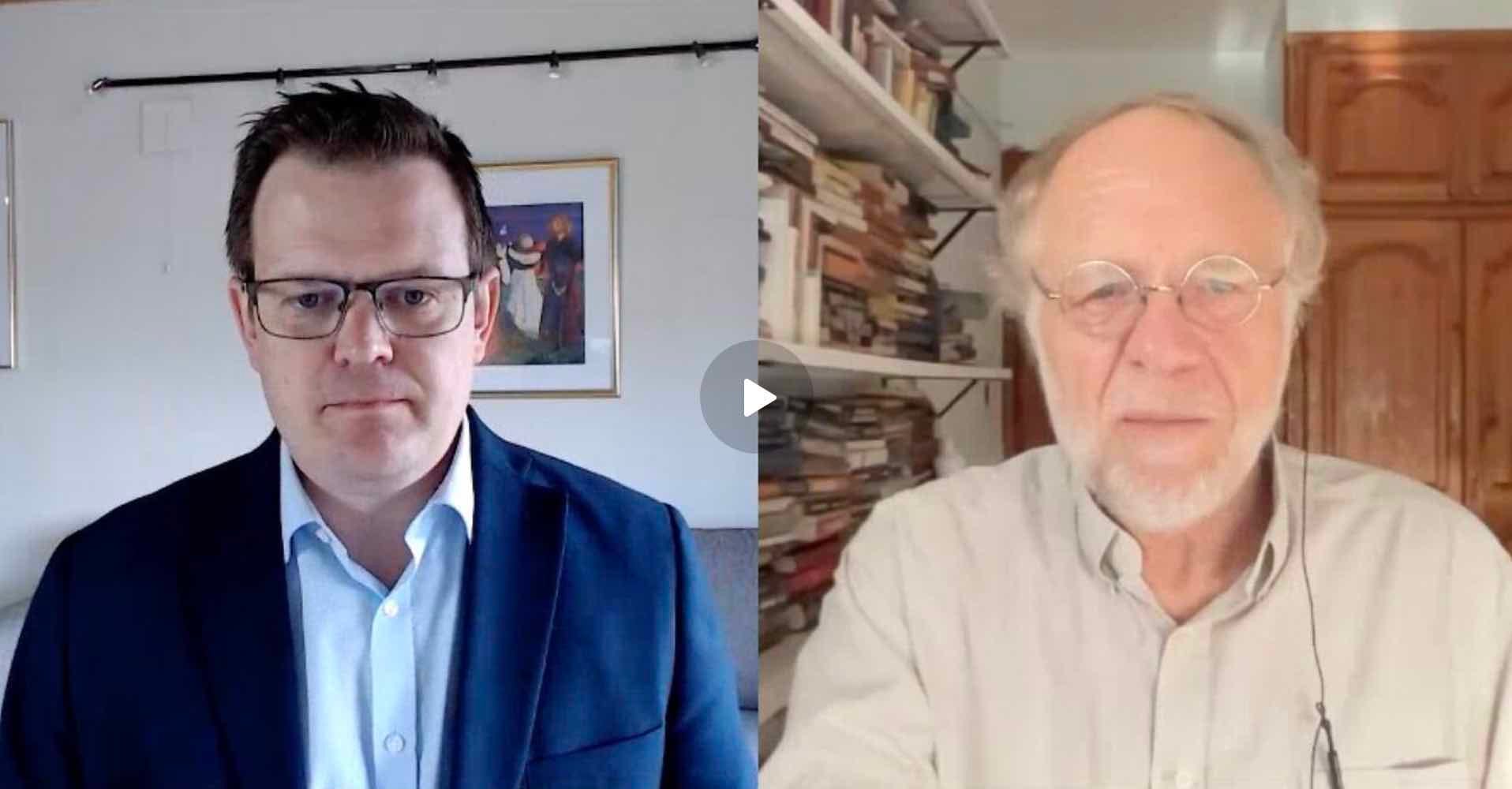
Glenn Diesen on THE UKRAINE WAR & the EURASIAN WORLD ORDER
Description
Glenn Diesen discusses his book The Ukraine War and the Eurasian World Order. He sketches the historical background from a geopolitical realist perspective, and argues that “to understand the war it is necessary to acknowledge that it has three participants: NATO, Russia, and Ukraine, with their respective objectives. NATO under U.S. leadership explicitly seeks to defeat Russia to end its great power status…Russia considers the war to be an existential threat and has acted accordingly…Ukraine obviously also considers the war to be an existential threat, although different factions within Ukraine may turn on each other…Irrespective of the outcome of the war, the unipolar world order has come to an end…A Eurasian world order is now finally emerging as the international distribution of power continues to shift from the West to the East, and the legitimacy of the Western-centric world order has been severely weakened.”
Dr. Glenn Diesen is a Scholarly Teaching Fellow at the Department of Security Studies and Criminology at Macquarie University. He studied international relations, Russian foreign policy, and security institutions in the European post-Cold War security architecture.
Excerpt:
During the first hour of the show, Alan Sabrosky agreed that we're transitioning toward a multipolar order. He felt that the US empire’s nuclear brinksmanship, having Ukrainian proxies attacking Russian early warning systems, exemplifies its reckless willingness to push things right up to the nuclear brink and beyond. And for that reason, he thought that the emergence of this multipolar world was questionable, or the way it's going to happen is questionable. He seemed to disagree with my analysis, which I put out as soon as Russia, quote unquote “invaded” Ukraine, that the Russians have more skin in the game, so the nuclear deterrent becomes more credible on the Russian side than on the US side. It's not totally existential for the US as a nation in the way that it is existential for Russia as a nation. But Alan thinks that the US empire is run by people who are so crazy—the neoconservatives—that they are going to push the nuclear brinksmanship just as hard as the Russians are. And that strikes me as a very pessimistic forecast. What do you think?
Well, I agree that the Russians, as you said, have more skin in the game. And the fact that it's at this proximity, that it's on the border of Russia, gives the Russians two advantages. One would be the actual war fighting, because in large-scale wars such as this, logistics is the key. And as it's happening on the Russian borders, they will simply have more benefits, as opposed to the United States, who have to supply everything from the other side of the planet.
But the second, obviously, is that they have more to lose. This is an existential threat for Russia. They see this as essentially a fight for survival, so they will go all the way. Which also raises the question, where are we going with these escalations? Because NATO is gradually escalating. Remember, first we weren't going to have tanks, then we did artillery, now missiles. The missiles can strike inside Russia. Now (NATO is) attacking Russia’s early warning system.
So, we have this gradual escalation. First of all, this can trigger a response from the Russians, which they're already arguing is c