Episode Details
Back to Episodes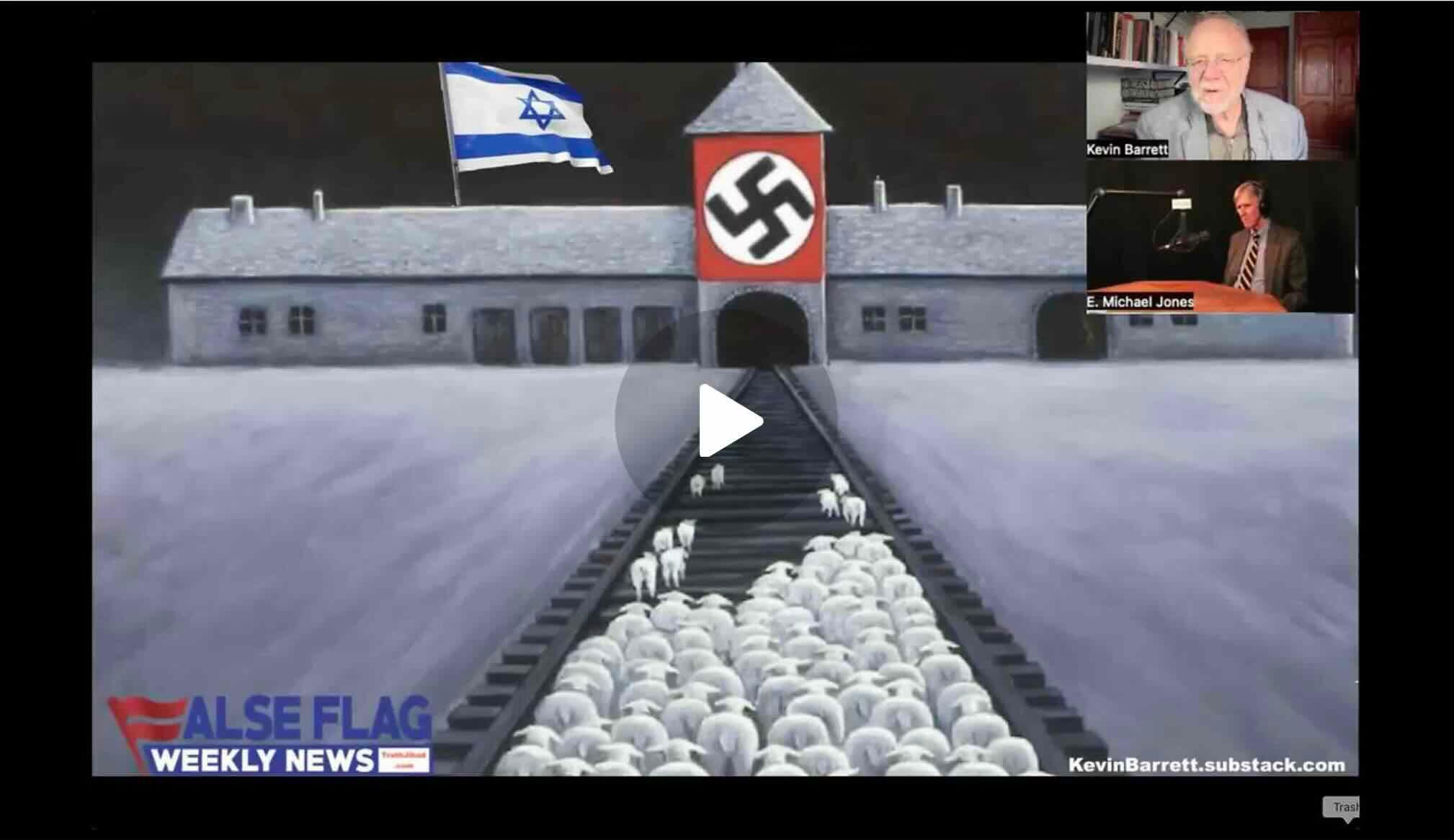
Free Speech Holocaust?
Description
Stripe is Substack’s only processor and they debanked me, so you can no longer pay me through Substack. Currently I am posting everything on Substack free and asking people to sign up for recurring donations at Paypal…or better yet, the free speech platform SPdonate where you may need to do a recurring larger recurring annual donation ($100 suggested) not a small monthly one, because SPdonate can’t process anything under $20.
Mainstream journalists say crazy things. Most of their madness is banal, consisting of shallow platitudes endorsing GoodThink. But sometimes they one-up themselves, exhibiting a genius for craziness that leads one to wonder: What was that about?!
Such a moment came when CBS commentator Margaret Brennan blamed the Holocaust on free speech. JD Vance correctly diagnosed Brennan’s remark as mad. But Freud wasn’t the first to note that genius is to madness near allied. That is, certain symptoms of apparent madness imply rich tapestries of meaning, some or most of which the mad person (or poet or dreamer, according to Freud) does not consciously grasp.
Brennan’s brilliantly mad remark was symptomatic of the decadence of today’s pseudo-liberal elite. Many decades ago, back when liberals genuinely believed in liberalism,* it was taken for granted that “the Holocaust” and “free speech” were antagonistic polar opposites. Everyone understood, or professed to understand, that Hitler’s regime had destroyed the moral compass of its society by imposing a one-size-fits-all totalitarianism that brooked no dissent. Martin Niemöller’s famous line about how “first they came for the socialists and I did not speak out because I was not a socialist” summarized the accepted wisdom that the drunk-on-censorship Nazis crushed people’s free expression group-by-group. The implication of Niemöller’s truism was that widespread failure to speak out, and consequent loss of free speech, enabled the horrors of Hitler’s regime, including the war it supposedly caused and the extermination of six million Jews (mostly in gas chambers) that it supposedly perpetrated. In short, the destruction of free speech—not free speech—caused the Holocaust.
So what led Brennan to madly flaunt her self-styled liberal identity by expressing the precise opposite of the classical liberal understanding of “the Holocaust” and its relation to free speech?
The answer, of course, is that she is afraid of something. “The Holocaust” represents something so fearful she cannot allow herself to think about it, or even to think at all. This thought-stopping magic of “the Holocaust,” the secret to its power, is related to its incomparability. Prior to the ri