Episode Details
Back to Episodes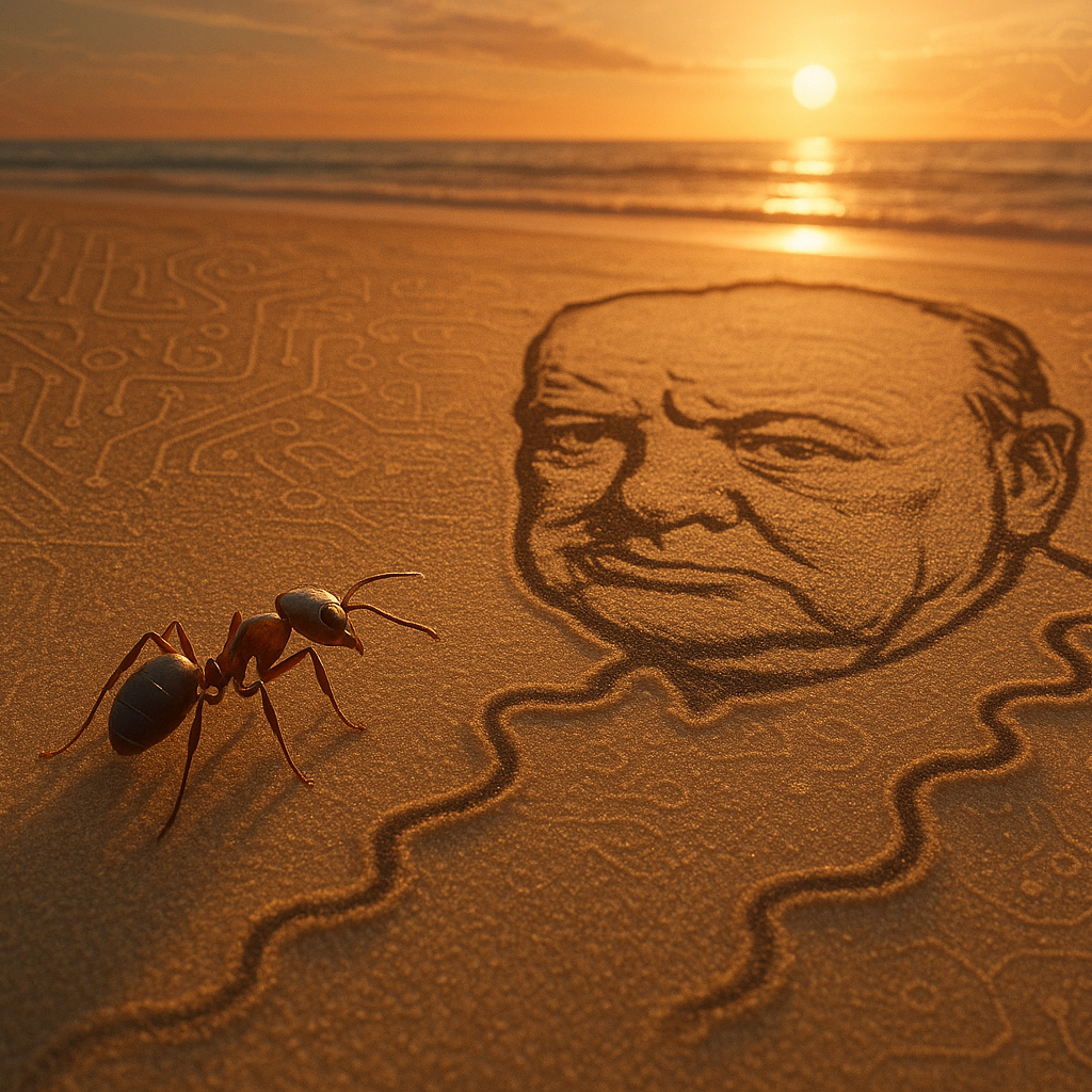
AI with Shaily: The Ant, Churchill, and What AI Really Understands About Meaning
Published 10 months, 4 weeks ago
Description
Welcome to *AI with Shaily* 🎙️, hosted by Shailendra Kumar, where we dive deep into the fascinating world of artificial intelligence and its impact on our everyday lives. In this episode, Shaily brings a thought-provoking philosophical story from Hilary Putnam that’s making waves again in social media and philosophy circles, especially relevant to AI today 🤖✨.
The story goes like this: imagine an ant walking along the beach, randomly drawing a squiggly line in the sand. By sheer coincidence, this line looks like a portrait of Winston Churchill 🐜🏖️🖼️. But does that mean the ant actually created a meaningful portrait? Absolutely not! The ant has no knowledge of Churchill, no intention to depict anyone, and no understanding of what the pattern represents. This example perfectly illustrates Putnam’s idea about what it truly means to create *meaningful* representation — it’s not just about accidental resemblance but about intention and understanding.
This story leads into Putnam’s famous "brain in a vat" argument 🧠🧪, which challenges our skepticism about reality. If our perceptions could be a simulation, how can we trust what we see or know? According to Putnam, representation requires a genuine causal connection or intention behind it, not just random similarity.
Now, why is this so important for AI? Today, machines can create art, recognize faces, and generate images that sometimes rival human creativity 🎨🤖. But do these AI systems truly *understand* what they create, or are they just like the ant, producing accidental patterns that look meaningful? This sparks a lively debate about AI’s creativity and the nature of meaning in generated content. It also ties into broader ideas like simulation theory and virtual reality—are we perhaps just brains in vats ourselves, mistaking random patterns for reality? 🌐🔍
Shaily shares a personal anecdote: when he asked a friend to describe her favorite painting, she gave a rich, emotional explanation filled with intention and knowledge 🖼️❤️. Compare that to a random doodle that might look similar but means nothing without context. This contrast captures the essence of Putnam’s point and offers a great mental exercise when thinking about AI’s creative abilities.
Here’s a bonus tip from Shaily: next time you see AI-generated art or a deepfake video, take a moment to ask yourself—what’s behind this image? Is there real intention, or just pattern recognition? 🤔🖼️ This question helps sharpen your critical thinking in an age flooded with AI-generated content.
To wrap up, Shaily quotes Putnam: *“Meaning just ain’t in the head.”* 💭 This reminds us that knowledge and representation depend on interaction and connection, not just accidental appearances.
If you want more insightful discussions like this, follow Shailendra Kumar on YouTube, Twitter, LinkedIn, and Medium under *AI with Shaily* 📱💻. Don’t forget to subscribe for your regular dose of AI news and philosophy, and share your thoughts on the ant’s accidental artistry in the comments. After all, in a world of artificial minds, it’s your perspective that brings true meaning 🌟🧠.
Thanks for tuning in! Until next time, keep questioning and keep exploring! 🚀🔍