Episode Details
Back to Episodes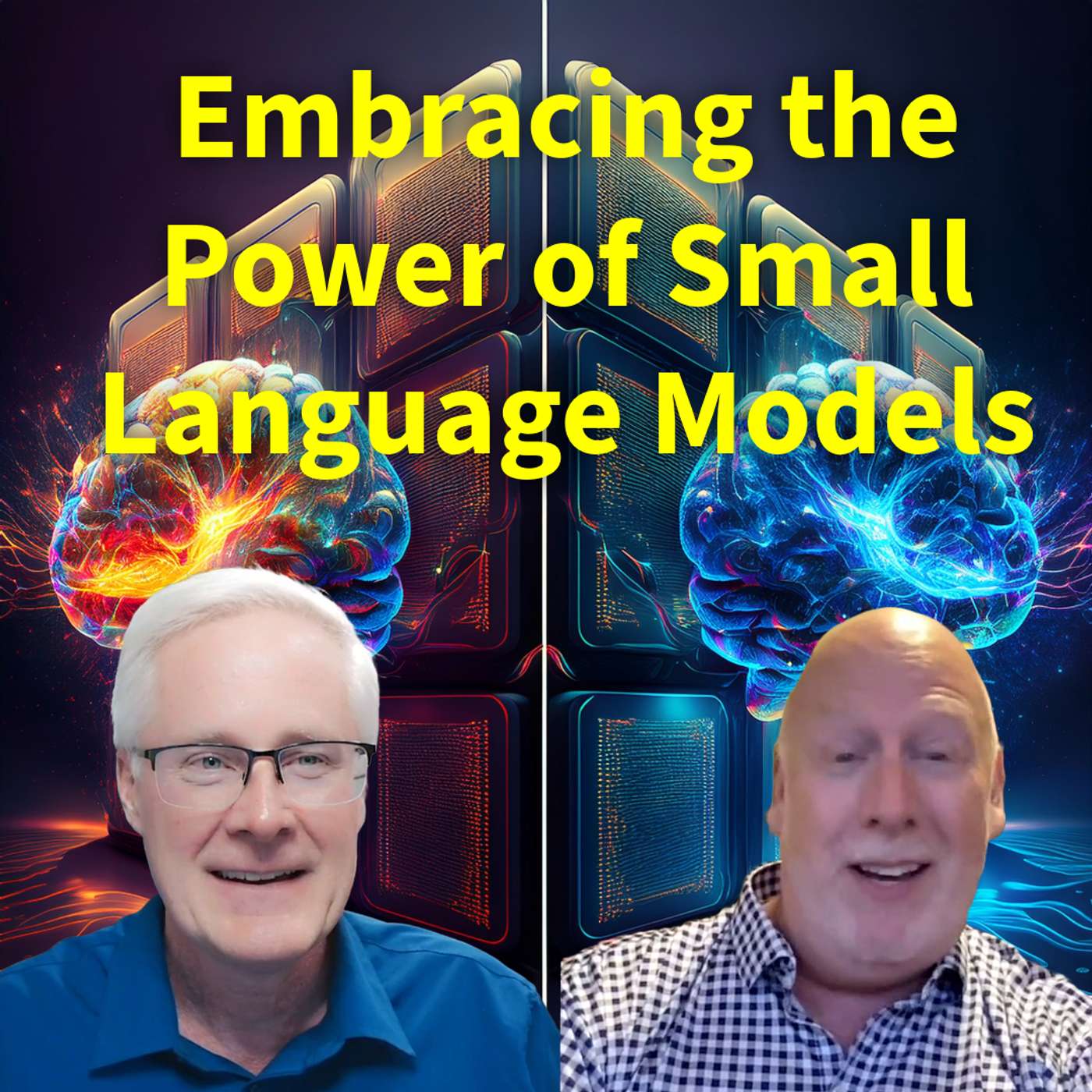
#279 Embracing the Power of Small Language Models
Description
Check out my new book AI Augmented Teams on Amazon or on my website paidar.ai/books.
In this episode of Embracing Digital Transformation, hosted by Dr. Darren, we delve into the innovative world of Small Language Models (SLMs) with guest Chris Carter. Chris shares his journey from programming with a Commodore Vic 20 to leveraging advancements in artificial intelligence and cloud computing today. The discussion highlights the pivotal shift in focusing on smaller, efficient models rather than extensive, resource-hungry large models. Key points include the importance of data cleansing, the role of SLMs in enhancing operational efficiency within SAP environments, and actionable strategies for organizations to maximize their use of generative AI without compromising on data integrity. ## Takeaways Discover how smaller language models (SLMs) are revolutionizing the AI landscape. These models provide efficient alternatives to large models for specific tasks, ensuring quicker results and reduced data noise. Their efficiency will surely pique your interest. Understand that data cleansing and maintenance are the backbone of effective AI operation, ensuring that only the most relevant information contributes to processes. Realize the potential of generative AI to revolutionize roles across various departments, such as HR, by streamlining processes without requiring extensive programming knowledge. - Practical experimentation with SLMs fosters creativity and innovation within teams, encouraging a culture of exploration and learning. - The future of AI lies in precision and targeted solutions rather than sheer computational power, driving a shift in how teams approach AI deployment. ## Chapters - 00:00 - Introduction to the Episode - 02:35 - Chris's Origin Story in Technology - 10:15 - The Evolution of AI and Generative Models - 18:45 - The Impact of Small Language Models on SAP Use Cases - 25:30 - Importance of Data Cleansing and Maintenance - 32:00 - Operationalizing AI in Organizations
In today's world, technology continues to revolutionize the way we think, communicate, and conduct business. One such innovation, small language models (SLMs), is making waves across various industries. These models, with their ability to drive significant change without overwhelming resources, are proving to be a game-changer, shifting the conversation from the conventional large language models to more nuanced and manageable systems.
By harnessing the capabilities of SLMs, technologists and business leaders are positioned to streamline operations, enhance communication, and optimize processes in ways previously unimaginable. So, how can organizations effectively leverage the potential of small language models? Let’s explore several key aspects.
The Shift Toward Smaller, Targeted Models
As organizations grapple with the overwhelming capabilities of large language models, the realization has begun to set in—sometimes, less is more. SLMs operate on a more focused scale, allowing businesses to hone in on specific datasets rather than risk contamination from a vast ocean of information.
With such precision comes the ability to cater to distinct business needs. For instance, in enterprise environments, especially those dealing with complex systems like SAP, it's crucial to avoid unnecessary complications that large datasets can introduce. By utilizing SLMs, businesses can derive insights directly from relevant databases, thereby ensuring the quality of outcomes. Tasking an SLM to process only pertinent information can lead to practical applications, such as understanding employee attendance patterns without sifting through extraneous data. This approach maximizes efficiency without losing the richness of valuable information.
Additionally, this focus is not just about data minimization, but about cultivating quality outputs that enable