Episode Details
Back to EpisodesBird-Women of Greece and Russia
Description
Bird-women hybrids of Greek legend and Russian folklore are uniquely ambivalent, sometimes bringing death and destruction and at others, prophetic wisdom and the joy of Paradise.
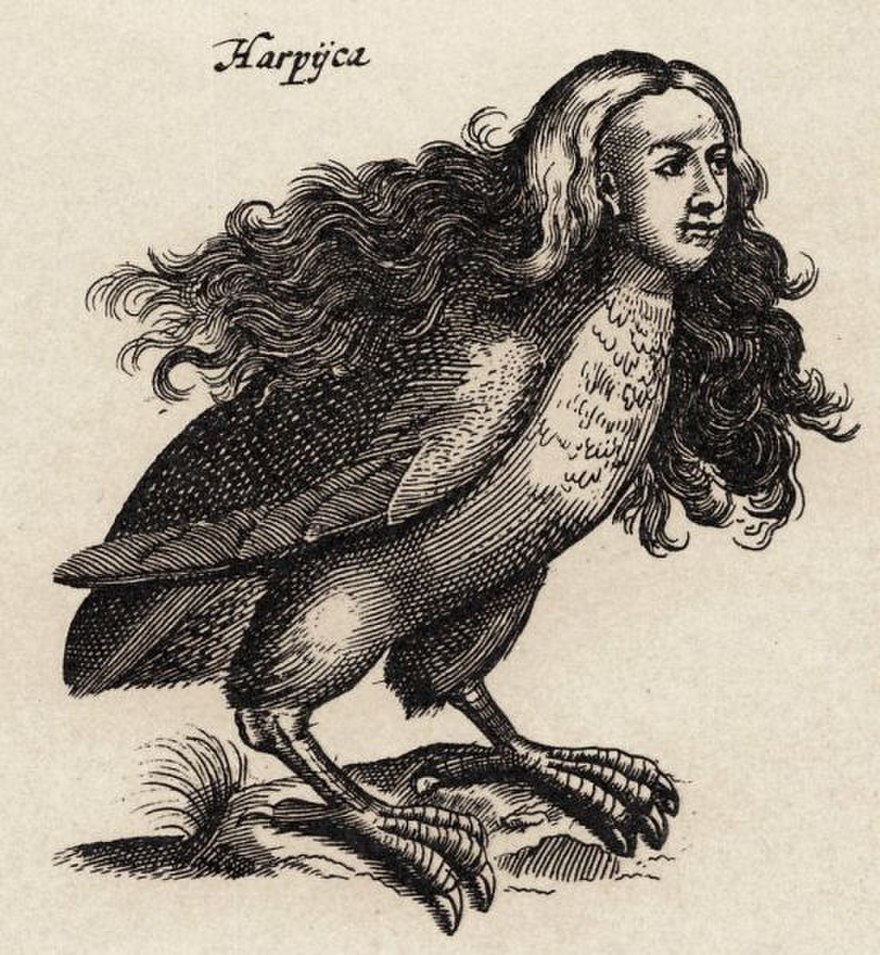
The two Greek species we treat are sirens and harpies, both at times described as having the bodies of birds and faces or upper bodies of human females.
Beginning with harpies — we hear a bit of audio from the 1963 film Jason and the Argonauts, which features a pair of stop-motion harpies created by Ray Harryhausen. While these are more batlike than birdlike, the animator’s tendency to conflate features is actually in line with various classical tales, which tend to disagree sometimes offering winged harpies, others not, and if birdlike, not necessarily featuring the heads of women. We hear some of these descriptions read by Mrs. Karswell.
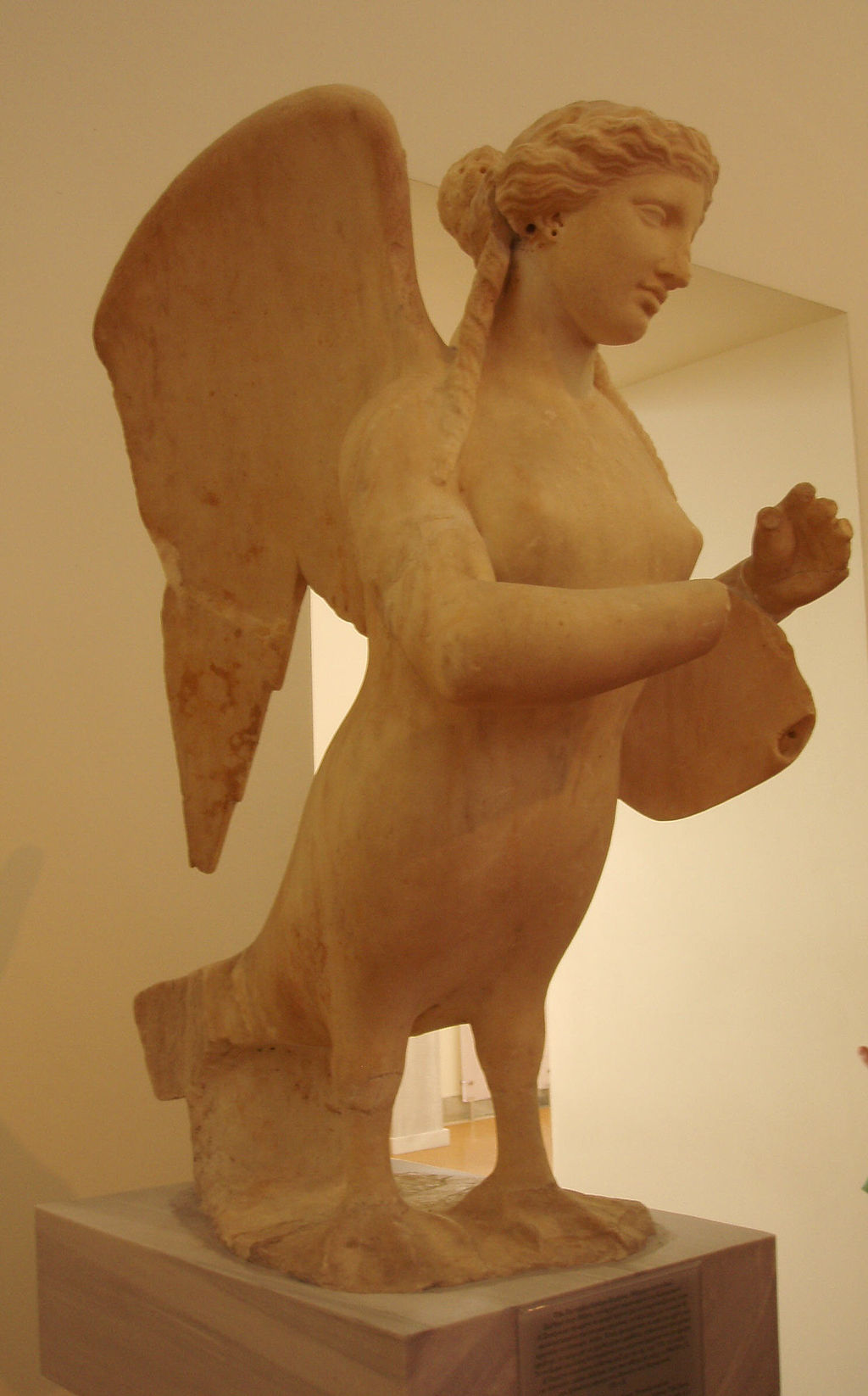
As for sirens, while today they are regarded as equivalent to mermaids, originally they were bird-human hybrids. Thanks to the siren’s connection to the sailors they would seduce, an intuitive shift from bird to fishlike portrayals seems natural, but did not occur until late antiquity or the early medieval period. It seems likely that once this transition occurred the harpy’s image consolidated around the birdlike form no longer associated with the siren. Unlike the creature’s form, the siren’s song, which drew sailors to wreck their ships upon the rocks, has always been a defining attribute of the creature.
There’s something of a disconnect between ancient siren and harpy narratives and the creatures’ representation in visual art, with some of their traits more fixed in the latter than the former. In particular, sirens and harpies, along with other hybrids such as the griffin and sphinx, first appear in Greek culture as decorative embellishments on household items. These monsters, as discussed, were borrowings from cultures of the East, with the human-headed Egyptian ba bird being a likely origin for our avian figures.
Listen Now
Love PodBriefly?
If you like Podbriefly.com, please consider donating to support the ongoing development.
Support Us