Episode Details
Back to Episodes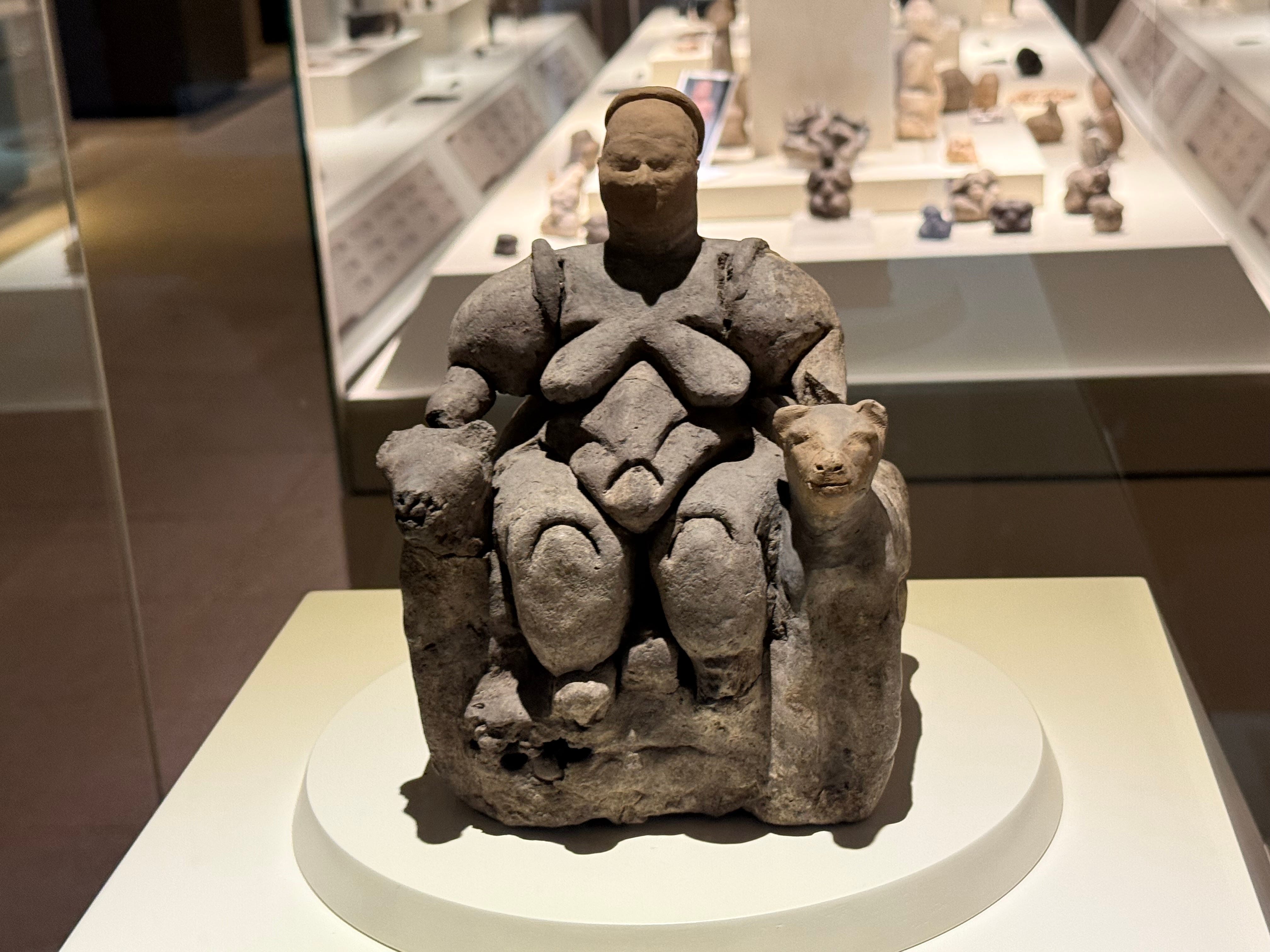
Ep 3 Using M-N- to determine which came first - Indian or Germanic culture?
Description
So the Ingaevones, this is the ancestors who then became the English, comes from Ing, who corresponds to the Old Norse god Ingvi, Freyr. And Freyr is actually a pre-Indo-European remnant, we believe.
So in this tripartite structure I talked about where we have sovereign, soldier (so sovereign representing, you know, the monarch, the magical aspect of sovereignty, (which is all of the mystical, mythological, the poetic)), the stuff I'm really talking about today (in the context of if we're trying to build a culture of Manuland among all the Indo-European peoples) we’re reaching back into history to find our common ancestors and this M-N-sound and this area, the Yamna.
So that's kind of what I'm doing here. You have the soldiers, the security function, which is my namesake, the Istavones. Then the third function, the economic function, the fertility function, basically, we believe, which corresponds to Friday, the day Friday, corresponds to the Old Norse god Ingvi, whose name is also Freyr.
This is a pre-Indo-European layer. So prior to the Yamna, and their descendants spreading out from ancient Ukraine across to Ireland and eastwards to India, there was a common European culture, old Europe, old European culture. I've written about it before in the context of its female goddess worshipping, which is often we also think of that as the fertility function.
And the amazing archaeological museum I visited in Ankara, which, as you now know, was founded by a Celtic language-speaking community a couple hundred years before the Common Era, and the Romans eventually conquered there as well.
That museum amazing archaeological museum which will come into many of our episodes to come.
I've already printed pictures just has vast numbers of these goddess forms which we find in every area between Ireland and India really, but particularly between Ireland and Anatolia and Ireland and Turkey in Europe.
This is the old European culture where most of the idols we find in archaeological sites from this era are female forms. 95% of them are female forms according to experts who have studied this and there's many of these sites in ancient Ukraine and contemporary Ukraine and also across Anatolia.
This layer was then replaced by the Indo-European layer, the Yamna, the emanations of the Yamna community who founded all the living Indo-European languages. And my, one of my starting points, I talk about it in the second and third episodes of Finding Manuland. Well, actually, I write about it because I haven't spoken about it yet, but I will get to voicing those episodes.
This mound in Dnipro, Dnipro, the upper Don, when you look at it in this D-n- sound, in Dnipro, where this mound, again, M-n-, in Mound, where this mound was destroyed by property developers in May 2021, which was another of my starting points for this amazing journey across Manuland.
Underneath this Yamna burial mound, where there was one, well, the first person buried there was the local monarch, the local Rì, the local Rex, the local king, reich. And there was assorted other bodies in there, including the body of the Soviet era head of the collective farm who had delusions of grandeur.
But underneath this mound was a stone circle. And that stone circle was built by the Stredny Stog culture, which predates the Yamna.
And as part of this old European layer, this unified culture across Europe from Ireland to Ukraine and indeed in Turkey and Anatolia and stuff where we find the same kinds of artifacts. And we also find, in many cases, the same script which no one has cracked as yet and probably fed into the Indo-European language.
We'll come back to that because it's very important. But the old Norse god Ingua Freyr probably corresponds to this layer and it's the survival.
So in Greek mythology, for instance, the story I've just told you is often it's, two gods fighting over each other and dominatin