Episode Details
Back to Episodes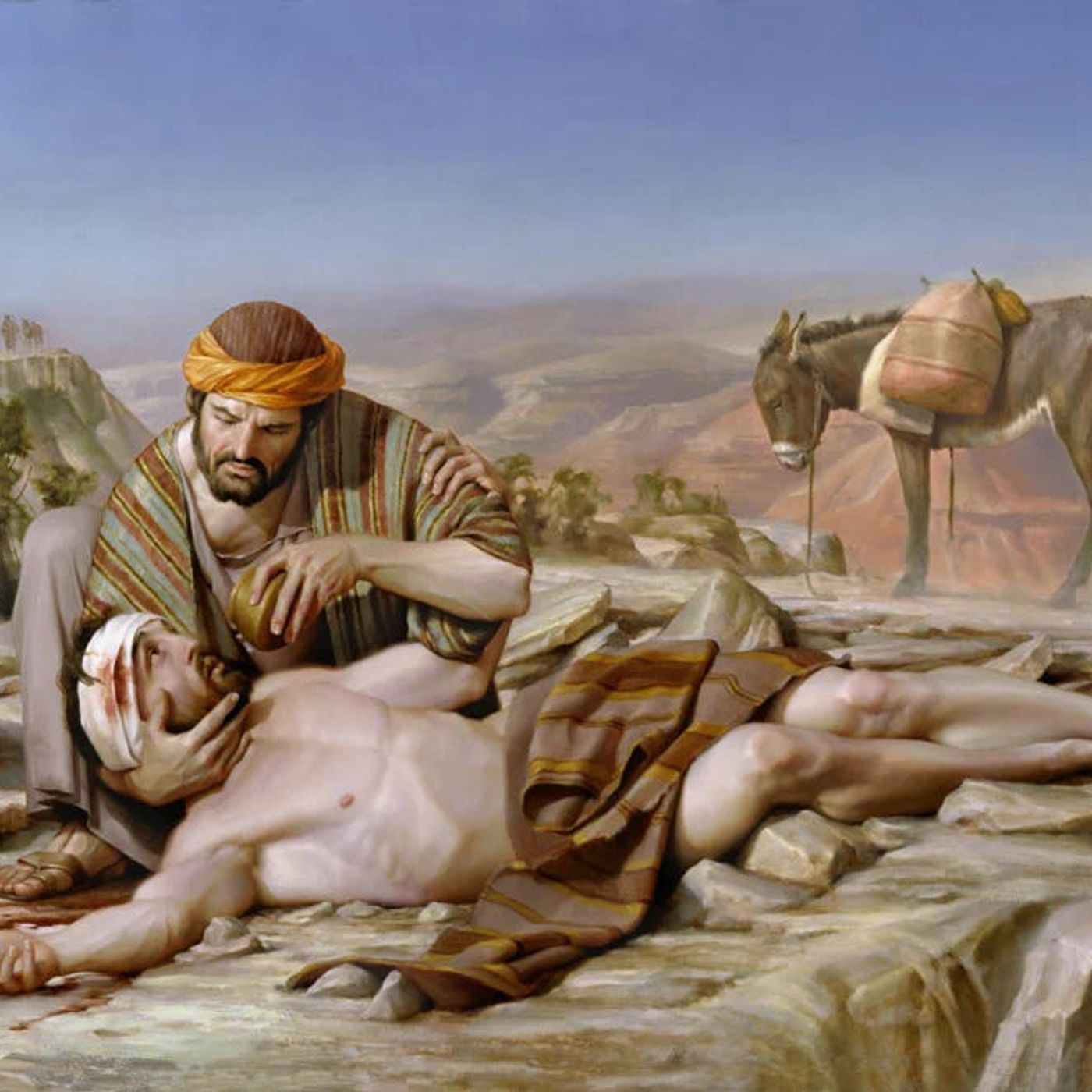
God Wished to be Called Our Neighbour
Published 1 year, 3 months ago
Description
In one sense, the literal meaning of the Parable of the Good Samaritan is quite clear. We could summarise it by saying that we ought to prove ourselves to be good neighbours to those around us, to those who are in need. Perhaps it is simply this that Christ’s wishes to tell us.But let’s not rush too quickly to this interpretation. Let us consider first the symbolic meaning of this story. The early church was uniform in believing that the Parable of the Good Samaritan was not teaching us simply to love other people. Rather, it is a Parable that teaches us how God has loved us in Christ. This may have been veiled from the minds of the original listeners, but it is nevertheless the truth.The shocking first detail of the story is that it was not the priest or the Levite who stopped to help the man who was in need. These are the ones who we would expect to do so. They are people like me, who wear clothes signifying their religious role. And, yet, they were too busy, preoccupied and disinclined to help a man who was truly broken.The Samaritan, on the other hand, represented an ethnic group and a religious sensibility that was resented by the Jewish people of the time. Christ’s story is subversive because it was the Samaritan and not the religious officials who stopped to help the man who had been beaten and robbed.But, there is an even deeper and more subversive aspect to this observation, which is that, in speaking about the Good Samaritan, Christ was in fact speaking of himself.Consider the words of the great Early Church theologian Origen:‘The priest is the law, the Levite is the Prophets, and the Samaritan is Christ. The wounds are disobedience. The (stable), which accepts all who wish to enter, is the church, The two denarii mean the Father and the Son. The manager of the stable is the head of the church, to whom its care has been entrusted. The fact that the Samaritan promises he will return represents the Saviour’s second coming.’Or the words of St Augustine:‘God our Lord wished to be called our neighbour. The Lord Jesus Christ meant that he was the one who gave help to the man lying half-dead on the road, beaten and left by robbers.’And, again,‘Robbers left you half-dead on the road, but you have been found lying there by the passing and kindly Samaritan. Wine and oil have been poured on you. You have received the sacrament of the only-begotten Son. You have been lifted onto his mule. You have believed that Christ became flesh. You have been brought to the inn, and you are being cured in the church.’It is so important to recognise this level of the story. Without it, the Parable of the Good Samaritan becomes simply a moralistic fable, telling us that it is not our status that makes us morally good but our actions. That message is valuable enough but this is not where God begins with us.The reason for this is because we do not begin in a place of strength and ability. Rather, we begin in a place of weakness and sin. We are like that man who fell among robbers, being stripped of our dignity, beaten and bruised by sin, both our own and that of others. We are helpless in and of ourselves and have no power to heal or save ourselves.The Samaritan represents the work of Christ and, in the deepest sense, the compassion of God for us. He then has had compassion upon us. He has bound our wounds. He has poured on them the oil and wine which cleanses and heals us. He has placed us upon his animal and taken us to a place of safety, refuge and restoration. This is all the work of Christ. And, as Origen tells us, as we are healed and restored within the ark of the Church of God, we await the return of the Son of God, who will bring to us ultimate healing and will bestow upon us everlasting life.Christ is the Samaritan. God wished to become a neighbour to us and he has done so in the coming into this world of Jesus Christ. He ‘wished to be called our neighbour’.Consider for a moment how this might apply to you: What mercy the Lord has had u