Episode Details
Back to Episodes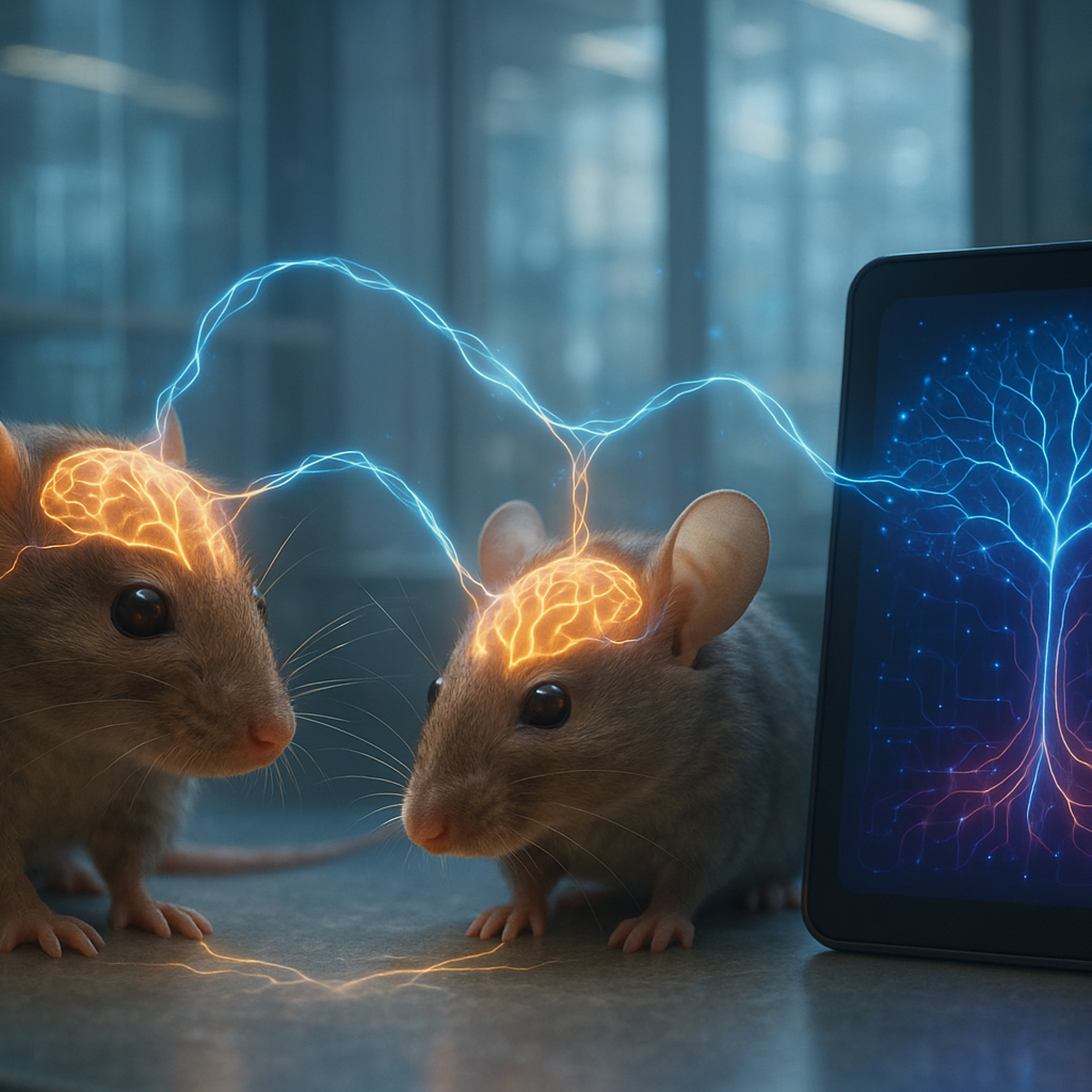
AI and Neuroscience Unite: How Mice and Machines Share a Social Brain Code
Published 11 months, 1 week ago
Description
Welcome back to *AI with Shaily*! 🎙️ I’m Shailendra Kumar, your host, bringing you the latest and most exciting breakthroughs where neuroscience meets artificial intelligence. 🤖🧠
Imagine a scene in a lab where two mice are interacting, their brains syncing in a beautiful, coordinated neural dance. Now, add a twist: an AI agent designed to mimic social behavior shows a strikingly similar pattern deep within its artificial neural networks. Sounds like science fiction? Well, UCLA researchers have turned this into science fact! 🔬🐭✨
In July 2025, a groundbreaking study published in *Nature* revealed that biological brains and AI systems develop *strikingly similar neural patterns during social interaction*. The focus was on a specific brain region in mice called the dorsomedial prefrontal cortex. Scientists found that certain neurons synchronize their activity, creating what they call “shared neural spaces.” This synchronization isn’t just a quirky brain phenomenon—it’s fundamental to how social connections form and function. 🧩💞
Here’s the amazing part: when AI agents tackled social tasks, their neural networks exhibited analogous synchronization patterns, mirroring those unique biological interactions. UCLA’s team developed a novel computational framework that breaks down complex neural data into “shared” versus “unique” components, allowing a direct comparison between real brains and artificial ones. It’s like discovering a secret handshake between nature and technology! 🤝🌐
Why is this important? For starters, it opens powerful new windows into understanding social cognition—not only in animals but also in machines. This insight could lead to better diagnostic tools and treatments for social disorders such as autism. Moreover, as AI assistants and companions become increasingly common in our daily lives, this research helps us build AI that genuinely understands human social nuances, rather than just pretending to. 🧩💡
I remember when the idea of chatting with an AI that truly understands social cues was pure fantasy. Now, thanks to studies like this, it’s within reach. It makes me wonder—how soon will your AI buddy know *you* as well as a close friend does? 🤔💬
Here’s a bonus tip: when designing or interacting with AI systems, think beyond just task performance. Pay attention to how these systems process social cues and synchronize with your behavior—that’s where the magic of genuine connection happens. ✨🤗
As we wrap up today’s episode, I’ll leave you with a timeless thought from the great neuroscientist Hebb: “Neurons that fire together, wire together.” Thanks to UCLA’s discovery, this wisdom now echoes not only in our biological brains but also in the circuits of artificial minds. 🔥🧠💻
Don’t forget to catch more AI insights on my YouTube channel, follow me on Twitter and LinkedIn, and dive into detailed articles on Medium. I’d love to hear your thoughts—do you think AI will ever truly *feel* social connection? Share your views in the comments and subscribe to keep riding the wave of AI’s latest and greatest with me, Shailendra Kumar. 🌊📲
That’s it for now on *AI with Shaily*. Till next time—keep your neurons firing and stay curious! ⚡🧠😊