Episode Details
Back to Episodes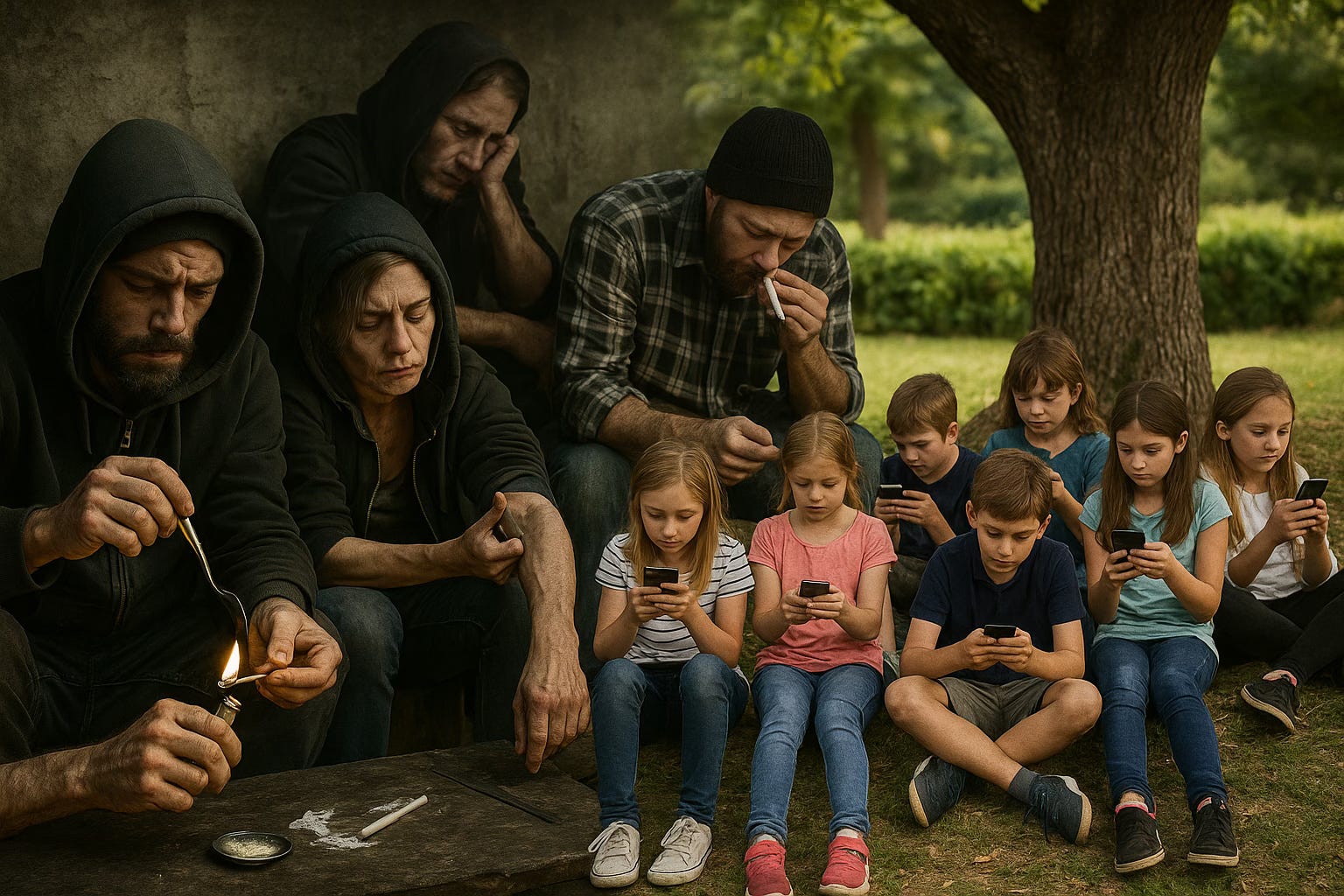
Special Issue: Digital drugs in our children's pockets 💊
Description
Do you know what cigarette companies in the 1950s, Las Vegas casinos, and your favorite mobile game or social network have in common? They all use the same psychological tricks to keep you hooked. The only difference? You’d hardly sell cigarettes to kids today, while we happily put digital dopamine dealers into their pockets—with a smile.
Sean Parker, former president of Facebook, put it bluntly:
“We knew exactly what we were doing. We were exploiting a vulnerability in human psychology.”
And as it turns out, he wasn’t alone.
How Digital Heroin Works
Imagine you’re playing a slot machine. You pull the lever and… sometimes nothing, sometimes a little win, and once in a while—JACKPOT!
This “variable ratio reinforcement” is the most addictive mechanism psychology knows. It’s exactly how scrolling on social media works.
You open the app, and you never know what you’ll find. A boring post from your aunt? Skip. A funny video? Small dopamine hit. A photo where someone tagged you? BINGO!
Your brain floods with happiness. And because you never know when the next “hit” will come, you keep scrolling… and scrolling…
In 2021, Frances Haugen, a Facebook whistleblower, leaked internal documents:
32% of teenage girls reported that Instagram made them feel worse about their bodies. Meta knew. They did nothing.
TikTok: Cocaine in App Form
If Instagram is marijuana, TikTok is pure cocaine. Its For You Page algorithm is the most refined dopamine delivery system humanity has created so far.
Average video length? 15–60 seconds—just long enough for a dopamine spike, but too short to feel full.
The algorithm tracks everything:
* How long you watch a video
* Whether you finish it
* Where you look on the screen
* How fast you scroll away
In just minutes, it knows more about your preferences than your closest friends. And then it feeds you content designed to glue you to the screen.
Research shows concentration loss is key to TikTok addiction—you lose track of time, of reality, of your surroundings.
Dr. Anna Lembke from Stanford calls it dopamine overload. Your brain responds by reducing sensitivity—you need more and more stimulation for the same satisfaction.
Ordinary activities become boring. A book? Dull. A walk? Pointless. Conversation? I’d rather scroll.
Snapchat and Digital Blackmail
Snapchat Streaks are a genius form of digital blackmail. You send snaps with a friend for 50 days in a row? Great—you have a streak. Miss one day? It’s all gone.
We’ve seen kids who:
* Gave friends their passwords to keep streaks going during vacation
* Woke up at night to send a snap
* Had panic attacks when their internet went out
That’s not friendship. It’s digital slavery disguised as fun.
Loot Boxes: Teaching Kids to Gamble
The worst manipulation happens in games. Loot boxes—those cute little chests with random content—are pure gambling.
Instead of chips or cash, you’re betting… well, money too. It’s just less visible.
FIFA (now EA FC) has its Ultimate Team packs. Want Messi? Maybe he’s in your first pack for $2. Or in the hundredth for $200. Or never.
It’s a lottery. With no age limit.
Belgium and the Netherlands banned loot boxes as illegal gambling.
In the Czech Republic? Silence. The average Czech child spends about 2,000 CZK ($85) on microtransactions per year.
The “high rollers”? Tens of thousands.
Microtransactions
Modern mobile and online games run on a free-to-play model—the game is free, but constantly tempts you to pay small amounts (aka microtransactions) for extra advantages: boosters, gear, game currency, new content.
These are often priced at $1–$5 per purchase, so