Episode Details
Back to Episodes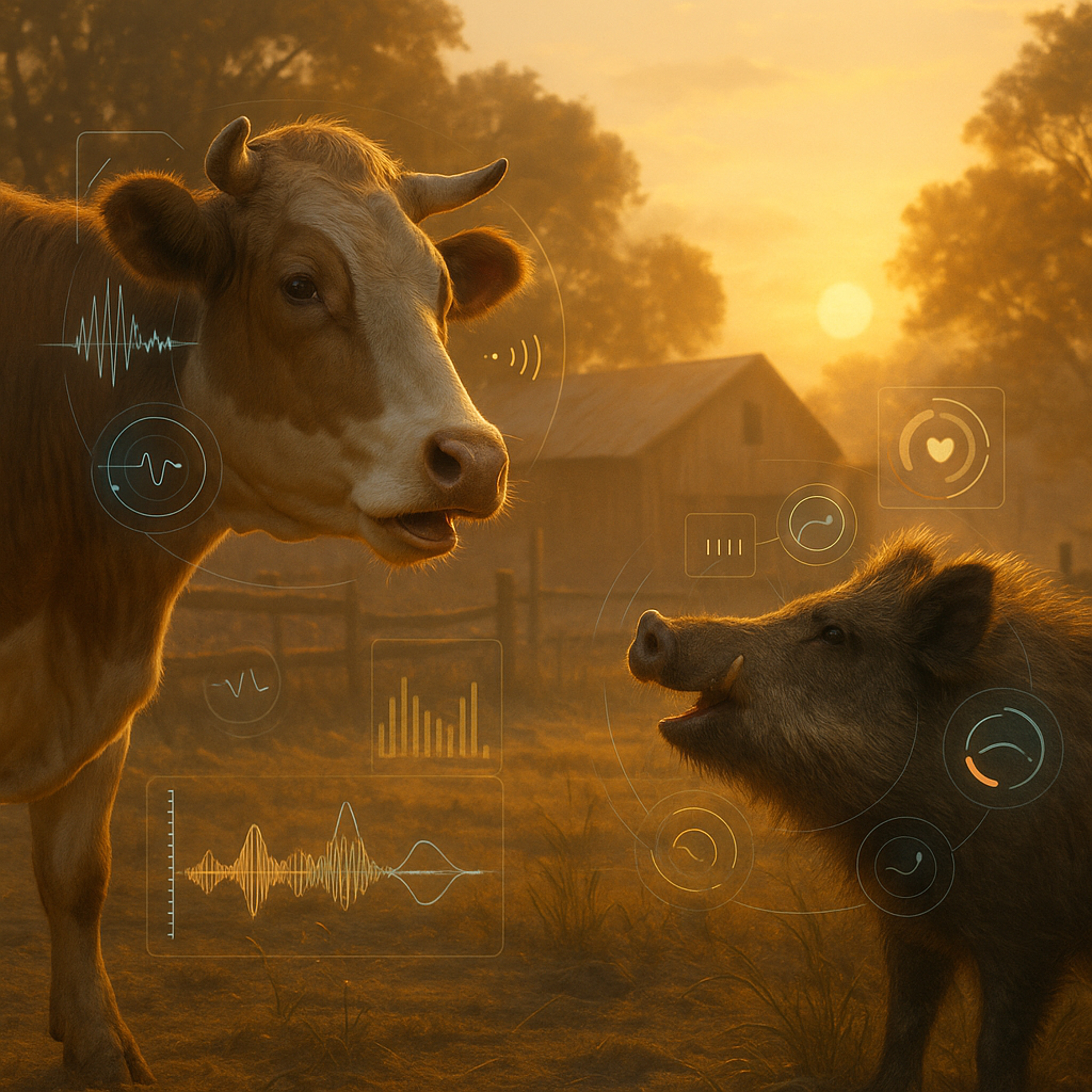
AI Decoding Animal Emotions: The Future and Ethics of Listening to Wildlife
Published 11 months, 3 weeks ago
Description
Welcome to AI with Shaily! 👋 I’m Shailendra Kumar, and today we’re diving into a fascinating and furry frontier of artificial intelligence—decoding emotions in wildlife using machine learning. 🐄🐗 Imagine an AI that can listen in on a cow or a wild boar and tell if it’s happy or grumpy. Sounds like the start of a new animal soap opera, right? 📺 But behind this cool tech lies some deep ethical puzzles we need to explore.
Recently, a groundbreaking study from the University of Copenhagen made headlines by training a machine learning model to detect positive or negative emotions across seven ungulate species—think cows, pigs, and wild boars—just by analyzing their vocalizations. 🎙️ This AI nailed it with nearly 90% accuracy! What’s truly impressive is that it discovered shared emotional cues in sound—like pitch shifts and energy levels—that seem to be evolutionarily conserved. 🧬 It’s as if animals speak their feelings in a universal language, and our AI translator is finally learning to understand. 🌍
This brings me to a personal story from a farm visit last year. Watching cows grazing peacefully, I wondered if they experience moments of joy or stress that we humans often overlook. 🐄💭 If AI can reliably decode these feelings, imagine the possibilities for improving animal welfare and conservation efforts! 🌱 But here’s the catch—how do we make sure we’re interpreting these signals correctly? Could we be projecting human emotions onto animals? 🤔 And who decides what’s ‘good’ or ‘bad’ for them based on AI’s readings?
These questions lead us into a dense ethical thicket. 🌳 Decoding animal emotions raises concerns about consent—can animals agree to this kind of monitoring? There’s also the risk of misuse, privacy invasion, and whether AI insights might justify interventions that disrupt natural behaviors or ecosystems. 🐾 Plus, there’s a bigger philosophical question about moral agency: should AI tools influence how we treat wildlife or make decisions for them? 🤖⚖️
Social media is buzzing with excitement and alarm. 🐝 People are thrilled about the idea of an “animal emotion translator” but also wary of scenarios that feel like ‘Big Brother meets the barnyard’. 📡🐄 It highlights our responsibility to balance innovation with respect for animal autonomy and ecosystem health. 🌿
Here’s a bonus tip for all AI enthusiasts thinking about ethical machine learning applications: always combine algorithmic insights with domain expertise and stakeholder engagement. 🧑🔬👩🌾 Don’t trust the model blindly—consult ethics watchdogs, ecologists, and sometimes even the farmers themselves. 🤝
I’ll leave you with a thought from philosopher Peter Singer: “The question is not, Can they reason? nor, Can they talk? but, Can they suffer?” 💭 As AI begins to listen to the voices of animals, let’s honor their feelings with genuine care and wisdom. 💙
If you enjoyed this deep dive into AI’s emotional intelligence for our fellow creatures, follow me, Shailendra Kumar, on YouTube, Twitter, LinkedIn, and Medium for more insights. 📱💻 Don’t forget to subscribe and share your thoughts—do you think AI will truly help or complicate our relationship with wildlife? 🌟 Until next time, keep questioning and stay curious! 🔍✨