Episode Details
Back to Episodes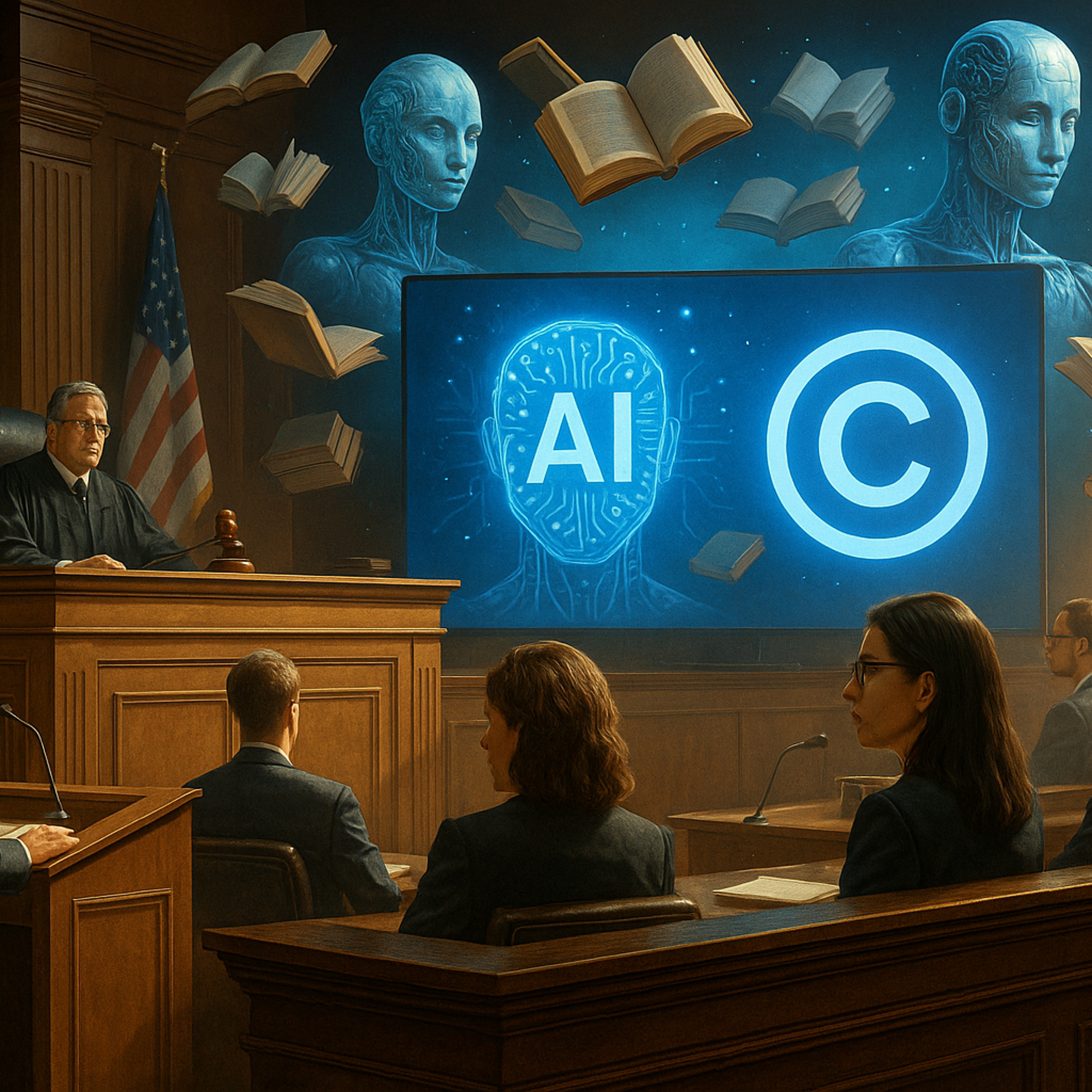
AI Fair Use Breakthrough: How a Landmark Ruling Could Change Copyright and Creativity Forever
Published 11 months, 3 weeks ago
Description
Welcome to *AI with Shaily* 🎙️, your ultimate destination for the freshest updates, insights, and trends in artificial intelligence, hosted by Shailendra Kumar. Today’s episode dives into a groundbreaking legal development shaking the AI world 🌍⚖️.
The big news centers around Anthropic, an AI company that just won a landmark court ruling in Northern California on June 24, 2025. The case revolved around whether AI models can legally train on copyrighted books without explicit permission from authors and publishers—a hot-button issue as creatives worry about their work being used without consent. Imagine being a writer or artist pouring your soul into a creation, only to find AI systems learning from it without your say-so. This has sparked intense legal battles across the U.S., involving major players like OpenAI, Meta, and Anthropic.
Judge William Alsup delivered a historic verdict, declaring that Anthropic’s use of legally purchased copyrighted books to train its AI model, Claude, qualifies as *fair use* 📚✨. He described this use as “quintessentially transformative,” emphasizing that Anthropic isn’t merely copying text but generating something new—similar to how a reader inspired by books becomes a writer with original ideas. This is the first time a court has explicitly supported an AI company on fair use grounds, marking a pivotal moment that could influence how AI developers navigate copyright laws moving forward.
However, the story isn’t over yet! Judge Alsup also raised concerns about Anthropic allegedly using millions of pirated books, a separate issue scheduled for trial in December 2025 ⚠️. This ongoing case adds complexity to the debate. Meanwhile, this ruling aligns with a similar win for Meta, signaling a judicial trend that balances AI innovation with copyright protections.
From Shailendra Kumar’s perspective, having hands-on experience with AI models, this ruling echoes early challenges in AI ethics and legality. It’s like teaching a child to read and write—they absorb knowledge from existing works but eventually create their own unique voice 🧠💡. The court’s decision acknowledges this delicate balance, potentially reducing legal risks for AI developers and speeding up innovation while still respecting creators’ rights.
Here’s a Bonus Tip for authors and artists 🎨✍️: If you’re concerned about AI training on your work, make sure to register your copyrights clearly and consider negotiating licensing agreements with AI companies. Staying proactive can help you protect your creations while exploring new opportunities in this evolving landscape.
Now, a thought-provoking question for you: Do you believe AI models transforming copyrighted material fall under fair use, or should creators have greater control over how their content is utilized? 🤔💭 Keep this in mind next time you interact with your smart assistant!
To close, here’s a memorable quote from Judge Alsup: “AI training is akin to a reader aspiring to be a writer, transforming source material rather than supplanting it.” These wise words beautifully capture the nuanced relationship between technological progress and intellectual property rights.
Stay connected with Shailendra Kumar on YouTube, Twitter, LinkedIn, and Medium for more deep dives into AI. Don’t forget to subscribe to *AI with Shaily* so you never miss an episode! Feel free to share your thoughts, questions, or stories in the comments below.
Until next time, keep exploring the future with AI—and remember, curiosity is the best algorithm of all! 🤖✨