Episode Details
Back to Episodes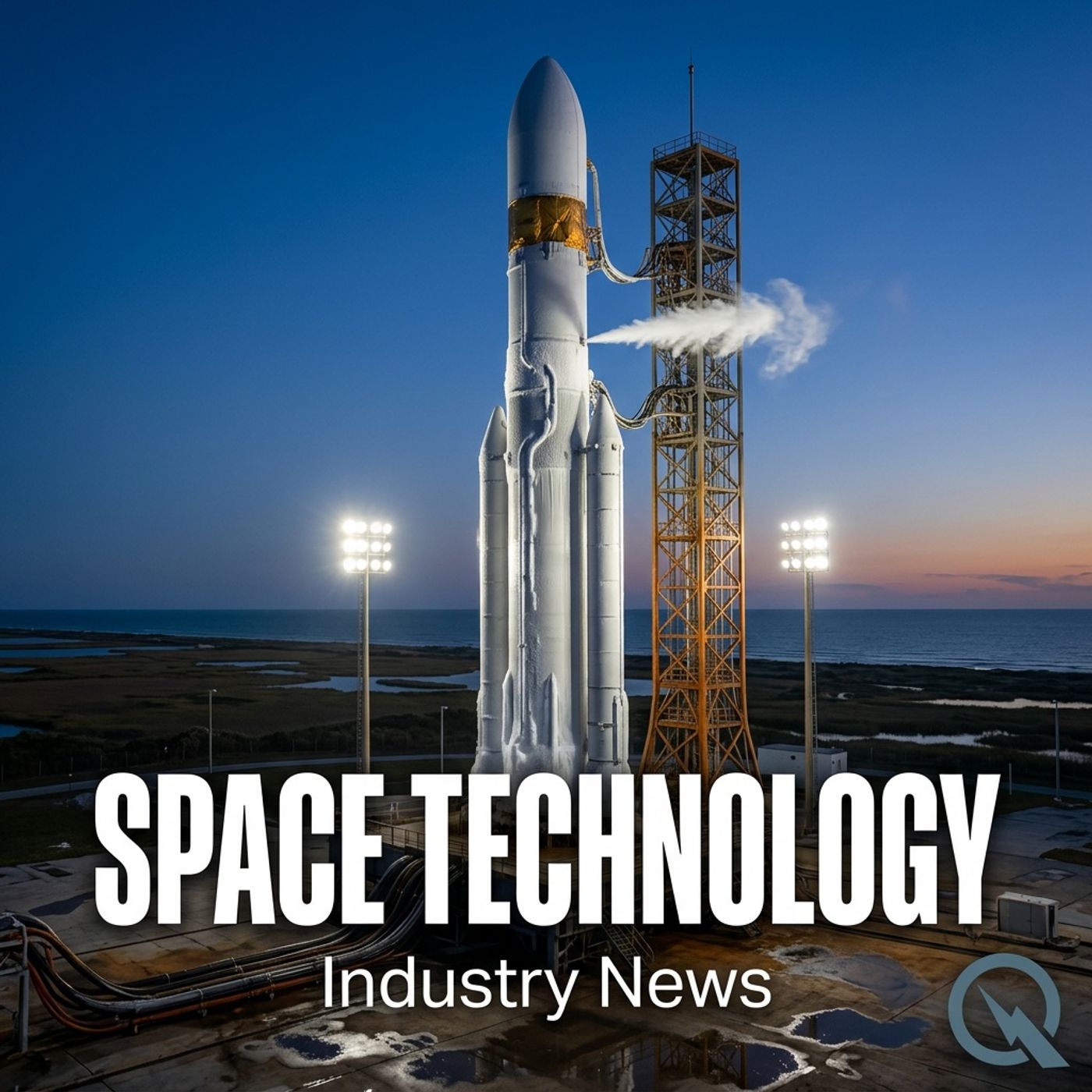
Space Tech Transformation: Reusable Rockets, Faster Inflight WiFi, and Booming Satellite Constellations
Published 9 months, 3 weeks ago
Description
The past 48 hours in the space technology industry highlight rapid progress and an increasingly competitive market. SpaceX remains a dominant force, having successfully launched a Falcon 9 rocket carrying 27 more Starlink satellites from Cape Canaveral. This mission expands Starlink’s global internet network and underlines SpaceX’s advantage in reusable rocket technology. Notably, Starlink now delivers the fastest inflight WiFi speeds worldwide, with airlines such as Hawaiian and Qatar Airways reporting up to 161 megabits per second, far outpacing other inflight providers. This technological edge bolsters the company’s commercial reach across aviation and maritime sectors.
In satellite science, the MTG-S1 satellite equipped with the Copernicus Sentinel-4 instrument has completed its final integration checks and is ready for launch. This partnership between ESA and SpaceX demonstrates the growing collaboration between public agencies and private firms aiming to advance weather monitoring and climate science.
A major scientific milestone was also achieved with the Vera C Rubin Observatory in Chile capturing its first images using the world’s largest digital camera. Its nightly surveys are set to generate as many as 10 million alerts about cosmic events every night, transforming time-domain astronomy and data-driven research. The observatory’s findings will be widely accessible, boosting participation among both professionals and citizen scientists.
The recent proliferation of satellites continues, with the global count having doubled from 3300 at the end of 2020 to more than 6700 by 2022. This surge, spurred chiefly by low-Earth orbit broadband constellations like Starlink, greatly enhances global communications, navigation, and observation. Meanwhile, lower launch costs and rising competition from new entrants are putting pressure on established players, encouraging innovation and cost efficiency.
No major regulatory upheavals have been reported in the past week, and no significant supply chain disruptions have been noted. Industry leaders are responding to shifting consumer demands for faster, more reliable connectivity by accelerating satellite launches and forging new partnerships. Compared to previous periods, the pace of technological advancement and competitive market expansion has intensified, driven by sustained investment and increased participation from both established corporations and emerging players.
This content was created in partnership and with the help of Artificial Intelligence AI
In satellite science, the MTG-S1 satellite equipped with the Copernicus Sentinel-4 instrument has completed its final integration checks and is ready for launch. This partnership between ESA and SpaceX demonstrates the growing collaboration between public agencies and private firms aiming to advance weather monitoring and climate science.
A major scientific milestone was also achieved with the Vera C Rubin Observatory in Chile capturing its first images using the world’s largest digital camera. Its nightly surveys are set to generate as many as 10 million alerts about cosmic events every night, transforming time-domain astronomy and data-driven research. The observatory’s findings will be widely accessible, boosting participation among both professionals and citizen scientists.
The recent proliferation of satellites continues, with the global count having doubled from 3300 at the end of 2020 to more than 6700 by 2022. This surge, spurred chiefly by low-Earth orbit broadband constellations like Starlink, greatly enhances global communications, navigation, and observation. Meanwhile, lower launch costs and rising competition from new entrants are putting pressure on established players, encouraging innovation and cost efficiency.
No major regulatory upheavals have been reported in the past week, and no significant supply chain disruptions have been noted. Industry leaders are responding to shifting consumer demands for faster, more reliable connectivity by accelerating satellite launches and forging new partnerships. Compared to previous periods, the pace of technological advancement and competitive market expansion has intensified, driven by sustained investment and increased participation from both established corporations and emerging players.
This content was created in partnership and with the help of Artificial Intelligence AI