Episode Details
Back to Episodes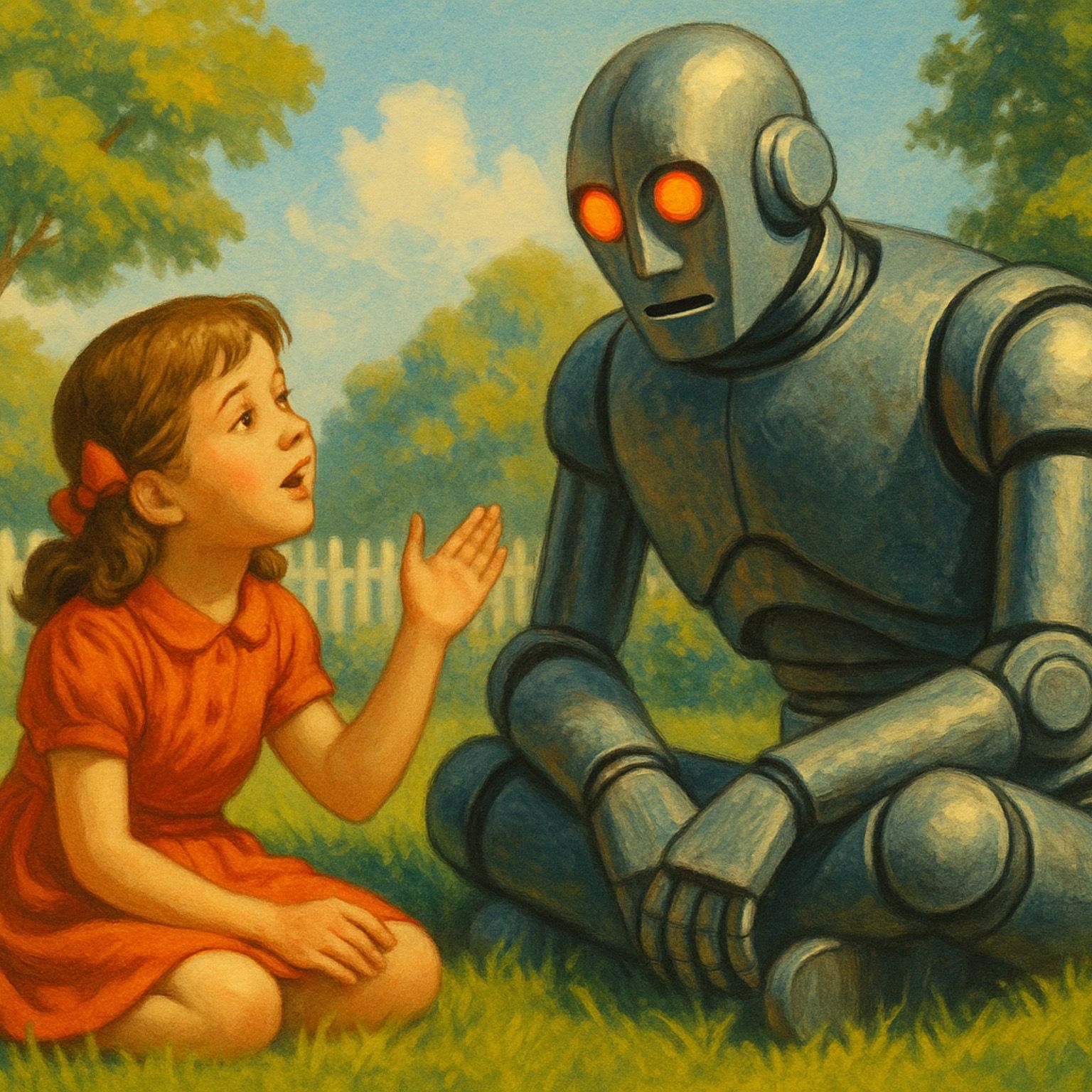
Robbie, From Fiction to Familiar — Robots, AI, and the Illusion of Consciousness | A Musing On Society & Technology Newsletter Written By Marco Ciappelli | Read by TAPE3
Description
⸻ Podcast: Redefining Society and Technology
https://redefiningsocietyandtechnologypodcast.com
_____________________________
This Episode’s Sponsors
BlackCloak provides concierge cybersecurity protection to corporate executives and high-net-worth individuals to protect against hacking, reputational loss, financial loss, and the impacts of a corporate data breach.
BlackCloak: https://itspm.ag/itspbcweb
_____________________________
Robbie, From Fiction to Familiar — Robots, AI, and the Illusion of Consciousness
June 29, 2025
A new transmission from Musing On Society and Technology Newsletter, by Marco Ciappelli
I recently revisited one of my oldest companions. Not a person, not a memory, but a story. Robbie, the first of Isaac Asimov’s famous robot tales.
It’s strange how familiar words can feel different over time. I first encountered Robbie as a teenager in the 1980s, flipping through a paperback copy of I, Robot. Back then, it was pure science fiction. The future felt distant, abstract, and comfortably out of reach. Robots existed mostly in movies and imagination. Artificial intelligence was something reserved for research labs or the pages of speculative novels. Reading Asimov was a window into possibilities, but they remained possibilities.
Today, the story feels different. I listened to it this time—the way I often experience books now—through headphones, narrated by a synthetic voice on a sleek device Asimov might have imagined, but certainly never held. And yet, it wasn’t the method of delivery that made the story resonate more deeply; it was the world we live in now.
Robbie was first published in 1939, a time when the idea of robots in everyday life was little more than fantasy. Computers were experimental machines that filled entire rooms, and global attention was focused more on impending war than machine ethics. Against that backdrop, Asimov’s quiet, philosophical take on robotics was ahead of its time.
Rather than warning about robot uprisings or technological apocalypse, Asimov chose to explore trust, projection, and the human tendency to anthropomorphize the tools we create. Robbie, the robot, is mute, mechanical, yet deeply present. He is a protector, a companion, and ultimately, an emotional anchor for a young girl named Gloria. He doesn’t speak. He doesn’t pretend to understand. But through his actions—loyalty, consistency, quiet presence—he earns trust.
Those themes felt distant when I first read them in the ’80s. At that time, robots were factory tools, AI was theoretical, and society was just beginning to grapple with personal computers, let alone intelligent machines. The idea of a child forming a deep emotional bond with a robot was thought-provoking but belonged firmly in the realm of fiction.
Listening to Robbie now, decades later, in the age of generative AI, alters everything. Today, machines talk to us fluently. They compose emails, generate artwork, write stories, even simulate empathy. Our interactions with technology are no longer limited to function; they are layered with personality, design, and the subtle performance of understanding.
Yet beneath the algorithms and predictive models, the reality remains: these machines do not understand us. They generate language, simulate conversation, and mimic comprehension, but it’s an illusion built from probability and training data, not consciousness. And still, many of us choose to believe in that illusion—sometimes out of convenience, sometimes out of the innate human desire for connection.
In that context, Robbie’s s