Episode Details
Back to EpisodesPMP377: Conversations that Matter with Jennifer Abrams
Description
Jennifer Abrams is an international educational and communications consultant for public and independent schools, universities, and nonprofits. She trains and coaches teachers, administrators, and others on new teacher/employee support, having hard conversations, collaboration skills, and being your best adult self at work.
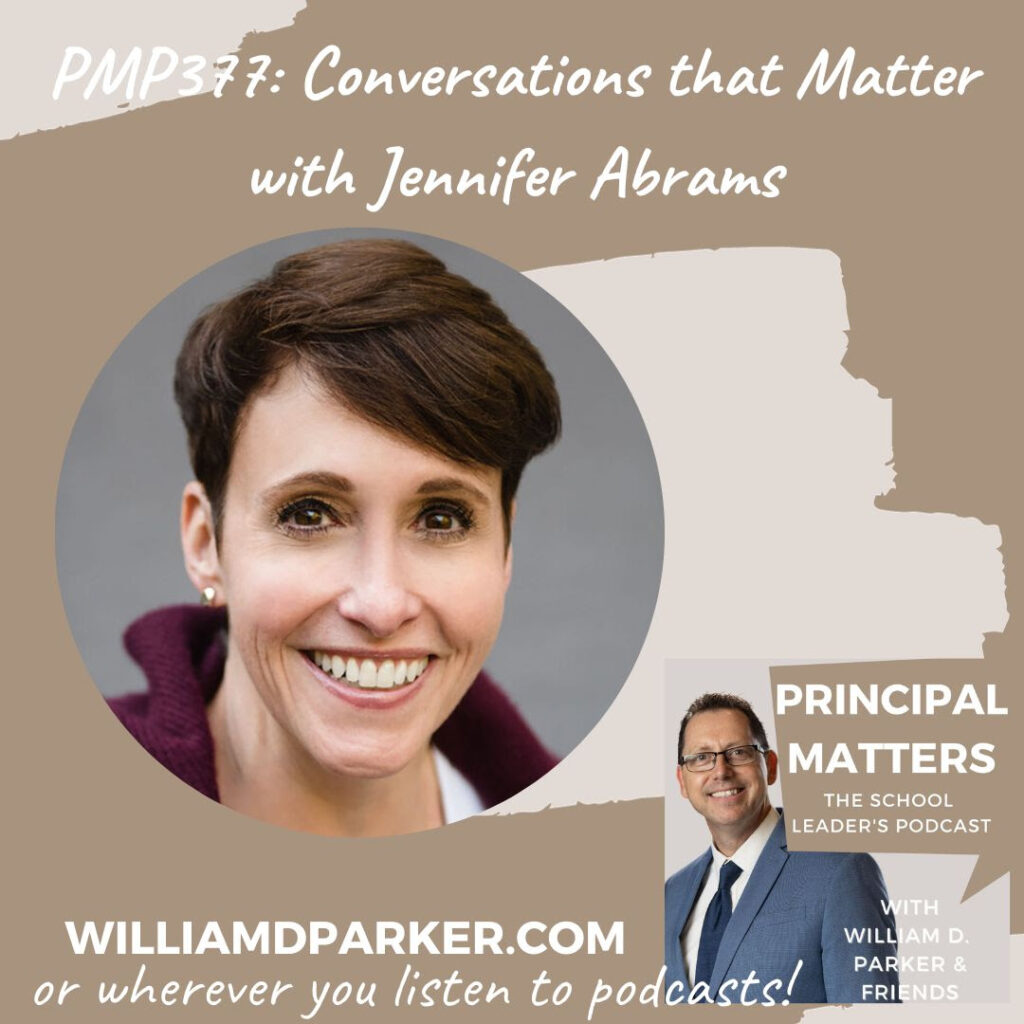
In her over two decades at Palo Alto Unified School District (Palo Alto, CA, USA), Jennifer was a high school English teacher, new teacher coach, and professional development facilitator. She left PAUSD in 2012 to start her full-time communications consultancy in which she works with schools and organizations across the globe.
Her publications include Having Hard Conversations, The Multigenerational Workplace: Communicating, Collaborating & Creating Community and Hard Conversations Unpacked – the Whos, the Whens and the What Ifs, Swimming in the Deep End: Four Foundational Skills for Leading Successful School Initiatives, and her newest book, Stretching Your Learning Edges: Growing (Up) at Work.
Jennifer has been recognized as one of the “21 Women All K-12 Educators Need to Know” by Education Week’s ‘Finding Common Ground’ blog. She considers herself a “voice coach,” helping others learn how to best use their voices – be it collaborating on a team, presenting in front of a group, coaching a colleague, or supervising an employee.
First, we discuss some topics from Jennifer’s book, Having Hard Conversations:
Jennifer has worked for decades of work in classrooms, schools, and with leaders. When facing a difficult conversation, she shares why it is important to understand the motivation for why a conversation should (or should not) happen.
She breaks down hard conversations into three areas: Get Clear, Craft, and Communicate. In her lessons on ‘Get Clear”, she explains why it is important to get to a place of feeling ready and comfortable in order to share what needs to be said.
In her lessons on “craft,” she explains why we should focus on understanding specific behaviors, understanding our own thoughts, and offering suggestions for fixing problems.
Then, she breaks down the practical suggestion of making a plan or creating a script for hard conversations.