Episode Details
Back to EpisodesPMP450: Instructional Excellence with Michelle Steingart
Description
A Quick Note to Listeners:
—- The Question of the Week is supported by Summer Pops Math Workbooks.Principals, when students practice math over the summer, math scores go up. What’s your summer math plan this year? A great way to start is by ordering FREE summer workbook samples at Summer Pops Workbooks.com. —-
Before this week’s interview, Will Parker answers a question from a student in Jen Schwanke’s graduate class at OSU.
The question is: In your work as an educational consultant, what current trends in human capital management do you believe future principals need to be aware of? (Question from Steph Rush, Intervention Specialist, Student in Education Master’s program at the Ohio State University)
Listen in to hear his response and thank you for doing what matters!
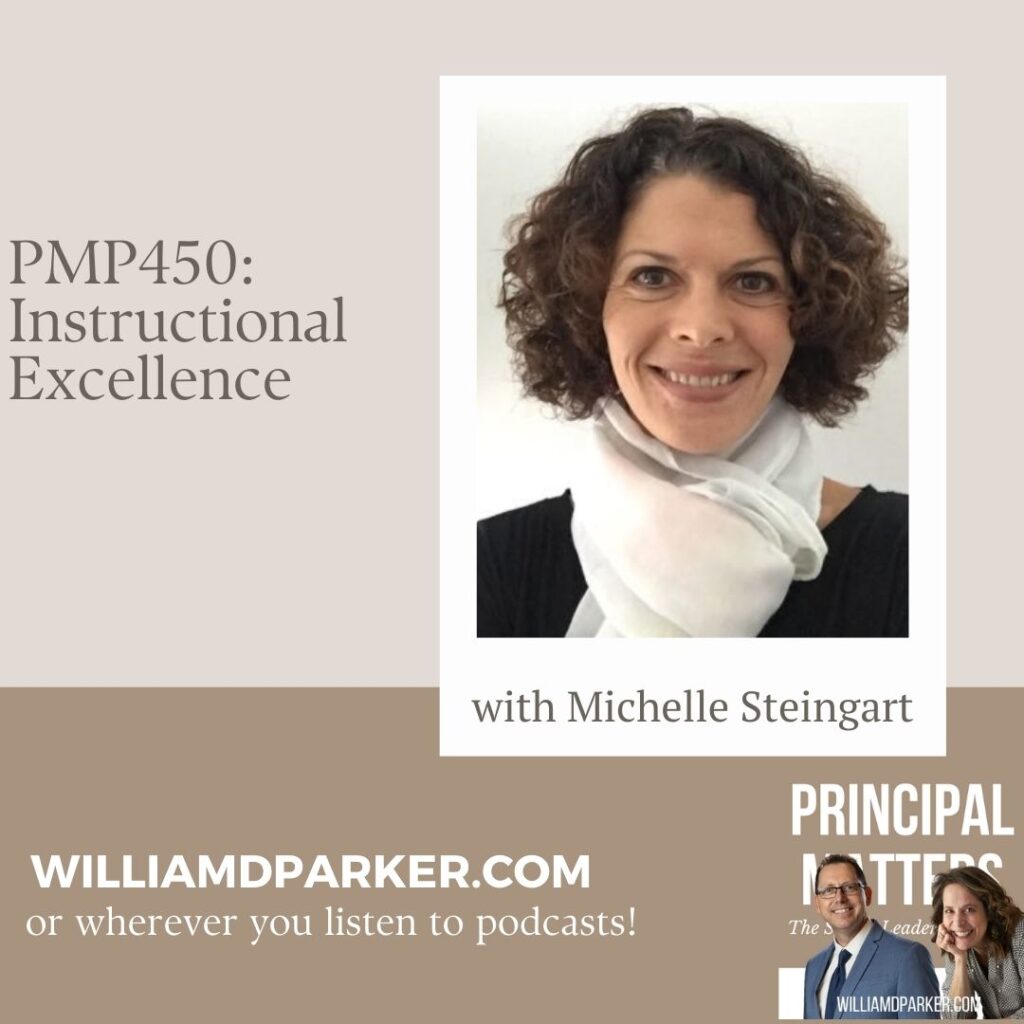
Meet Michelle Steingart:
Michelle Steingart is a dynamic and student-focused educational leader with over 20 years of experience in secondary education, including roles as assistant principal, teacher-leader, and classroom teacher. She has a proven record in fostering instructional excellence, cultivating collaborative relationships, and driving school-wide initiatives that enhance academic achievement, equity, and student well-being. As Assistant Principal of Palo Alto High School, in Palo Alto California, she is adept at leading large teams, managing complex programs, and aligning operations with a strategic vision for high school success. In her free time, she enjoys trying to talk with her teenage children and convincing them to spend time with her, reading, as well as exercising (running and weight lifting) to help keep her sane. Currently, Michelle is training for a trail half marathon. She enjoys finding sparks of JOY in everyday life.
The Importance of Scheduling:
Michelle shares with listeners her personal philosophy: If it’s important to you, schedule it. School leaders’ calendars fill up very quickly, and blocking out time in her calendar helps her prioritize aspects of her work that would otherwise be neglected. For example, Michelle says she wanted to make classroom visits a habit. She starts working on her calendar for the next school year before she goes on summer break and blocks out time she wants to be in classrooms. This time is made up of 3-4 fifteen minute intervals that she is going to classrooms throughout the week.
Being a Teacher Coach:
As Michelle considers some lessons from her experience that listeners can apply to their leadership, she reflects on being a teacher coach. One of the skills that she considers extremely important for school leaders to learn is how to observe and give information to teachers in a manner that is not opinionated. It took her years of practice to learn how to share facts without also sharing her opinion. Being a teacher coach helps build trust with teachers and allows them to grow in their craft. Furthermore, Michelle emphasizes that she tries to help teach