Episode Details
Back to Episodes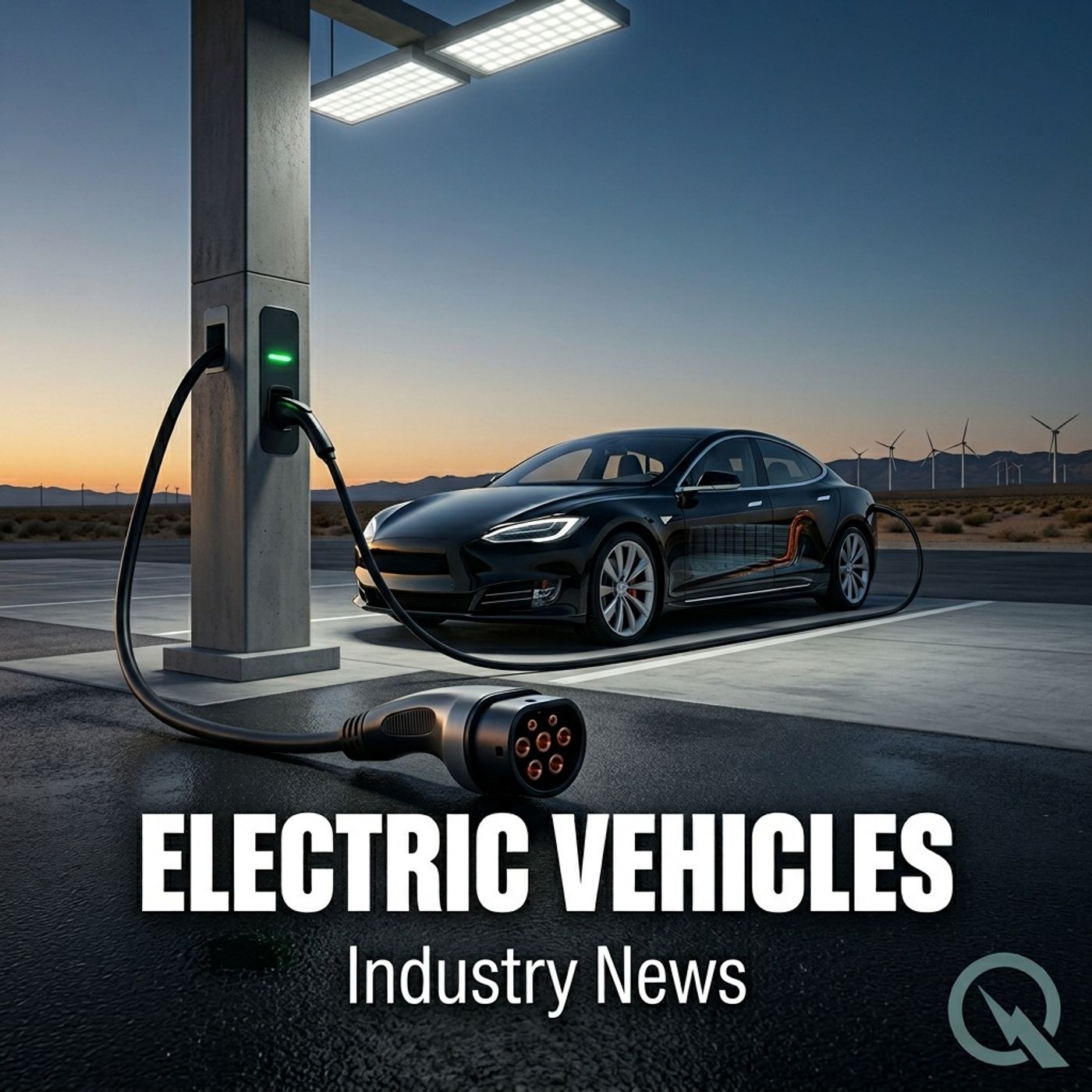
EV Industry Trends: US Slowdown, Global Momentum, and Supply Chain Resilience
Published 10 months, 1 week ago
Description
Over the past two days, the electric vehicle industry has shown mixed signals, marked by falling registrations in the United States but robust global momentum and active deal-making. The latest data from S and P Global Mobility reports the first drop in US EV registrations in over a year, with Tesla experiencing a sharp 16 percent decline in April, attributed in part to policy uncertainty and concerns over the possible removal of the seven thousand five hundred dollar tax credit. While the overall vehicle market remained healthy during that period, consumer hesitancy towards EVs has increased, partly due to ongoing price competition and wavering confidence in government incentives.
Despite this US slowdown, the broader global market continues to expand. According to the International Energy Agency, electric cars accounted for over 20 percent of global new car sales in 2024, with total sales reaching 17 million, up more than 25 percent year-on-year. In the UK, May registrations of electric cars rose nearly 29 percent compared to last year, comprising over a fifth of all car sales. Meanwhile, established automakers are doubling down on investments and partnerships. General Motors announced a four billion dollar investment across three plants to boost capacity to produce up to two million EVs annually in the US. Toyota is upgrading its battery pack lines, while Lucid has secured a new graphite supply deal, aiming for a more resilient battery supply chain.
Charging infrastructure expansion is also accelerating, highlighted by BP Pulse’s new partnership with Waffle House to roll out ultra-fast chargers across the US Southeast, a move intended to address consumer concerns around range and convenience. On the regulatory side, the White House extended exclusions on Section 301 tariffs for Chinese EV components until August thirty-first, easing immediate cost pressures for US manufacturers.
In summary, although the US market faces headwinds, with policy uncertainty and shifting consumer sentiment causing sales hiccups, the global EV industry remains on an upward trajectory. Industry leaders are responding through major production investments, supply chain deals, and charging network growth, adapting to dynamic and sometimes volatile regional trends while the world’s overall transition to electric mobility continues to gain speed[1][2][3][4][5].
This content was created in partnership and with the help of Artificial Intelligence AI
Despite this US slowdown, the broader global market continues to expand. According to the International Energy Agency, electric cars accounted for over 20 percent of global new car sales in 2024, with total sales reaching 17 million, up more than 25 percent year-on-year. In the UK, May registrations of electric cars rose nearly 29 percent compared to last year, comprising over a fifth of all car sales. Meanwhile, established automakers are doubling down on investments and partnerships. General Motors announced a four billion dollar investment across three plants to boost capacity to produce up to two million EVs annually in the US. Toyota is upgrading its battery pack lines, while Lucid has secured a new graphite supply deal, aiming for a more resilient battery supply chain.
Charging infrastructure expansion is also accelerating, highlighted by BP Pulse’s new partnership with Waffle House to roll out ultra-fast chargers across the US Southeast, a move intended to address consumer concerns around range and convenience. On the regulatory side, the White House extended exclusions on Section 301 tariffs for Chinese EV components until August thirty-first, easing immediate cost pressures for US manufacturers.
In summary, although the US market faces headwinds, with policy uncertainty and shifting consumer sentiment causing sales hiccups, the global EV industry remains on an upward trajectory. Industry leaders are responding through major production investments, supply chain deals, and charging network growth, adapting to dynamic and sometimes volatile regional trends while the world’s overall transition to electric mobility continues to gain speed[1][2][3][4][5].
This content was created in partnership and with the help of Artificial Intelligence AI