Episode Details
Back to Episodes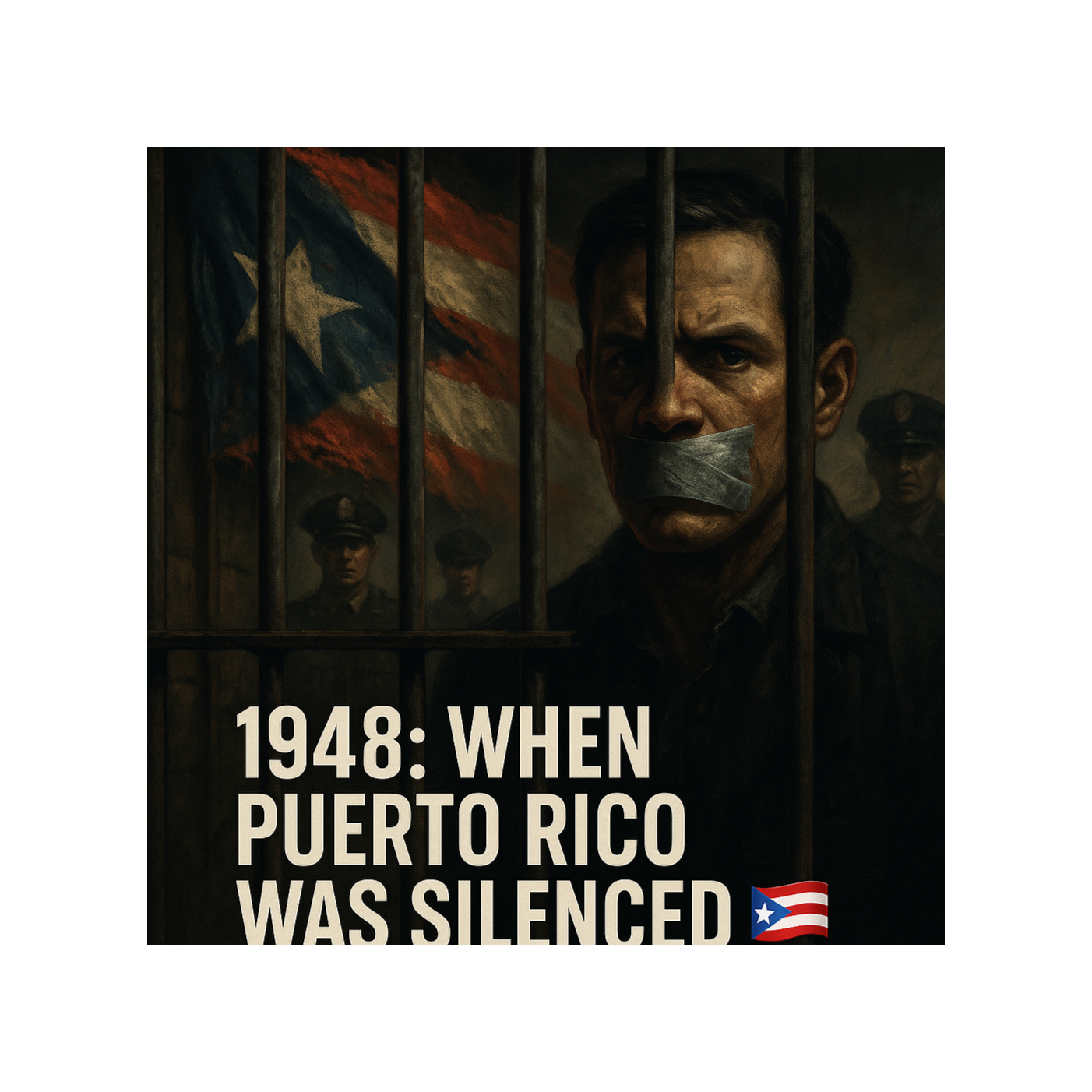
1948: The Gag Law (Ley de la Mordaza) – Puerto Rico’s Silenced Voice
Season 1
Episode 19
Published 1 year, 3 months ago
Description
1948: The Gag Law (Ley de la Mordaza) – Puerto Rico’s Silenced Voice
In 1948, Law 53, infamously known as “La Ley de la Mordaza” (The Gag Law), was enacted by Puerto Rico’s legislature — under pressure from the U.S. government — to suppress the growing independence movement.
🚫 What the Gag Law Criminalized:
- Singing patriotic songs like La Borinqueña (revolutionary version)
- Speaking or writing in favor of Puerto Rican independence
- Meeting or assembling to discuss Puerto Rico’s political status
- Displaying or possessing the Puerto Rican flag — even inside one’s own home
👮♂️ Police Powers Under the Law:
- Warrantless home invasions
- Seizure of property without probable cause
- Massive arrests targeting those with pro-independence views
⚖️ Penalties:
- Up to 10 years in prison
- $10,000 fine (USD)
- Or both
🇺🇸 Violation of U.S. Constitutional Rights:
Despite Puerto Ricans being declared U.S. citizens in 1917, the Gag Law violated the First Amendment, which guarantees:
- Freedom of speech
- Freedom of assembly
- Freedom of expression
🧑⚖️ Repression and Resistance:
- 15 leaders of the Puerto Rican Nationalist Party were immediately arrested.
- Mass arrests and surveillance became widespread.
- Rallies and underground resistance defied the ban.
📅 Law Repealed:
- The Gag Law remained in effect for 9 years
- It was finally repealed in 1957, after public outcry and legal challenges
⚠️ REMEMBER:
Freedom of expression was outlawed in a U.S. colony. The Gag Law is a clear example of colonial repression under the guise of democracy.