Episode Details
Back to Episodes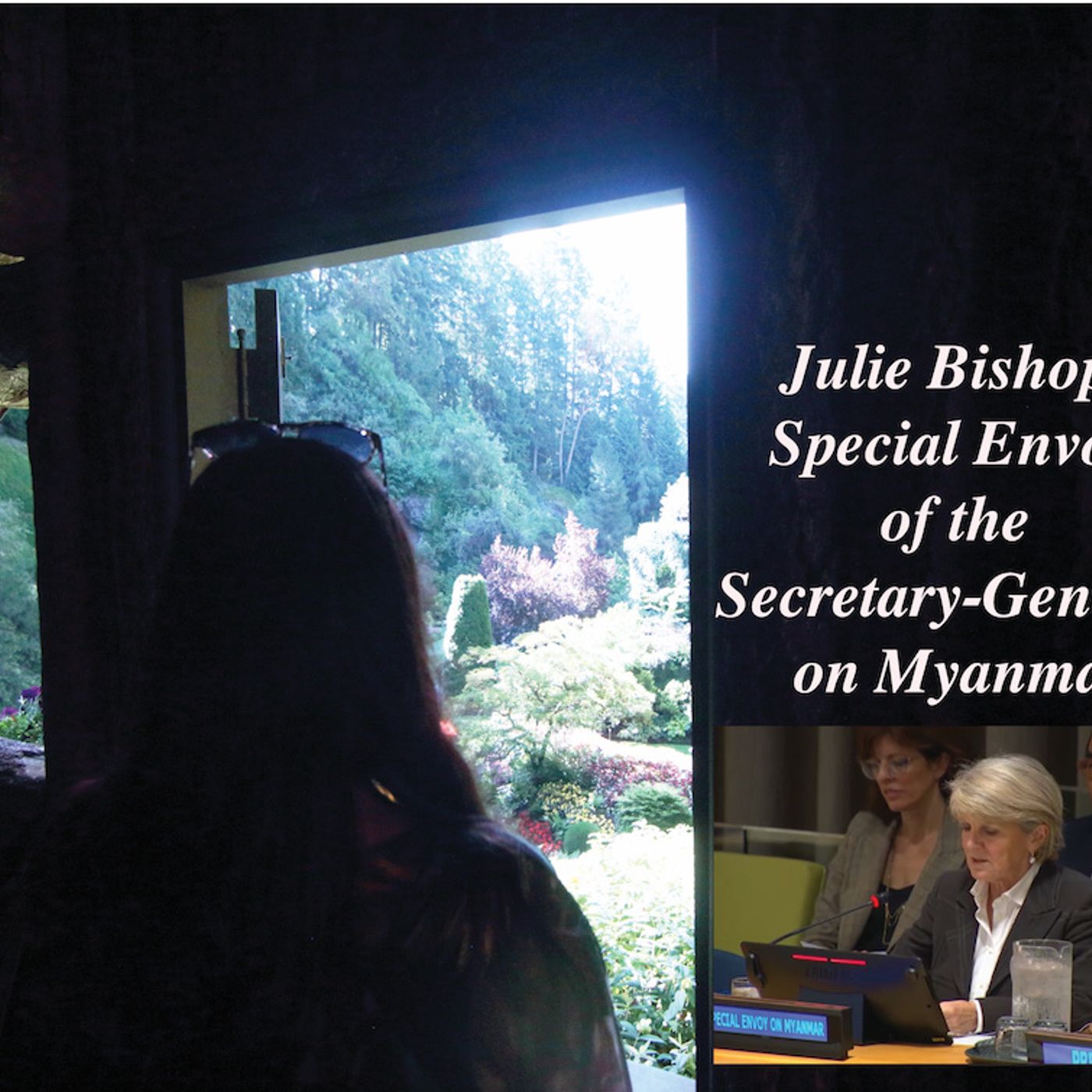
Julie Bishop, Special Envoy of the Secretary-General on Myanmar
Published 9 months, 1 week ago
Description
Ministers speak briefly with reporters on Parliament Hill as the federal cabinet holds its weekly meeting. Ministers Mélanie Joly (industry), François-Philippe Champagne (finance) and David McGuinty (public safety) face questions on the newly-tabled report by Auditor General Karen Hogan detailing the cost overruns for the American-made F-35 fighter jets. Joly, Champagne and McGuinty also comment on the government’s recent announcement that it will meet its NATO defence spending target of 2 per cent of GDP this fiscal year.
Steven MacKinnon (government House leader) and Julie Dabrusin (environment and climate change) respond to questions on Bill C-5, the government’s new legislation on bolstering trade between the provinces and territories and moving forward with major infrastructure projects of “national interest.”
Briefing by Julie Bishop, Special Envoy of the Secretary-General on Myanmar, at the informal meeting of the General Assembly, 79th session.
"I am deeply saddened to report to distinguished delegates, that the fighting across Myanmar continues and that the humanitarian crisis impacting its people is far worse than when I briefed the General Assembly last October.
There has been no end to the violence, let alone any significant pause in the conflict between the warring parties, and the scale of the conflict has escalated over the four years since the military takeover in February 2021.
There has been no end to the violence, even though thousands have been killed and thousands more injured;
Even though civilians, women and children have been targeted in what should be safe spaces – schools, hospitals and places of worship.
There has been no end to the violence, even though towns, villages, markets and other infrastructure have been bombed;
Nor because of the immense humanitarian needs of over 20 million people, nor because the health system is collapsing, foreign direct investment is evaporating, and the economy is floundering.
There has been no end to the violence, notwithstanding the calls of neighbouring countries and ASEAN, or the appeals of the General Assembly and the Security Council.
Alarmingly, there has been no end to the violence even after the country was struck by a massive 7.7-magnitude earthquake that devastated not only parts of Nay Pyi Taw, Mandalay and Sagaing, but was so powerful that it impacted Thailand, China and other neighbouring nations.
What will it take to end the violence? What will it take to cease hostilities in Myanmar so that we can begin a journey to peace and reconciliation?
For if there is no end to the violence, Myanmar is on a path to self-destruction".
Become a supporter of this podcast: https://www.spreaker.com/podcast/policy-and-rights--3339563/support.
Steven MacKinnon (government House leader) and Julie Dabrusin (environment and climate change) respond to questions on Bill C-5, the government’s new legislation on bolstering trade between the provinces and territories and moving forward with major infrastructure projects of “national interest.”
Briefing by Julie Bishop, Special Envoy of the Secretary-General on Myanmar, at the informal meeting of the General Assembly, 79th session.
"I am deeply saddened to report to distinguished delegates, that the fighting across Myanmar continues and that the humanitarian crisis impacting its people is far worse than when I briefed the General Assembly last October.
There has been no end to the violence, let alone any significant pause in the conflict between the warring parties, and the scale of the conflict has escalated over the four years since the military takeover in February 2021.
There has been no end to the violence, even though thousands have been killed and thousands more injured;
Even though civilians, women and children have been targeted in what should be safe spaces – schools, hospitals and places of worship.
There has been no end to the violence, even though towns, villages, markets and other infrastructure have been bombed;
Nor because of the immense humanitarian needs of over 20 million people, nor because the health system is collapsing, foreign direct investment is evaporating, and the economy is floundering.
There has been no end to the violence, notwithstanding the calls of neighbouring countries and ASEAN, or the appeals of the General Assembly and the Security Council.
Alarmingly, there has been no end to the violence even after the country was struck by a massive 7.7-magnitude earthquake that devastated not only parts of Nay Pyi Taw, Mandalay and Sagaing, but was so powerful that it impacted Thailand, China and other neighbouring nations.
What will it take to end the violence? What will it take to cease hostilities in Myanmar so that we can begin a journey to peace and reconciliation?
For if there is no end to the violence, Myanmar is on a path to self-destruction".
Become a supporter of this podcast: https://www.spreaker.com/podcast/policy-and-rights--3339563/support.