Episode Details
Back to Episodes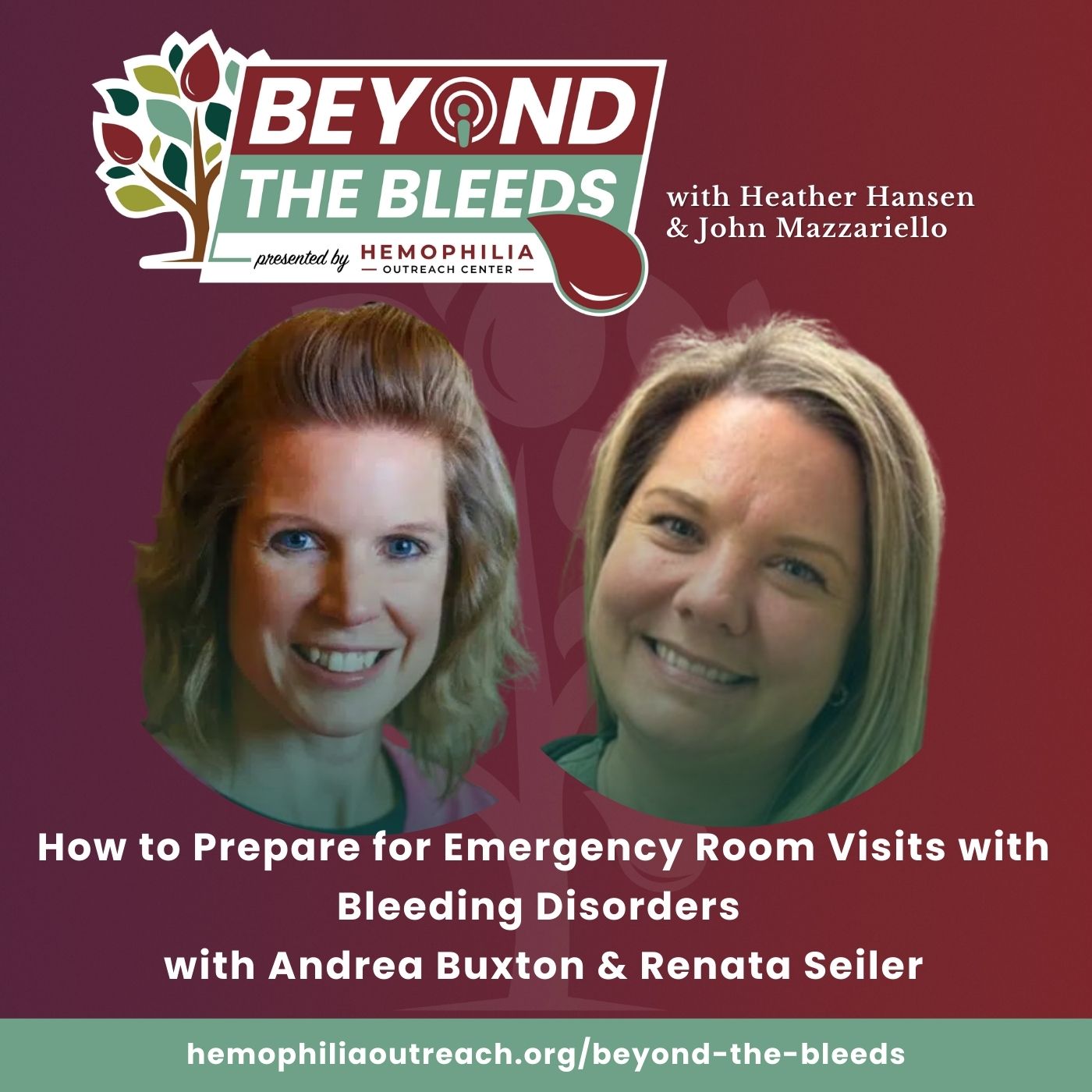
How to Prepare for Emergency Room Visits with Bleeding Disorders with Andrea Buxton & Renata Seiler
Description
Today on Beyond the Bleeds, we sat down with Andrea Buxton, a nurse practitioner, and Renata Seiler, nurse coordinator, to discuss what happens when patients with bleeding disorders visit the emergency room. Together, we unpacked the unique challenges these patients face, the critical importance of preparedness and advocacy, and the decisive role of coordinated care. This conversation is packed with insights that can help anyone living with a bleeding disorder—or caring for someone who does—feel more empowered and ready for emergencies, whether at home or traveling far from their usual care team.
Andrea Buxton is a nurse practitioner specializing in caring for individuals with bleeding disorders. With extensive experience in clinical practice and patient education, Andrea is dedicated to bridging the gap between patient needs and the complexities of the healthcare system. She excels at guiding patients through emergencies, ensuring they are prepared, informed, and supported during ER visits and transitions in care.
Renata Seiler is a nurse coordinator with a rich background as an emergency room nurse. She combines her ER expertise with her passion for patient advocacy, making her an invaluable resource for patients managing rare and complex bleeding conditions. Her hands-on approach and commitment to educating patients and healthcare professionals have significantly impacted the quality and coordination of care for the bleeding disorder community.
“It doesn’t matter where you travel to, call us here. It doesn’t matter if it’s the middle of the night, the weekend, you call here first.” – Renata Seiler.
Today on Beyond the Bleeds:
- Patients with bleeding disorders often experience delayed or suboptimal care in the ER due to the rarity and lack of specialized staff training.
- Emergency staff must recognize the urgency and specific treatment needs for bleeding disorders, even if protocols differ from those for the general population.
- Bringing an updated emergency card and having contact info for your treatment center handy can significantly improve ER experiences.
- Always bring your factor medication to the ER if you have it, but be aware of hospital policies regarding patient-supplied medication.
- Medical ID jewelry can be lifesaving if a patient cannot communicate in an emergency.
- Always call your HTC (Hemophilia Treatment Center) before heading to the ER—even while traveling or on vacation—to allow professionals to coordinate care and ensure ER staff are informed and prepared.
- Advocacy starts at check-in: let registration and triage nurses know you have a bleeding disorder and require urgent attention.
- Preemptive travel planning includes knowing hospital locations along your route, bringing extra clothing, and ensuring you understand where specialized care can be accessed.
Guest Contact Information:
Andrea Buxton
Hemophilia Outreach Center (HOC) – Wisconsin
https://hemophiliaoutreach.org
Renata Seiler
Hemophilia Outreach Center (HOC) – Wisconsin
https://hemophiliaoutreach.org
Resources Mentioned:
• Hemophilia Outreach Center (HOC), available 24/7 for patients in need of assistance: https://hemophiliaoutreach.org
• Medical emergency cards issued du