Episode Details
Back to Episodes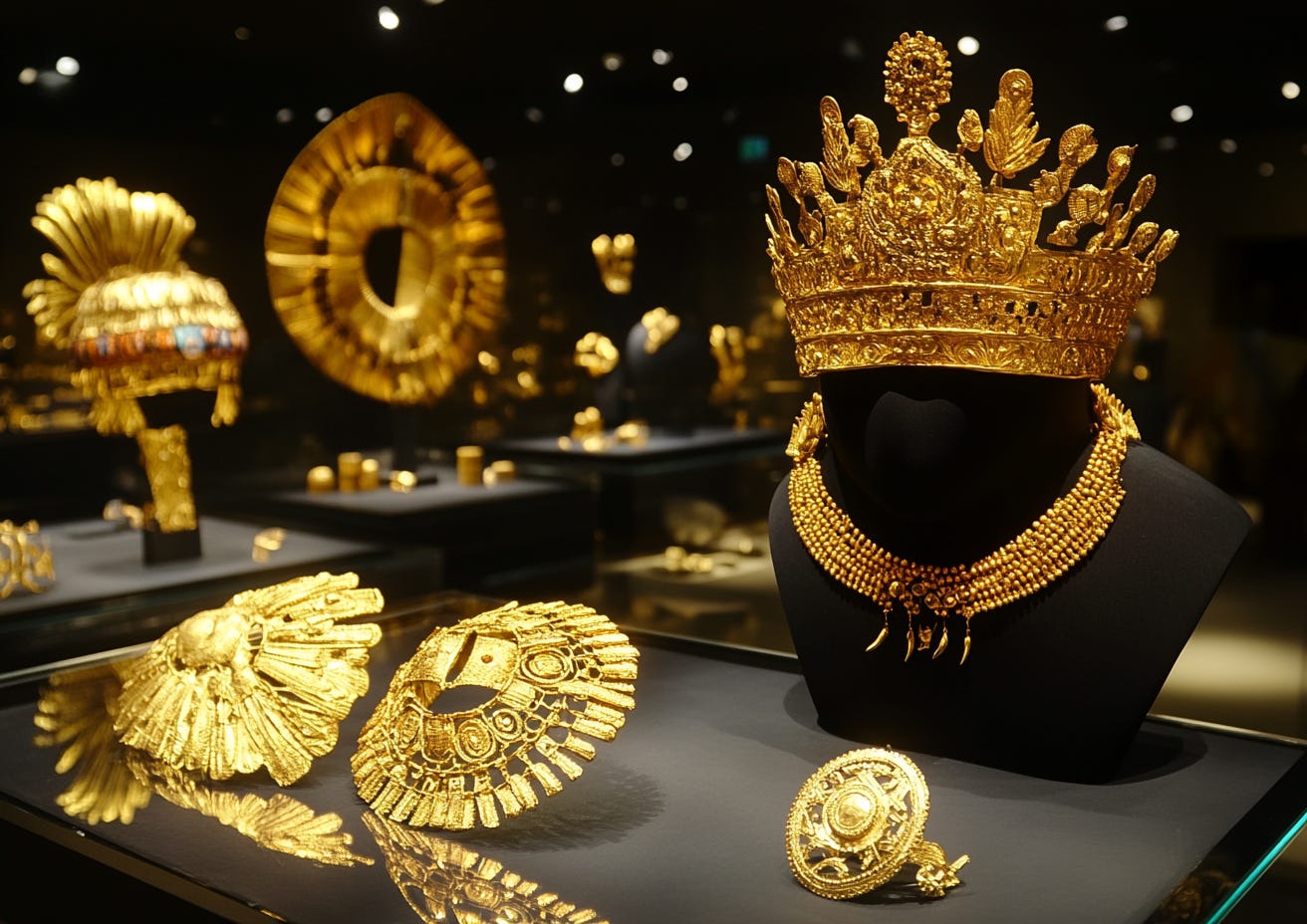
Should You Invest in Golden Art and Collectibles? Why Rarity Doesn't Always Pay
Description
Let me quickly flag three things:
* There is a short note at the end of this piece on the subject of bitcoin treasury companies, which I know is of interest to some of you.
* We now have a video version of last week’s thought piece about the housing market.
* I am in Palm Springs, California, all next week. If any readers from that neck of the woods fancy meeting up, I’ll be performing at the Punching Up Comedy Night with Adam Carolla, Thai Rivera and Lou Perez, and also doing various panels at Freedom Fest on gold and bitcoin. You should be able to find me via this QR code. Or send me an email or message.
Right, gold … today we ask:
Should you invest in gold collectibles?
The gold at the Museo del Oro in Bogotá, Colombia, is one of the most stunning collections you will ever see – diadems, helmets and crowns, rings, necklaces and bracelets, beads and breastplates, even fishhooks and penis covers. The smiths of ancient South and Central America were quite brilliant artisans. The Spaniards who saw their work said Aztec goldsmiths were more skilled than their European counterparts.
In Mexico, the conquistadors found life-size figures of men and women, great jars and pitchers, half pottery-half gold vases sculpted in relief with birds, animals and insects, and more. In Peru and Ecuador, the conquistadors found miniature gardens made of gold – earth of gold granules, gold cornstalks, and gold figures of men and llamas.
Unfortunately, what sits in the Museo del Oro is just a fraction of what was made. The Spaniards valued bullion on weight alone, ascribing no value to art, beauty or workmanship. Most got melted down before being sent home. What they sent to their king intact got melted down once back in Europe. “What was being destroyed was more perfect than anything they enjoyed and possessed,” said a young priest travelling with the conquistador Francisco Pizarro.
The conquistadors were by no means alone in this. It has happened repeatedly through history. Though gold may last, art made from gold rarely does. People always seem to melt it down. That should mean ancient gold workings should command an even higher premium for their antiquity, because they have survived the meltdown risk. But for some reason, it doesn’t seem to work like that.
You can’t destroy gold, as I’m sure you know. It lasts forever and never loses its shine. It was present in the dust that formed the solar system, and sits in the Earth’s crust today, just as it did when our planet was formed some 4.6 billion years ago.
That means that little bit of gold you may be wearing on your finger or around your neck is actually older than the Earth itself. In fact, it is older than the solar system. Who knows? It might once have adorned a pharaoh or sat in a conquistador’s treasure chest. Gold may be antique, but it’s very rare that you get vast premiums for its antique value.
Buying gold or silver? The dealer I use and recommend is the Pure Gold Company. Pricing is co