Episode Details
Back to Episodes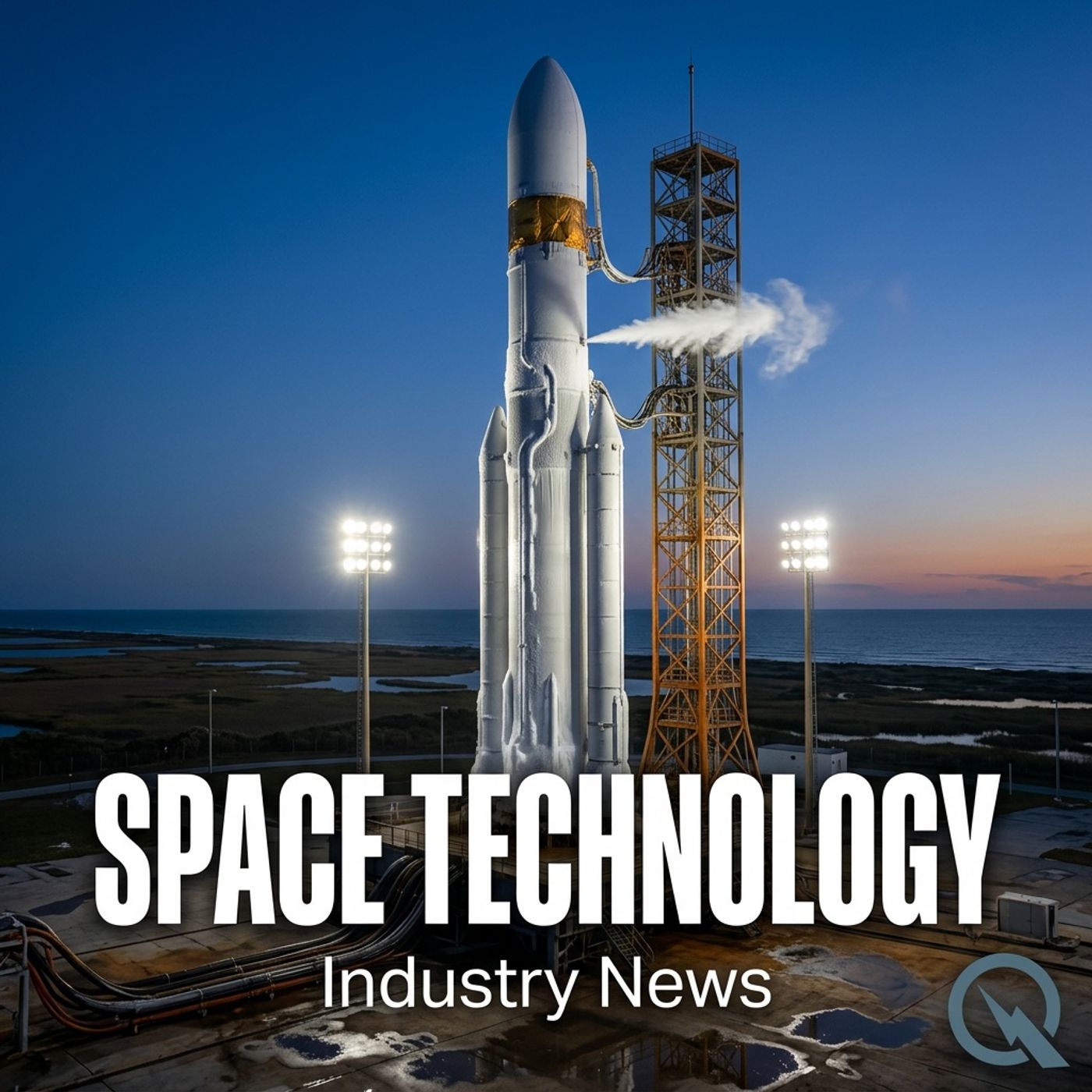
Space Tech Innovation Surges: Conquering Market Challenges and Powering Global Connectivity
Published 10 months, 3 weeks ago
Description
The space technology industry has seen rapid developments over the past 48 hours, reflecting both ongoing innovation and emerging market challenges. SpaceX successfully launched another batch of 23 Starlink satellites from Cape Canaveral, further expanding its satellite internet constellation and maintaining its market leadership in low-cost, rapid launch services. This launch demonstrates continued consumer demand for global broadband coverage and highlights the company’s commitment to scaling its infrastructure to meet rising usage needs.
Recent weeks have seen the awarding of a significant iSpace US contract with a maximum value of up to 2.6 billion dollars. This move positions iSpace US as an aggressive new competitor focused on reliable, sustainable space infrastructure. While the company’s revenues have dipped about 16 percent in the last quarter, their net profit margin has improved by 47 percent year-over-year, suggesting effective cost management despite market headwinds. Their market capitalization remains around one billion dollars, and investors are watching closely for revenue stabilization and growth from these high-profile deals. Financial reporting across the sector shows mixed trends, with some firms experiencing slightly declining revenues but improved net incomes, pointing to industry-wide cost-cutting and consolidation in response to tighter capital markets[3].
New technology launches have added further momentum. The Massachusetts Institute of Technology has developed a sodium fuel cell that could exceed 1,000 watt-hours per kilogram, promising major breakthroughs for electric regional aviation and representing potential dual-use applications for space power systems. Meanwhile, airship and hydrogen propulsion projects underscore the sector’s drive to diversify beyond traditional rocket launches[1].
Industry leaders are responding to supply chain pressures by increasing vertical integration and forming deeper partnerships to secure mission-critical components. The trend toward commercial and private sector growth continues, with the lower cost and reusability of launch vehicles enabling startups to join a field that was once the domain of governments and large corporations. Regulatory environments remain generally stable, but there is anticipation of new policies as more firms push for commercial spaceflight and lunar missions[5].
In summary, the space technology sector is characterized by intensifying competition, technological innovation, and ongoing adjustments to economic pressures. Compared to previous quarters, current conditions show more focus on profitable scaling, cost controls, and strategic deal-making, as industry leaders adapt swiftly to an environment shaped by both opportunity and uncertainty.
This content was created in partnership and with the help of Artificial Intelligence AI
Recent weeks have seen the awarding of a significant iSpace US contract with a maximum value of up to 2.6 billion dollars. This move positions iSpace US as an aggressive new competitor focused on reliable, sustainable space infrastructure. While the company’s revenues have dipped about 16 percent in the last quarter, their net profit margin has improved by 47 percent year-over-year, suggesting effective cost management despite market headwinds. Their market capitalization remains around one billion dollars, and investors are watching closely for revenue stabilization and growth from these high-profile deals. Financial reporting across the sector shows mixed trends, with some firms experiencing slightly declining revenues but improved net incomes, pointing to industry-wide cost-cutting and consolidation in response to tighter capital markets[3].
New technology launches have added further momentum. The Massachusetts Institute of Technology has developed a sodium fuel cell that could exceed 1,000 watt-hours per kilogram, promising major breakthroughs for electric regional aviation and representing potential dual-use applications for space power systems. Meanwhile, airship and hydrogen propulsion projects underscore the sector’s drive to diversify beyond traditional rocket launches[1].
Industry leaders are responding to supply chain pressures by increasing vertical integration and forming deeper partnerships to secure mission-critical components. The trend toward commercial and private sector growth continues, with the lower cost and reusability of launch vehicles enabling startups to join a field that was once the domain of governments and large corporations. Regulatory environments remain generally stable, but there is anticipation of new policies as more firms push for commercial spaceflight and lunar missions[5].
In summary, the space technology sector is characterized by intensifying competition, technological innovation, and ongoing adjustments to economic pressures. Compared to previous quarters, current conditions show more focus on profitable scaling, cost controls, and strategic deal-making, as industry leaders adapt swiftly to an environment shaped by both opportunity and uncertainty.
This content was created in partnership and with the help of Artificial Intelligence AI