Episode Details
Back to Episodes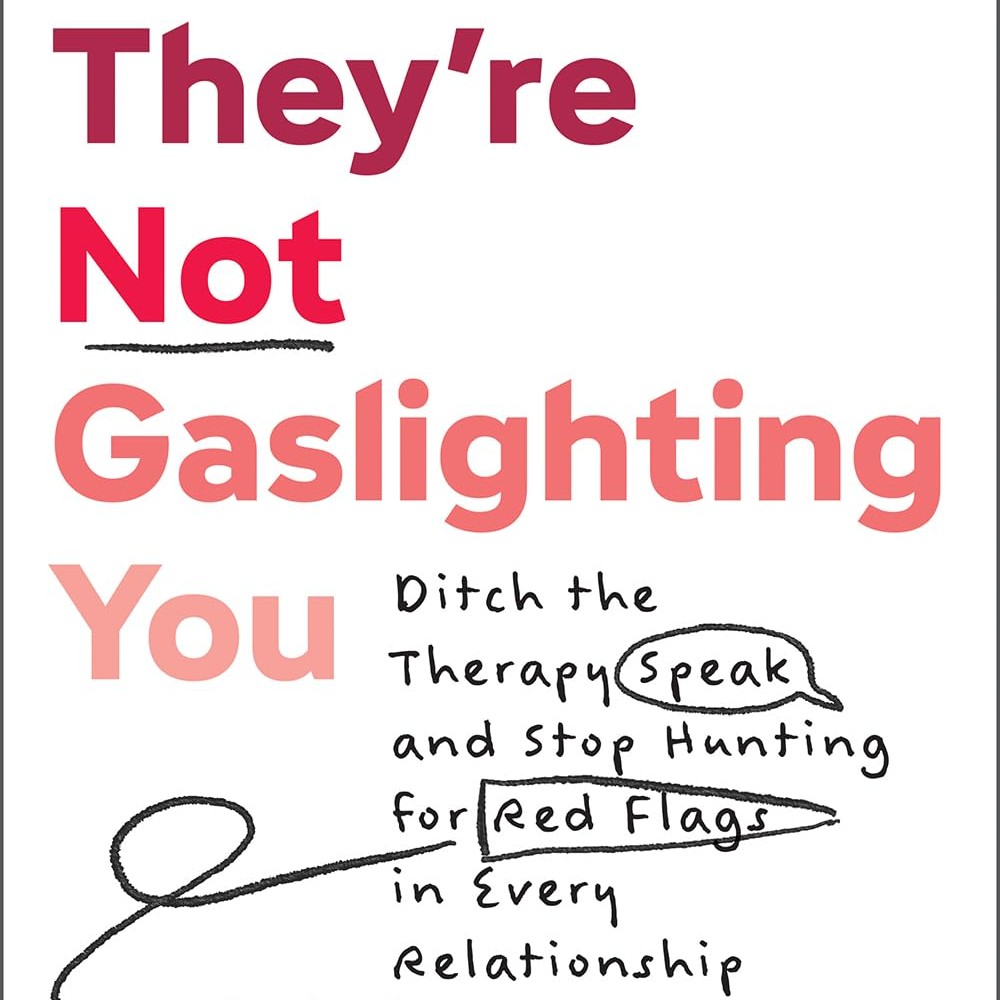
They're NOT gaslighting you! Dr. Isabelle Morley on the weaponization of therapy speak
Description
I’ve never highlighted a book as much as They’re Not Gaslighting You: Ditch the Therapy Speak and Stop Hunting for Red Flags in Every Relationship.
It's my favorite book in 2025!
Watch the Video Interview
Author Dr. Isabelle Morley gives us a timely book that rejects the reckless proliferation of the following terms:
- Sociopath
- Psychopath
- Love bomb
- Narcissist
- Boundaries
- Borderline
- Toxic
- Gaslighting
Who is Dr. Isabelle Morley?
Dr. Morley is not a chronic gaslighter trying to convince the world that she doesn't gaslight by writing a book about it. Here's her resume:
- Author of Navigating Intimacy and They’re Not Gaslighting You
- Co-host of the podcast Romcom Rescue
- Contributor to Psychology Today
- Advisory Board Member of the Keepler app
- Founding Board Member of UCAN
- Member of the American Psychological Association
- Certified in Emotionally Focused Therapy (EFT)
- The Gottman Method – Completed Levels 1 and 2
- Relational Life Therapy – Completed Level 1
- PsyD in Clinical Psychology from William James College, 2015
- Doctoral project researching hookup culture’s impact on relationship formation, 2015
- Master's in Professional Psychology from William James College, 2013
- Bachelor of Arts from Tufts University, 2011
My Fatima Story
I dated a woman for two years. Let’s call her Fatima.
In the second half of our relationship, Fatima bombarded me with many of the highly charged and often misused words listed above.
After she dumped me the fifth and final time, I finally pushed back on her barrage of accusations. I said to her, “So, you truly believe I’m a narcissist? Let’s look up the clinical definition of a narcissist and see how I stack up.”
She agreed. Perplexity wrote:
To be clinically considered as having Narcissistic Personality Disorder (NPD) according to the DSM-5, an individual must exhibit at least five out of nine specific characteristics. These characteristics, as summarized by the acronym “SPECIAL ME,” include:
- Sense of self-importance Exaggerating achievements and expecting to be recognized as superior without commensurate achievements.
- Preoccupation Being preoccupied with fantasies of unlimited success, power, brilliance, beauty, or ideal love
- Entitled Having unreasonable expectations of especially favorable treatment or automatic compliance with their expectations.
- Can only be around people who are important or special Believing that they are “special” and unique and can only be understood by, or should associate with, other special or high-status people (or institutions).
- Interpersonally exploitative Taking advantage of others to achieve their own ends.
- Arrogant Showing arrogant, haughty behaviors or attitudes.
- Lack empathy Being unwilling to recognize or identify with the feelings and needs of others.
- Must be admired Requiring excessive admiration.
- Envious Often being envious of others or believing that others are envious of them.
These symptoms must be pervasive, apparent in various social situations, and consistently rigid over time. A qualified healthcare professional typically diagnoses NPD through a clinical interview. The traits should also substantially differ from social norms.
I asked her how many of these nine characteristic