Episode Details
Back to Episodes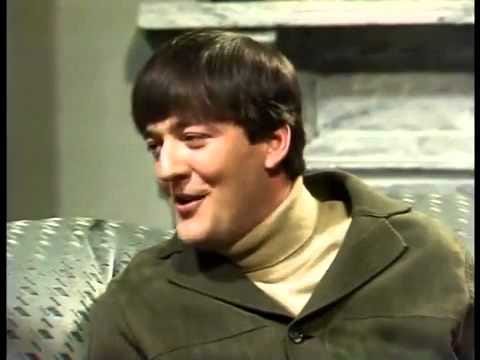
George Floyd and the Problem of Goodness
Description
[Click to listen, or read the text version below … up to you!]
George Floyd and the Problem of Goodness
Since last week’s ‘worthless cockroach’ post, I’ve been thinking more about goodness and evil, and what a problem they are for our world.
The Problem of Evil we know very well. He often pops up and starts making a noise after a particularly catastrophic event: “How can you believe in a so-called good and powerful God”, he asks accusingly, “when this kind of thing happens?” (where ‘this’ can be a global pandemic, or a child’s cancer, or the senseless, unjust death of George Floyd).
Sometimes the Problem of Evil has a smug, self-satisfied demeanour about him—as if he is the clever and righteous person for having noticed how bad evil is, whereas Christians are dumb and monstrous for perpetuating their belief in a good creator God.
Exhibit A in this respect is Stephen Fry (once described by Julie Birchill as “a stupid person’s idea of a clever person”). In a 2015 television interview, Fry famously excoriated God for being “a capricious, mean-minded, stupid” deity, for having created a world with so much suffering and injustice. “It’s perfectly apparent that he is monstrous. Utterly monstrous and deserves no respect whatsoever. The moment you banish him, life becomes simpler, purer, cleaner, more worth living in my opinion.”
However, what Fry and most mouthpieces for the Problem of Evil don’t seem to realise is that whenever the Problem of Evil comes trip-trapping over the bridge, his bigger and more difficult elder brother, the Problem of Goodness, is not far behind. And the Problem of Goodness is not one that we think about very often. In some ways, that’s what my post last week was about—the fact that even as Christians we sometimes struggle with the idea of goodness within our world, or within ourselves.
Goodness is particular problem for the modern God-banishing world, of which Stephen Fry is just one particularly articulate example.
Evil can only be said to exist (and thus be a problem) if it describes the absence or destruction of some ‘good’. That’s what evil is. It’s when the good thing that is the life of George Floyd is cruelly and senselessly snuffed out. Floyd’s death is only really evil (and surely it is) if Floyd’s continued life is something really good that should not have been cut off. The ‘should not’ in that last sentence is very important. It demonstrates something that we, and all the protesters in their outrage, know to be true—that the goodness of George Floyd being alive is something real that imposes an obligation on those around him.
But if the goodness of people and things in our world is real, that presents a huge problem for Stephen Fry, and every modern God-banishing person.
The English ethicist Oliver O’Donovan put his finger on this issue when he wryly observed that everyone who starts to think about morality and goodness and evil finds themselves pretty early on with a momentous decision to make. Is moral goodness and evil an objective thing that exists in the world—or not? When we sense or experience anything good or evil in the world, are we perceiving something real that is ‘out there’, beyond ourselves? Or are we merely projecting a set of personal preferences or feelings onto the blank screen of the world—preferences or feelings that we choose to call ‘good’ or ‘evil’, but which are only expressions of our minds?
If we say the latter, we find ourselves on a path to nihilism, banality and despair. There is no objective good that we can rejoice in together, nor evil that we can protest together. There are only my sensations and preferences, which I arbitrarily label ‘good’ or ‘evil’.
But if someone wishes to acknowledge that moral goodness and evil has a reality beyond our perceptions and thoughts—that it actually exists and is worth having or arguing about—then that p