Episode Details
Back to Episodes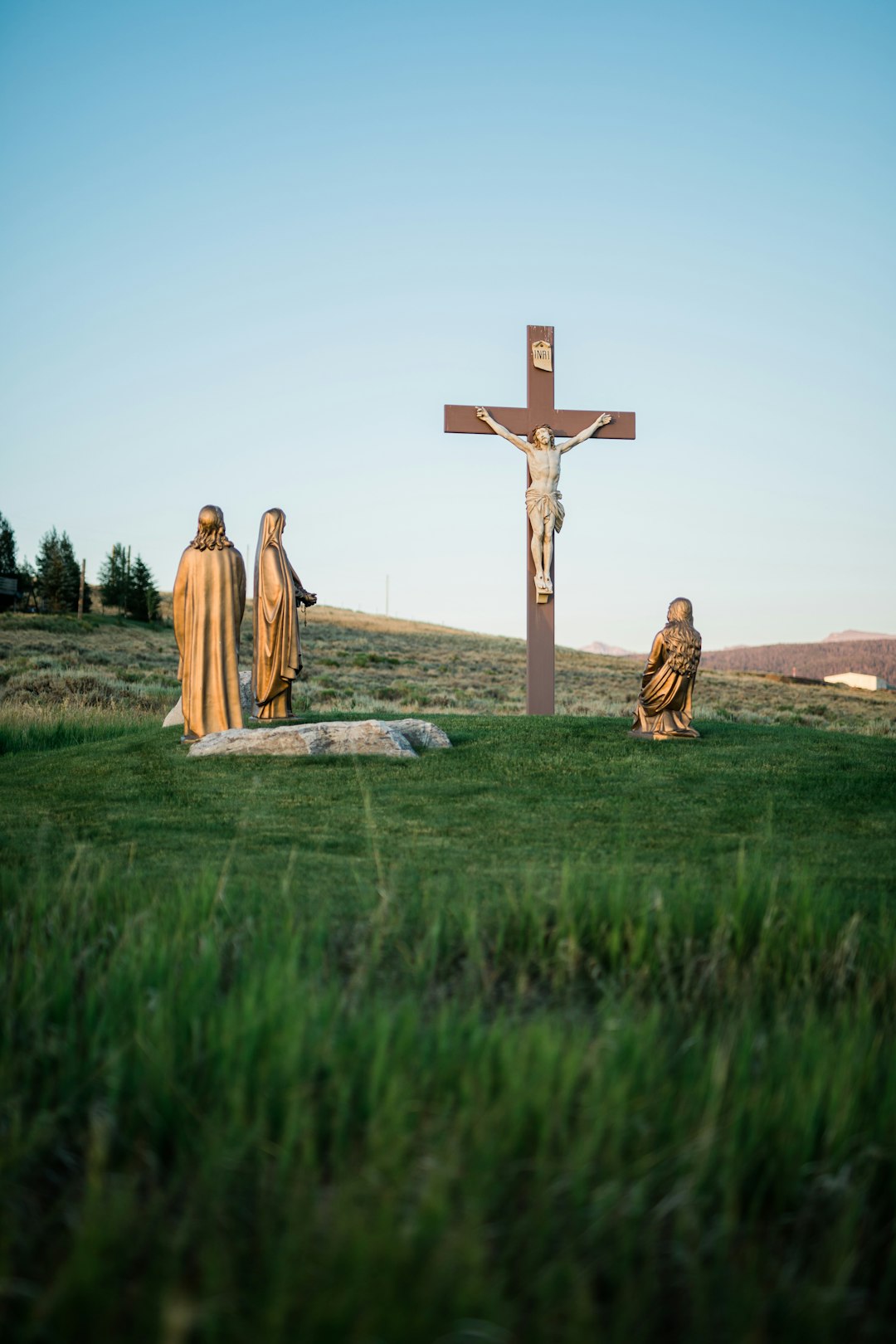
7 Words; Woman, Behold Your Son
Description
Woman, Behold Your Son
7 Words, John 19:16-27, Remsen Bible Fellowship, 3/30/25
In John 1:5 we read that, “the light shines in the darkness, and the darkness has not overcome it.” Unless of course you’re reading a translation which says, “the darkness has not understood it.” Why is there discrepancy? The Greek word which John uses can mean either to understand/comprehend, or to lay hold of/conquer/overcome. And as you read John’s gospel, it seems he chose an intentionally flexible word because both possible meanings are true. The Word became flesh, the Son took on humanity as Jesus of Nazareth, and the Light of Life himself shone into the darkness of our sin-sick world. And that world could neither comprehend Jesus, or overcome his light.
One of the most difficult aspects of Jesus to understand is how Jesus exercised his unconquerableness. By dying on the cross. Jesus reigns over all the universe. And that rule and reign are not only predicated upon his cross work, but were exercised while he hung on the tree.
After the mock trials of Jesus in John 18 and 19, beginning in John 19:16b we read the following:
So they took Jesus, 17 and he went out, bearing his own cross, to the place called The Place of a Skull, which in Aramaic is called Golgotha. 18 There they crucified him, and with him two others, one on either side, and Jesus between them. 19 Pilate also wrote an inscription and put it on the cross. It read, “Jesus of Nazareth, the King of the Jews.” 20 Many of the Jews read this inscription, for the place where Jesus was crucified was near the city, and it was written in Aramaic, in Latin, and in Greek. 21 So the chief priests of the Jews said to Pilate, “Do not write, ‘The King of the Jews,’ but rather, ‘This man said, I am King of the Jews.’ ” 22 Pilate answered, “What I have written I have written.”
Pilate turned Jesus over, and the soldiers took him out. But note how John phrases this: he went out. John doesn’t mention the soldiers leading him; it just says he went. Note also the emphasis that John makes in regard to the cross: bearing his own cross. We know from the other accounts that somewhere along this journey, likely at the city gate, Jesus’ body gave way under the cross. So Simon of Cyrene is enlisted to carry it the rest of the way. But all during this meandering walk of shame through the city, Jesus is carrying the cross-bar on which he will be hung.
They took Jesus out to Golgotha, the Place of a Skull, and there crucified him. This would have consisted of laying him down on the cross-piece, nailing his hands down, lifting him up to just above eye-level, and then nailing his feet in.
“As Moses lifted up the serpent in the wilderness, so must the Son of Man be lifted up, that whoever believes in him may have eternal life” (John 3:14-15).
What was Jesus’ transgression, according to Pilate? Why was he crucified? The crimes of crucified criminals were listed above their heads, and the sign over Jesus read: Jesus of Nazareth, the King of the Jews. He was crucified for being the King.
Verse 20 says that this sign was read by many. This is because the place of crucifixion was near the city, right beside the road. Further, as Jesus was led to the cross, one of the soldiers leading him would have carried this sign. It would have been read by all, because in large black or red letters, the sign was written in three languages: Aramaic, the language of the region; Latin, the language of the soldiers and official language of the empire; and Greek, the lingua franca, the universal trade language.
This signage offended the leaders, who cried out, “Pilate, change the words! Say this is what he claimed, not who he is!”
But Pilate refused. What I have written I have written. This statement of Pilate is most likely one of spite. He’s annoyed b