Episode Details
Back to Episodes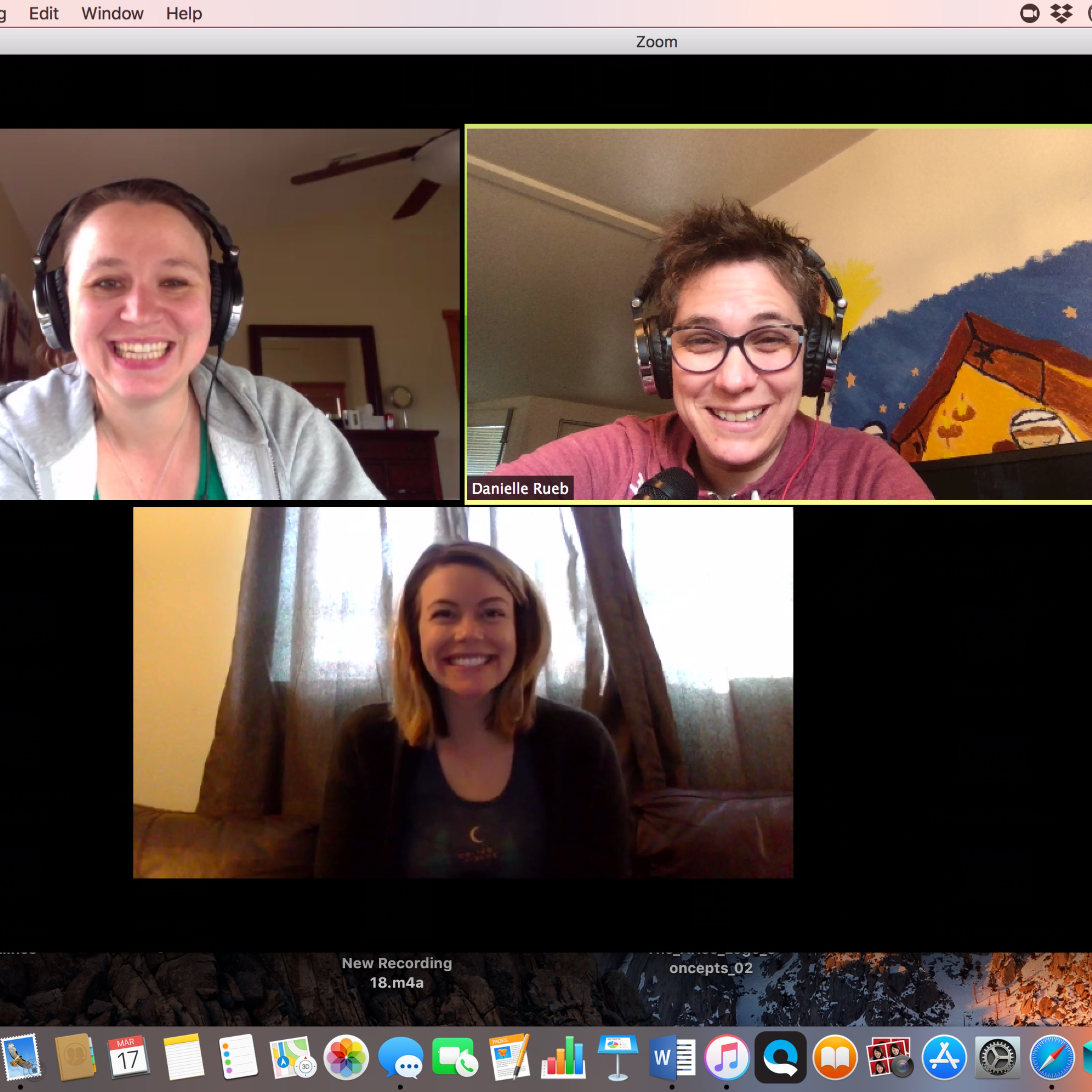
Season 1, Episode 19: Jenny McGrath, Maggie Hemphill, and Danielle Castillejo speak candidly about how to come back to our bodies in the midst of a Worldwide Pandemic
Description
*Please note that at the time of recording the Governor of Washington had not yet issued a “Shelter in place” order. As of the release of this podcast, all Washington residence are required by law to stay home. Please, for you own safety and that of others, stay in your homes and practice social distancing when you do have to leave your home for food or medical attention.*
Jenny McGrath is a Licensed Mental Health Counselor, Somatic Psychotherapist, Core facilitator at the Allender Center, and specializes in using movement, mindfulness and narrative work to help people find their way back to their bodies.
Jenny explored and did research in Northern Uganda on how movement and dance could be used therapeutically which lead to her to graduate studies at the Seattle school. She learned about how the body is impacted by trauma and how the body is our portal to healing trauma, healing communities and to heal our world.
We have become disconnect from our bodies. Western thinking is that the body and mind are separate and are not connected. This thinking has been harmful to how we care for ourselves, body and mind.
Jenny grew up in theology and teaching around the body being something to get passed. And as a woman, she had a lot of messaging both implicit and explicit of the dangers of her body. She worked hard avoid her body and to use it as a tool. Her experience lead her to the mission field: “If I’m going to have a body it should be useful for others.”
After working in Northern Uganda for a couple of years her body told her no. She broke into shingles and her immune system shut down. She didn’t know what was going to happen and if she would be able to return to Uganda. It was at a conference she heard Dan Allender speak on longevity in serving professions. She decided to go to graduate school in Seattle, thinking she’d learn how to care for her body for three years and then return back to Uganda. The more she deconstructed her story and her faith, why she was so drawn to the places she was drawn to, she came to realize that tending to and learning how to inhabit her body was going to be a life long journey and a life long work.
Amari, her boxer dog, helps regulate her and her clients.
Right now, all around the world people are practicing social distancing and staying at home: it’s like getting a crash course in being with yourself. Not everyone gets the privilege to be with family members or a safe place to shelter. The current situation has made self-regulation so much more difficult as people are in tight quarters and anxiety and frustration are high. Not being able to express what you’re feeling in your body, what you’re feeling still comes out even when we’re disconnected.
How do we come back to our bodies? Societies that are to focused on productivity have existed as floating heads… but as we’re stuck in these spaces where we’re not used to working or being productive and it’s an invitation back to our bodies and ourselves in pretty drastic ways.
How do we listen to our bodies and interrupt what we are feeling? First Jenny encourages us to normalize feelings of anxiety that come up. One working definition of trauma she uses in her work is immobility, whether psychically or physically, immobility is a felt sense of trauma in our bodies. Listen to the impulses in your body, what does it want to do? Does it want to release adrenaline and cortisol by running or some other physical activity? When she is working with someone, their body is the wisest person in the room. Our bodies can move through anxiety and surprisingly quick to resolve the anxiety if we start to listen to our body’s impulses. The more you try ignore and push away, the louder your body will get. Pay attention, what are you noticing? When you engage in active noticing of your body, it will naturally begin to