Episode Details
Back to Episodes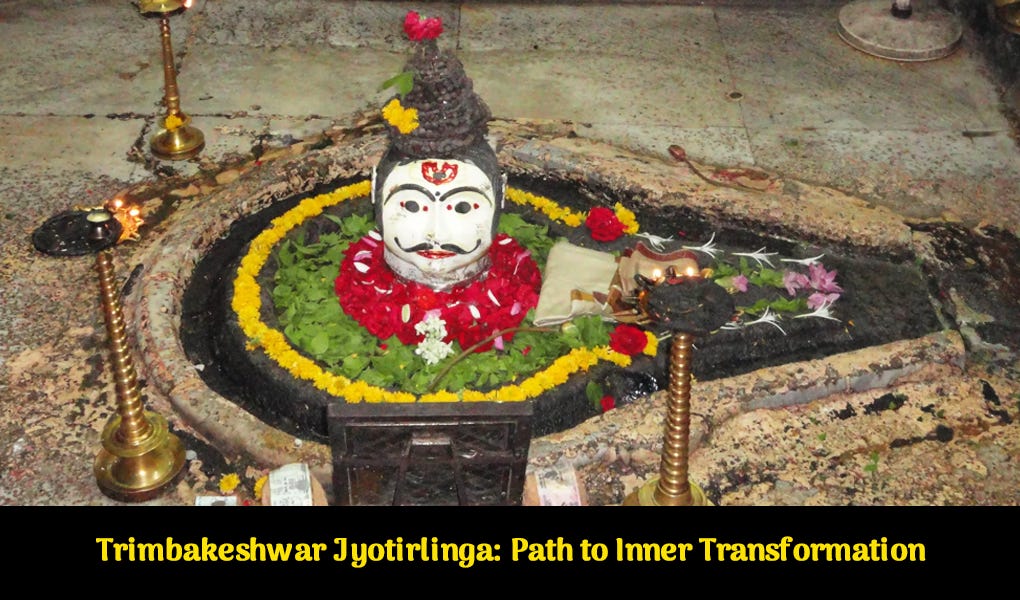
Shri Trimbakeshwar Jyotirlinga: A Divine Abode of Lord Shiva
Description
Shri Trimbakeshwar Jyotirlinga is one of the twelve sacred Jyotirlingas of Lord Shiva in India. Located in Trimbak town of Nashik district in Maharashtra, this temple holds immense spiritual, religious, and historical significance. It is revered not only for its unique Jyotirlinga form but also as the origin point of the sacred Godavari River, often referred to as the Ganga of the South.It is dedicated to the Hindu god Shiva and is one of the twelve jyotirlingas where the Hindu genealogy registers at Trimbakeshwar, Maharashtra are kept. The origin of the sacred Godavari River is near Trimbak. Several Hindu rituals are carried out in Trimbakeshwar, for that pilgrims travel from all over India.
Jyotirlingas are sacred shrines of Lord Shiva; it is believed that Lord Shiva himself visited these places and hence they have a special place in the hearts of devotees. There are 12 of them in India.
Jyotirlinga means ‘column or pillar of light’. The ‘stambha’ symbol represents that there is no beginning or end.
When Lord Brahma and Lord Vishnu had an argument about who was the supreme god, Lord Shiva appeared as a column of light and asked each one to find the ends. Neither could do it. It is believed that the places where these columns of light fell is where the jyotirlingas are located.
Trimbakeshwar Jyotirlinga is only one of the 12 jyotirlingas in India that does not only honor Lord Shiva but the other two gods in the Holy Trinity - Lord Vishnu and Lord Brahma as well.
Historical Origin & Timeline The Trimbakeshwar temple has a history dating back thousands of years and is mentioned in several ancient Hindu scriptures including the Shiva Purana and the Skanda Purana. It is believed that Gautam Rishi performed penance here and brought the Ganga down to earth in the form of Godavari. The original temple is said to have existed in the Satya Yuga. The present structure was reconstructed in the 18th century by the Maratha ruler, Peshwa Balaji Baji Rao (Nanasaheb Peshwa).The entire temple is built with black stone. The main feature of Trimbakeshwar Shiva Temple is that the jyotirlinga has three faces representing the gods - Shiva, Vishnu and Brahma. They all exist within the hollow space within the Shivalinga. Hence the name Trimbakeshwara (Three Lords). They are covered by a jewelled crown that is believed to date to the era of the Pandavas.
You will also find images of Rama, Krishna, Ganga, Parasurama and Kedarnath among others. There are also monasteries of saints in this temple.
The temple has a well called Amritavarshini. It also has a Kushavarta or sacred pond, which is believed to be the source of the Godavari.Timeline Overview:
* Satya Yuga: Gautam Rishi's penance and origin of Godavari.
* Ancient Period: Temple mentioned in Shiva Purana and Skanda Purana.
* 18th Century: Temple reconstructed by Peshwa Nanasaheb.
What is the story behind Trimbakeshwar Jyotirlinga?
It is said that Gautama rishi lived on the Brahmagiri hills along with his wife, Ahalya. While there was famine everywhere else on the land, inside the rishi’s ashram, there were abundant food grains. This was because the gods had blessed him because of his steadfast devotion and regular prayers. The other rishis felt jealous of him and sent a cow into his fields.
When Gautama tried to frighten the cow away from his fields, it died. For the sin of killing a cow, Gautama worshipped Lord Shiva to release the Ganga River and let her flow into his ashram to purify it. Pleased with his devotion, Lord Shiva released Ganga and told her to stay there. The Kushavarta or sacred pond that exists now is the source of the Godavari. (People worship the Godavari as Ganga.) The sage requested Lord Shiva also to make the site his abode, which the Lord did in the form of the jyotirlinga.